ART WIKI32.963 en sala
MapaColecciónArtistasMuseosExposicionesRevista
Acceder

ART WIKI

Dónde cuelga la obra maestra y cuándo le dejan pasar.

Colecciones: Galería Nacional de Arte, Galería Nacional de Dinamarca, Galería Nacional de Retratos, Galería Tretiakov, Harvard Art Museums, Instituto de Arte de Chicago, Instituto de Artes de Mineápolis, MoMA, Museo de Arte de Cleveland, Museo de Victoria y Alberto, Museo del Hermitage, Museo del Louvre, Museo Estatal Ruso, Museo Hirshhorn y Jardín de Esculturas, Museo J. Paul Getty, Museo Metropolitano de Arte, Museo Pushkin, Museo Smithsoniano de Arte Americano, Museo Whitney de Arte Estadounidense, National Museum of Asian Art, Rijksmuseum, Villa Getty, Catálogo Estatal del Fondo Museístico de Rusia (274 museos), Europeana (19 museos), Wikidata (6 museos), Paris Musées (12 museos) y Joconde, la base de museos del Ministerio de Cultura de Francia (495 museos). Las imágenes pertenecen a sus titulares de derechos.

Secciones

  • Mapa
  • Búsqueda
  • Colección
  • Obras maestras
  • Expuestas ahora
  • Artistas

Más

  • Museos y galerías
  • Exposiciones
  • Revista
  • De dónde salen los datos
  • Privacidad y cookies
InicioMapaCatálogo
  1. Colección/
  2. Museo J. Paul Getty/
  3. Horse Stable
Horse Stable, Gerard ter Borch, about 1654

Horse Stable

about 1654 · Painting · 45.4 × 53.5 cm

Sobre el cuadro

A dappled gray horse feeds at a manger while a man brushes his coat. A horse blanket and bridle hang from a pole in the foreground and other barnyard utensils--a pitchfork, broom, and pail--fill the stable. To the right, a fashionably dressed woman appears at a doorway that connects to the main farmhouse. Light from the open doorway illuminates the animal, the painting's center of attention. Domestic animals like this carefully groomed horse would have been valued possessions of their prosperous owners during the 1600s in Holland. Clues such as the orderly and well-built stable and the woman's handsome dress and jewelry indicate that this was a well-to-do middle-class household. Gerard ter Borch's paintings are noted for their subtlety of composition, close attention to detail, and delicate color. In *Horse Stable* he used a palette of warm browns and grays, brightened by the red accents of the man's hat, the woman's skirt, and the bricks on the left-hand wall.

MJPMuseo J. Paul Getty

Ficha

Mientras tanto, en la vida de Gerard ter Borch

La vida entera
  1. 14 February 1654

    Marries and settles in Deventer

    He marries Gertruid Matthijsen and settles in Deventer; in the 1650s he concentrates on genre painting, showing people in ordinary everyday surroundings and sometimes in mysterious or amorous relationships.

  2. 1655

    Granted citizenship of Deventer

    In 1655, a year after settling there, he is granted citizenship of Deventer.

  3. not after 1655

    Caspar Netscher becomes his pupil

    Caspar Netscher studies under ter Borch in 1655 at the latest. Together with his master he makes nine of the ten portraits of the Craeyvanger family.

Más obras de Gerard ter Borch

Todas las obras

En la misma sala · Museum East Pavilion, Gallery E204, Museo J. Paul Getty

Página del museo
about 1654 · a los 37 años
16171681
Número de inventario
86.PB.631

Fuentes

  • Museo J. Paul Getty
  • Imagen: Museo J. Paul Getty — Open Content
Gerard ter Borch, retratoGerard ter BorchPaíses Bajos, 1617–1681

¿Se puede contemplar?

Sí, recibe visitas

MJP
Museo J. Paul Getty

Los Ángeles, Estados Unidos

SalaMuseum East Pavilion, Gallery E204

Expuesta al público. Quién lo avala figura más abajo.

Comprobado
hace 3 días
En este estado desde
5 oct 2026
Fuente
El museo
En el mapaPágina del museo
Vrouw in boerenkostuum, Gerard ter Borch, c. 1648 - c. 1650

Vrouw in boerenkostuum

c. 1648 - c. 1650 · Rijksmuseum

Helena van der Schalcke, Gerard ter Borch, c. 1648

Helena van der Schalcke

c. 1648 · Rijksmuseum

Galante conversatie, bekend als ‘De vaderlijke vermaning’, Gerard ter Borch, c. 1654 - c. 1655

Conversación galante

c. 1654 - c. 1655 · Rijksmuseum

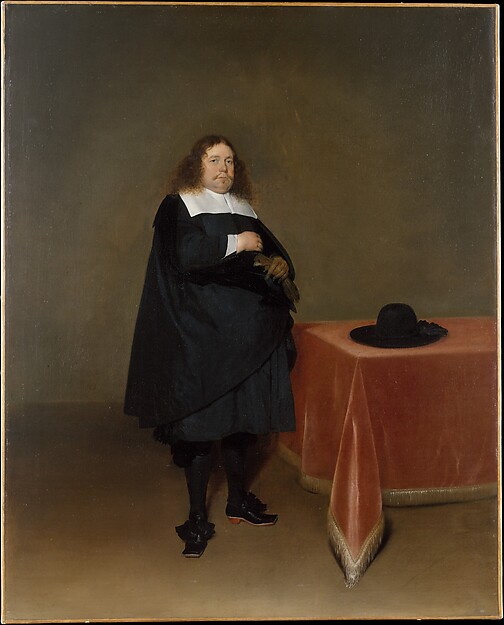
Burgomaster Jan van Duren (1613–1687), Gerard ter Borch the Younger, ca. 1666–67

Burgomaster Jan van Duren (1613–1687)

ca. 1666–67 · Museo Metropolitano de Arte

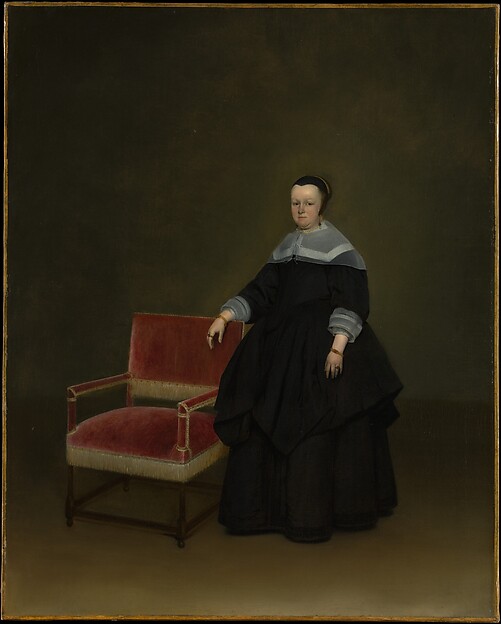
Margaretha van Haexbergen (1614–1676), Gerard ter Borch the Younger, ca. 1666–67

Margaretha van Haexbergen (1614–1676)

ca. 1666–67 · Museo Metropolitano de Arte

Het sluiten van de Vrede van Munster, Gerard ter Borch, 1648

Het sluiten van de Vrede van Munster

1648 · Rijksmuseum

A Young Woman at Her Toilet with a Maid, Gerard ter Borch the Younger, ca. 1650–51

A Young Woman at Her Toilet with a Maid

ca. 1650–51 · Museo Metropolitano de Arte

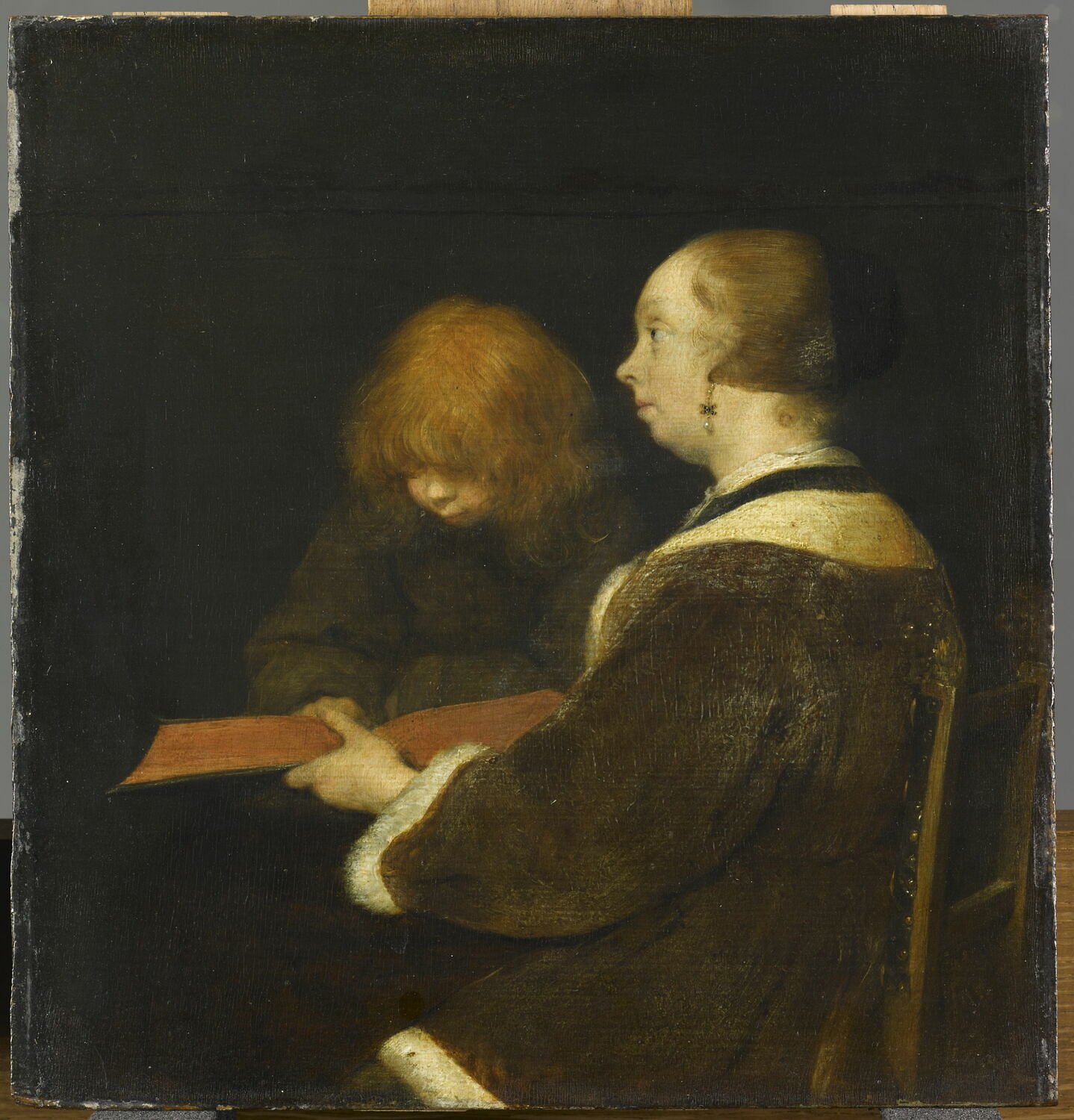
La Leçon de lecture, Borch, Gerard ter, 2e quart du XVIIe siècle (vers 1652)

La Leçon de lecture

2e quart du XVIIe siècle (vers 1652) · Museo del Louvre

Bathsheba After the Bath, Jan Steen, about 1670–1675

Jan Havicksz. Steen

Bathsheba After the Bath, about 1670–1675

The Drawing Lesson, Jan Steen, about 1665

Jan Havicksz. Steen

The Drawing Lesson, about 1665

The Satyr and the Peasant Family, Jan Steen, about 1660–1662

Jan Havicksz. Steen

The Satyr and the Peasant Family, about 1660–1662

Two Watermills and an Open Sluice, Jacob van Ruisdael, 1653

Jacob Isaacksz. van Ruisdael

Two Watermills and an Open Sluice, 1653

Bridge with a Sluice, Jacob van Ruisdael, about 1648–1649

Jacob Isaacksz. van Ruisdael

Bridge with a Sluice, about 1648–1649

A Woman Preparing Bread and Butter for a Boy, Pieter de Hooch, about 1660–1663

Pieter de Hooch

A Woman Preparing Bread and Butter for a Boy, about 1660–1663

The Music Lesson, Gerard ter Borch, about 1668

Gerard ter Borch

The Music Lesson, about 1668

A Maid Milking a Cow in a Barn, Gerard ter Borch, about 1652–1654

Gerard ter Borch

A Maid Milking a Cow in a Barn, about 1652–1654

En el catálogo

PinturaÓleoPintura neerlandesaBarrocoSiglo XVIIPaíses Bajos