 John James AudubonEstados Unidos, 1785–1851
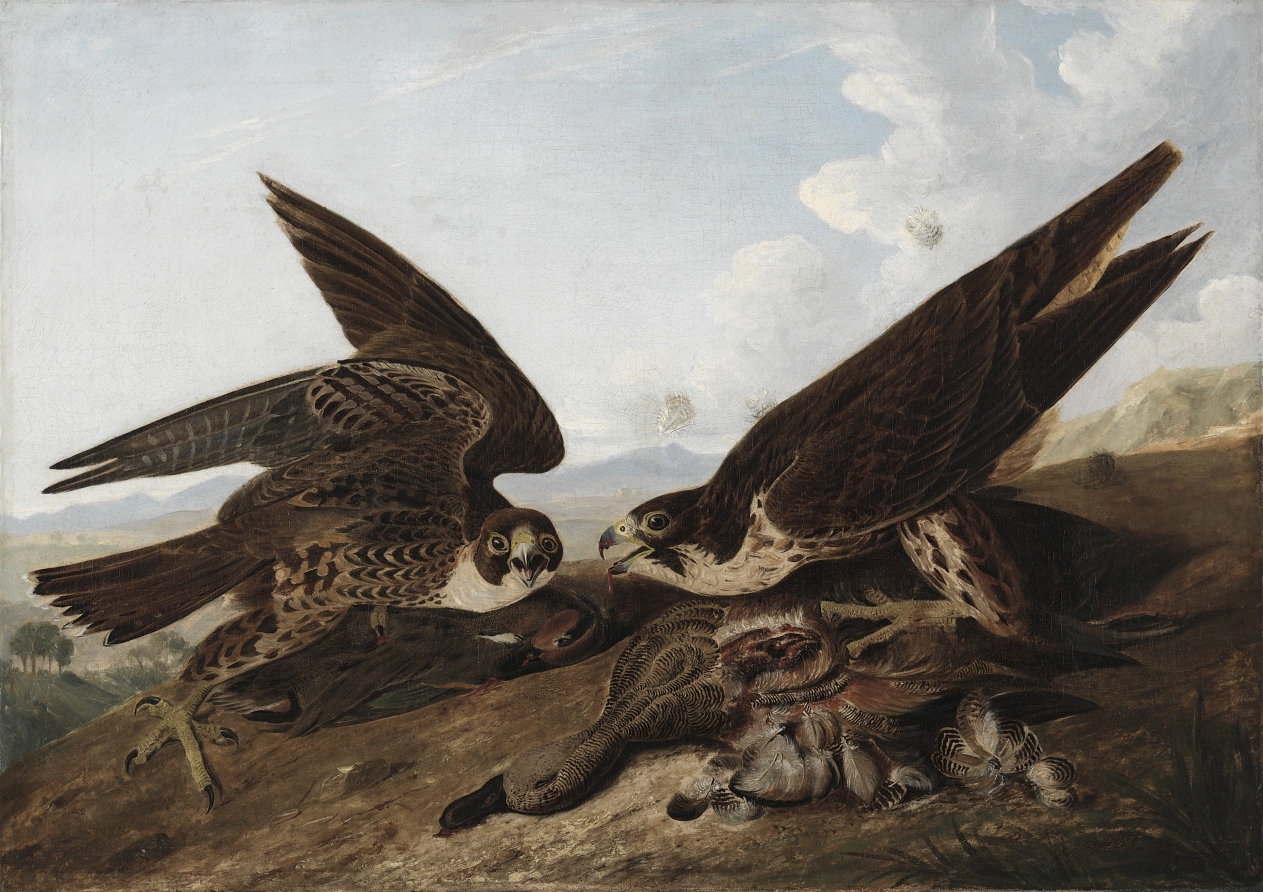
Great Egret
¿Se puede contemplar?
No: fue robada y se la busca
Listed in the FBI's National Stolen Art File under no. 01095.
- Comprobado
- · Según informes
- En este estado desde
- Fuente
- Un registro de arte robado
Ficha
En el catálogo
Fuentes
- El registro de arte robado del FBI
- Imagen: FBI National Stolen Art File
Mientras tanto, en la vida de John James Audubon
La vida enterasummer 1803
Sent to America to escape conscription
In the summer of 1803 his father sent the 18-year-old Audubon to America so that he would avoid conscription into Napoleon's army; on setting out, Jean-Jacques changed his name to John James. On arrival he caught yellow fever, was nursed back to health by Quaker women who ran a boarding house, and learned from them a Quaker English whose accent stayed with him for life.
January 1804
Meets Lucy Bakewell
In January 1804 Audubon got to know the family of the Englishman William Bakewell, who had bought the neighbouring estate of Fatland Ford, and began courting his 17-year-old eldest daughter Lucy, well read and educated, fond of music and swimming. Her father thought her too young for a courtship; in the summer of 1804 Audubon asked for her hand.
1819
The Panic of 1819: bankruptcy and prison
In the Panic of 1819 Audubon lost all his shops and sold Nicholas Berthoud almost everything of value: his share in the sawmill, the house with its furniture, books, musical instruments, animals and the remaining slaves. It was not enough to pay his debts; he was declared bankrupt and sent to prison, and on his release he walked from Henderson to Louisville and, by his own account, for the only time in his life saw the wild turkeys and the lesser birds as enemies.
12 October 1820
Sets out to paint all the birds of North America
On 12 October 1820 Audubon set off south with his gun, paintbox and assistant Joseph Mason, who from October 1820 to August 1822 painted the plant backgrounds of his bird studies; the Swiss landscape painter George Lehman travelled with him as well. Audubon was committed to finding and painting all the birds of North America for eventual publication, which he called “The Birds of America”, and tried to paint one page a day.
May – 21 July 1826
Across the ocean with a portfolio of drawings: Liverpool
Audubon left the United States in May 1826 and arrived in Liverpool on 21 July, going straight with a letter of introduction to the wealthy Richard Rathbone and getting to know his whole family. The exhibition of his work at the Royal Institution lasted a month, and after William Roscoe's urging the free first week gave way to paid admission: Audubon earned £100 and sold several oil copies of his drawings.
27 de enero de 1851
Died