John TennielReino Unido, 1820–1914
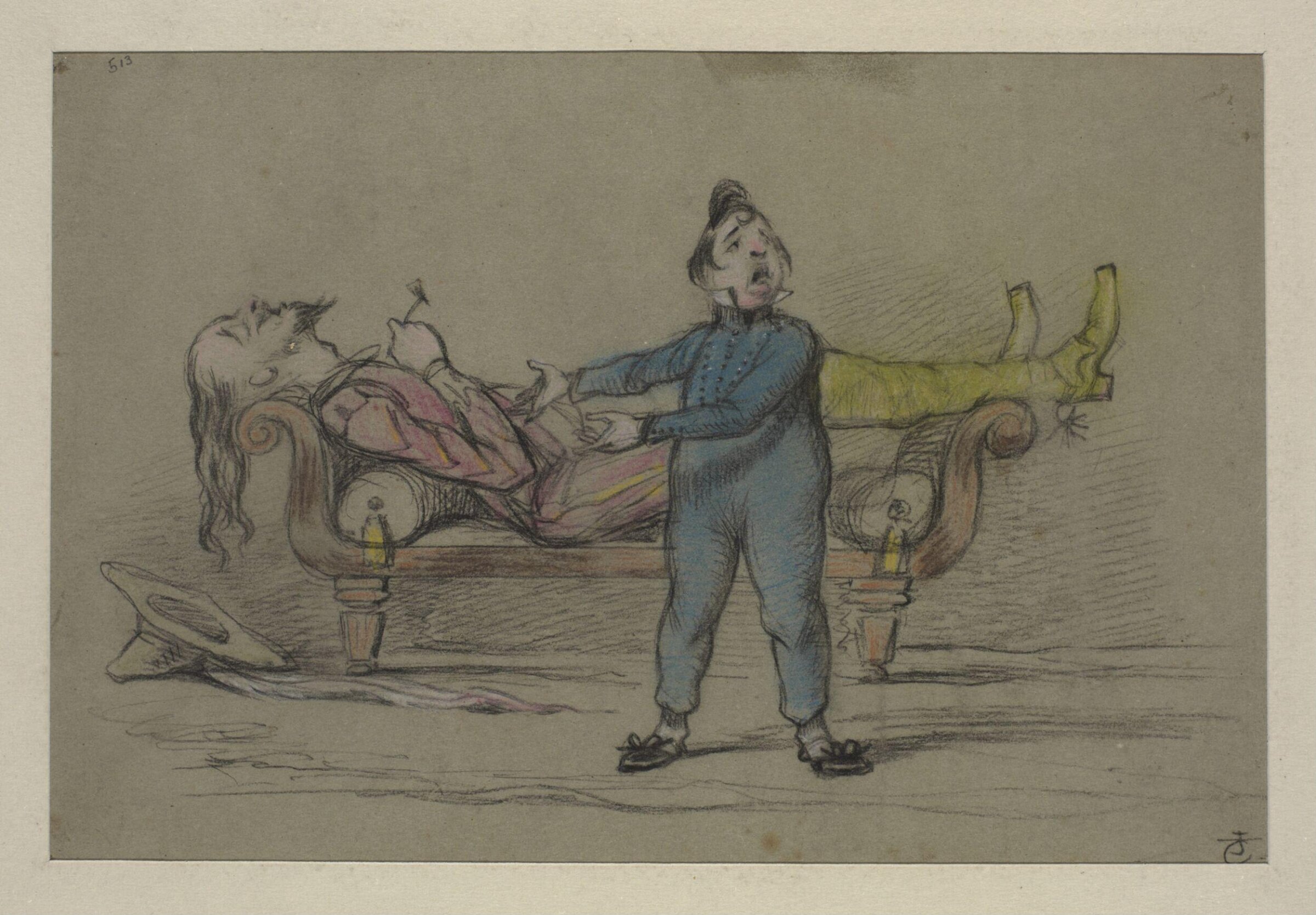
Great Cannon Game
¿Puedo verla?
Se desconoce
¿Dónde está «Great Cannon Game» hoy? Colección: Galería Nacional de Retratos, Washington D. C. Se desconoce.
Washington D. C., Estados Unidos
Se conoce el propietario; no se sabe si hoy está expuesta.
- En este estado desde
- Fuente
- El museo
Ficha
- Número de inventario
- S/NPG.78.165
Lo que muestra
En el catálogo
Fuentes
- Galería Nacional de Retratos
- Imagen: Galería Nacional de Retratos — National Portrait Gallery, Smithsonian Institution (CC0)
En la vida de John Tenniel
La vida entera1860s
Cartoons against Irish nationalism
His cartoons of the 1860s popularised a portrait of the Irishman as a sub-human being resembling an orangutan. Many of his cartoons were hostile to Irish nationalism: the Fenians and the Land League appeared as monstrous ape-like brutes, and Ireland as a helpless girl protected by an armoured Britannia.
1861
Offered Leech’s place at “Punch”
Tenniel was offered John Leech’s position as political cartoonist of “Punch”. Amid the heated social and political issues of the day he kept a sense of decorum and restraint.
1864
Meets Lewis Carroll
Carroll had wanted to illustrate “Alice’s Adventures in Wonderland”, already set in type, himself, but his drawing was amateurish, and the publisher Alexander Macmillan advised him to approach Tenniel (by other accounts it was the engraver Orlando Jewitt who suggested hiring a professional). Having read the text, Tenniel agreed to make forty-two illustrations — the number Carroll insisted on.
1864
Chief cartoonist of “Punch” after Leech’s death
When John Leech died, Tenniel became chief cartoonist of “Punch” and carried on their work alone, rarely missing a single week. His drawings followed the wishes of the magazine’s editors and could be scathing.
December 1865
A rejected print run — then a best-seller
Because Tenniel objected to the print quality, the first run of 2,000 copies of “Alice” was not sold in England but in the United States (by other accounts it was destroyed, apart from the advance copies). A new edition came out in December 1865, dated 1866, became an instant best-seller and increased Tenniel’s fame.