 Winslow HomerEstados Unidos, 1836–1910
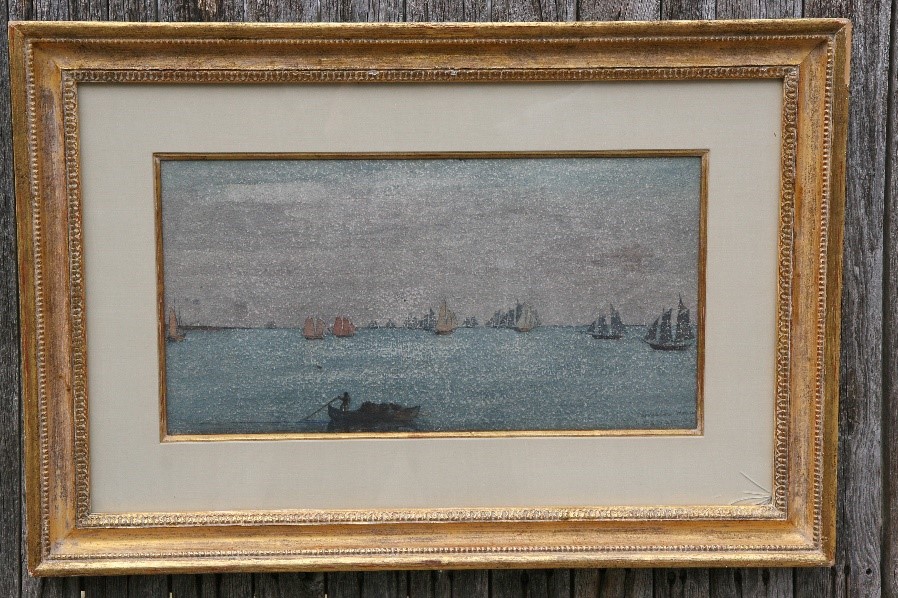
Gloucester Fleet at Night
¿Puedo verla?
No, robada y en búsqueda
¿Dónde está «Gloucester Fleet at Night» hoy? No, robada y en búsqueda. Comprobado 29 de septiembre de 2026.
Consta en el Registro Nacional de Arte Robado del FBI, con el n.º 01206.
- Comprobado
- · Según informes
- En este estado desde
- Fuente
- Un registro de arte robado
Ficha
En el catálogo
Fuentes
- El registro de arte robado del FBI
- Imagen: FBI National Stolen Art File
En la vida de Winslow Homer
La vida enteralate 1870s
A recluse in Gloucester
In the late 1870s, whether from disappointments with women or some other emotional turmoil, Homer became reclusive, abandoned urban social life and lived instead in Gloucester, for a while even in the secluded Eastern Point Lighthouse with the keeper's family. Watching the fishermen, the sea and the marine weather, he rediscovered his love of the sea and found a rich source of themes in it.
1878
A productive year at Valentine's farm
Homer spent 1878 as the guest of the industrialist Lawson Valentine at Houghton Farm, his property in the Adirondack Mountains, and it proved a particularly productive year. Valentine, whose paint company employed the artist's brother Charles as a chemist, was an early and important collector of Homer's work and later gave him a studio at the farm.
1878
Fireplaces and the Tile Club
In 1878 Homer made an enamel fireplace surround. For a short time he designed fireplace tiles as a member of the Tile Club, a group of artists and writers who nicknamed him “The Obtuse Bard” and included William Merritt Chase and the sculptor Augustus Saint-Gaudens.
spring 1881 – November 1882
England: the village of Cullercoats
In 1881 Homer set off on his second and last trip abroad, to England, and from the spring of 1881 to November 1882 lived in the village of Cullercoats on the North Sea, depicting the courage of fishermen and above all of women: gutting fish, mending nets, waiting for the men at the water's edge. The period profoundly changed his later work: his palette grew sober and his pictures larger. Of the local women he wrote: “The women are the working bees.”
1882
Return: “a very different Homer”
In November 1882 Homer returned to the United States and showed his English watercolours in New York. Critics noticed the change at once: “He is a very different Homer from the one we knew”, his pictures were “works of High Art”, and his women were no longer “dolls who flaunt their millinery” but sturdy, fearless wives and mothers.