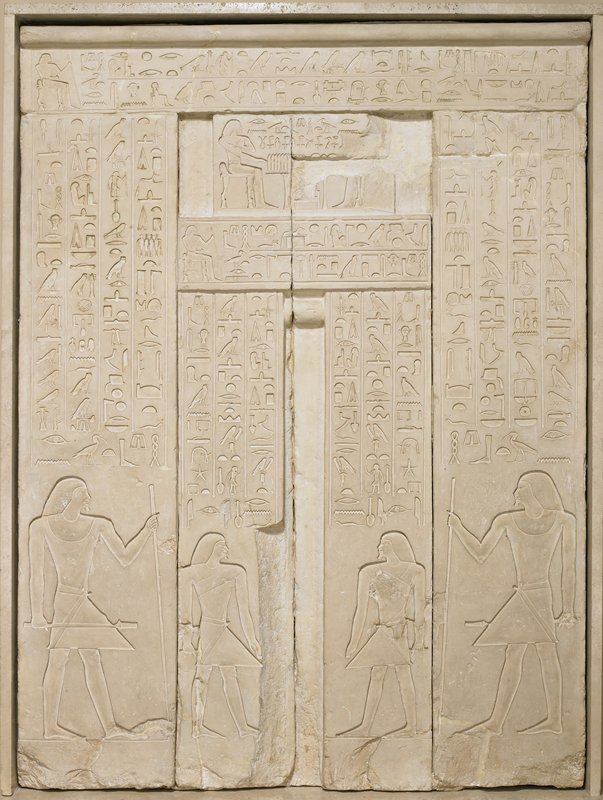
False door
¿Puedo verla?
Sí, expuesta ahora
¿Dónde está «False door» hoy? Instituto de Artes de Mineápolis, G250, Minneapolis. Sí, expuesta ahora. Comprobado 23 de noviembre de 2026.

Minneapolis, Estados Unidos
Cerrado· abre a las 10:00
Expuesta al público.
- Comprobado
- En este estado desde
- Fuente
- El museo
Sobre la escultura
A false door, built into the west wall of the tomb chapel, was the focal point of the cult of the deceased in ancient Egypt. This was the interface between the world of the living and the world of the dead, where visitors came to say prayers and deposit offerings for the spirit of the deceased, whose soul could pass through the door. The inscriptions on this door commemorate the priest Iryenakhet (year-ee-en-AH-ket), who is depicted seven times. The central niche is framed by two door jambs and a lintel in a composition ruled by symmetry. The normal direction of Egyptian writing was from right to left, with the hieroglyphs facing right, but here the hieroglyphs on the right jamb face left (as do the figures), toward the niche.
Instituto de Artes de Mineápolis
Ficha
- Número de inventario
- 52.22
En el catálogo
Fuentes
- Instituto de Artes de Mineápolis
- Imagen: Instituto de Artes de Mineápolis — public domain