 André KertészEstados Unidos, 1894–1985
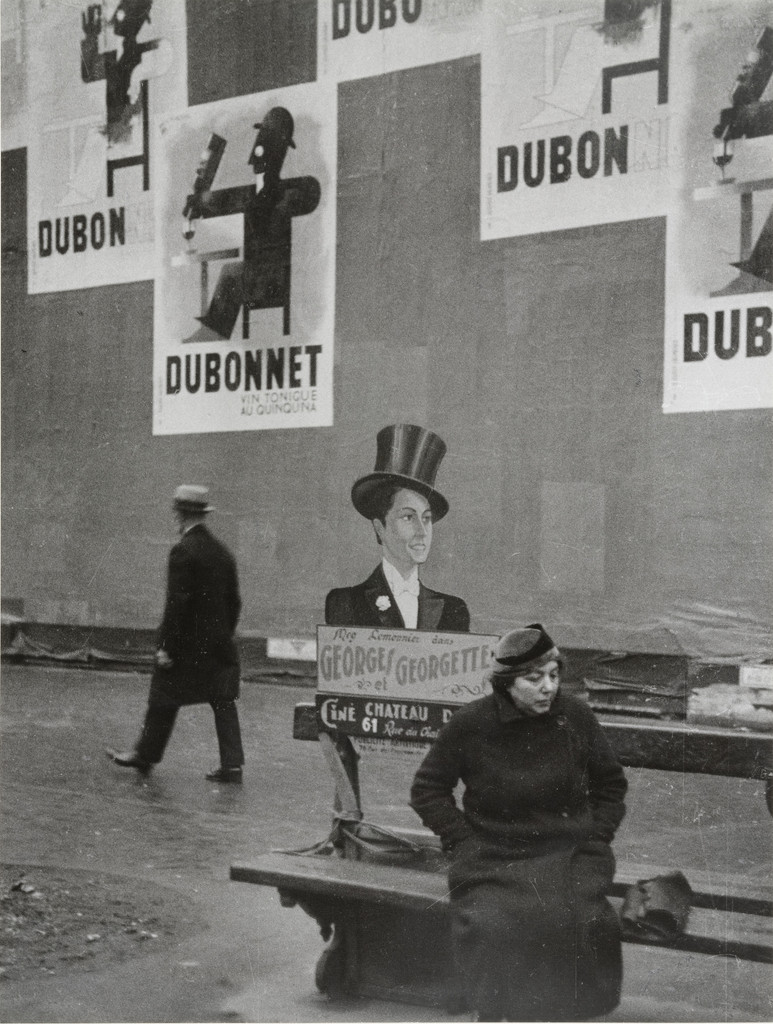
Dubo, Dubon, Dubonnet, Paris
¿Se puede contemplar?
Sí, recibe visitas

Expuesta al público. Quién lo avala figura más abajo.
- Comprobado
- Fuente
- El museo
Ficha
- Número de inventario
- 991.1969
En el catálogo
Fuentes
- MoMA
- Imagen: MoMA — © the artist or rights holder
Mientras tanto, en la vida de André Kertész
La vida entera1925–1936
The circle of Hungarian émigrés and portraits of friends
In Paris he is among numerous Hungarian artists, including François Kollar, Robert Capa, Emeric Fehér, Brassaï and Julia Bathory, as well as Man Ray, Germaine Krull and Lucien Aigner, who also emigrated there, and becomes involved with the Dada movement; visiting his sculptor friends, he is fascinated by Cubism. He makes photo portraits of the painters Piet Mondrian and Marc Chagall, the writer Colette and the film-maker Sergei Eisenstein.
early 1930s
Cartier-Bresson: “We all owe him a great deal”
Henri Cartier-Bresson says of Kertész that they all owe him a great deal; he later comes to be considered the father of photojournalism, and other photographers cite him as an inspiration.
1932
Exhibition at the Julien Levy Gallery in New York
At the Julien Levy Gallery in New York the price of his proofs is set at US$20, a large sum of money during the Great Depression.
17 June 1933
Marries Elizabeth
Despite his mother’s death earlier that year, Kertész marries Elizabeth; he is said to have spent less time with his artist friends in favour of his new wife.
1933–1937
Books: “Enfants”, “Paris”, “Nos amies les bêtes”
His first personal book of photographs, Enfants, is published in 1933, and he publishes regularly in the following years: Paris (1934), dedicated to his brothers Imre and Jenő, Nos Amies les bêtes (“Our Friends the Animals”, 1936) and Les Cathédrales du vin (“The Cathedrals of Wine”, 1937).
15 October 1936
Emigrates to New York
Magazines emphasise political stories and stop publishing Kertész for his apolitical subjects; with commissions dropping and persecution of Jews increasing, he and Elizabeth decide to move, which may have saved his life, as four years later France would fall under Nazi occupation. They board the SS Washington and arrive in New York on 15 October 1936, living at the Beaux Arts Hotel in Greenwich Village; deprived of his artist friends, struggling with English and among Americans who reject having their photos taken on the street, he goes through a period he later calls the “absolute tragedy”.