 Mattia PretiItalia, 1613–1699
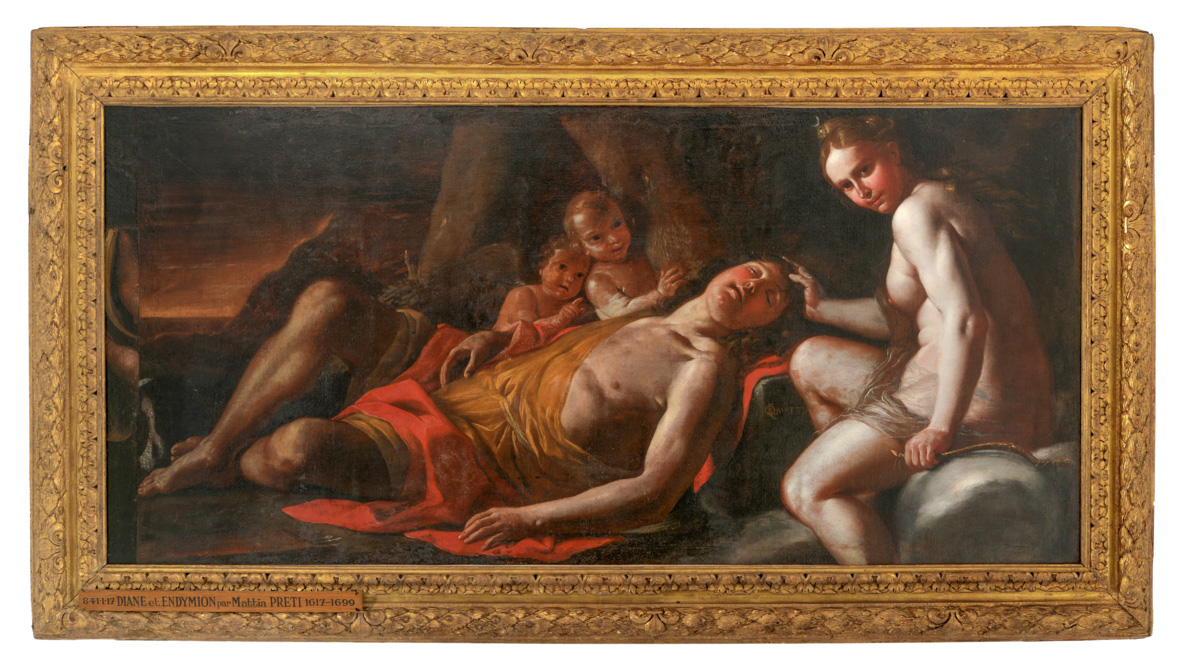
Diane et Endymion
¿Puedo verla?
Se desconoce
¿Dónde está «Diane et Endymion» hoy? Colección: Museo Hyacinthe-Rigaud, Perpiñán. Se desconoce.
Perpiñán, Francia
Se conoce el propietario; no se sabe si hoy está expuesta.
- En este estado desde
- Fuente
- El museo
Sobre el cuadro
En palabras del museo — en francés
Légèrement couvert d’une draperie jaune et rouge, Endymion dort couché dans une grotte ; près de lui, son amante, la déesse Diane, assise, semble veiller sur son sommeil.
Museo Hyacinthe-Rigaud
Ficha
- Número de inventario
- 841.1.17
Lo que muestra
En el catálogo
Fuentes
- Museo Hyacinthe-Rigaud
- Imagen: Museo Hyacinthe-Rigaud — © Ville de Perpignan. Musée d'art Hyacinthe Rigaud - Pascale Marchesan; Ministère de la Culture (France), base Joconde
En la vida de Mattia Preti
La vida entera24 de febrero de 1613
Born
1630
Moves to Rome to live with his brother Gregorio
He moved to Rome, where he lived with his older brother Gregorio, also a painter and about ten years his senior, who had arrived in the Papal capital two years earlier, in 1628. There he became acquainted with the techniques of Caravaggio and his followers, such as Bartolomeo Manfredi, Nicolas Tournier and Valentin de Boulogne, and in his early works he often used sharp contrasts between deep shadow and intense light and depicted everyday subjects: card players, musicians and tavern scenes.
31 October 1642
Admitted to the Order of St John of Jerusalem
He was admitted to the Order of St John of Jerusalem. The large canvas of Empress Faustina visiting Saint Catherine of Alexandria in prison (Dayton Art Institute, Dayton, Ohio) dates from this period: its original frame bore the Barberini coat of arms, and the work was most likely created to celebrate his knighthood.
1653
Moves to Naples
He first appears in the records in Naples in March 1653; he quickly became a prominent figure in Neapolitan artistic circles.
summer 1659
A trip to Malta: Knight of Grace of the Order
In the summer of 1659 he travelled to Malta, where he was made a Knight of Grace in the Order of St John and visited the Order’s headquarters.
3 de enero de 1699
Died