 Henri Cartier-BressonFrancia, 1908–2004
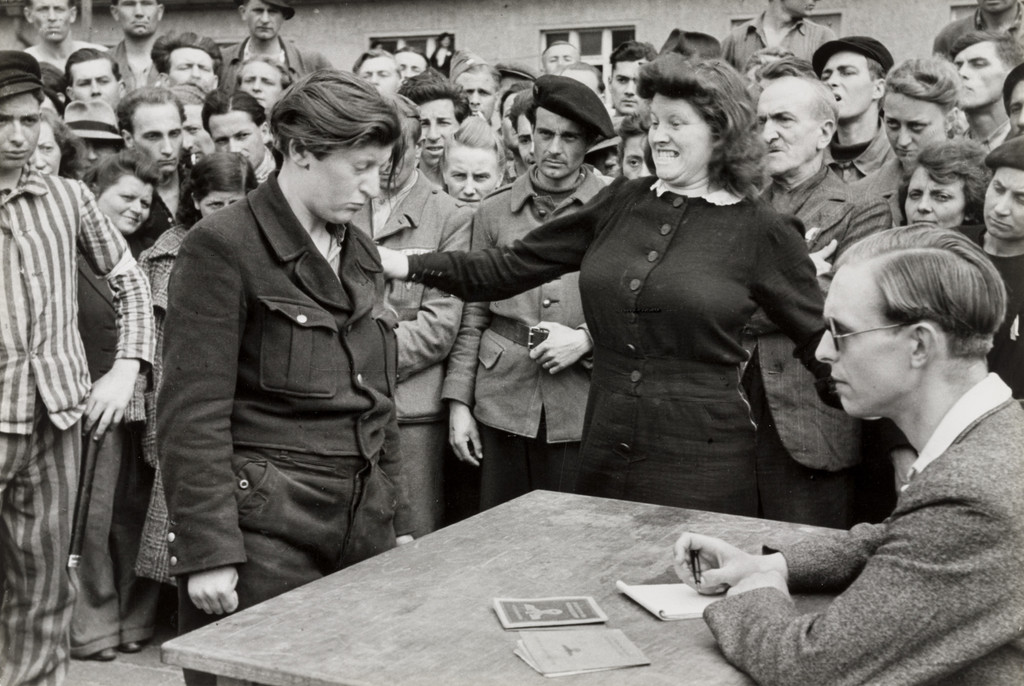
Dessau, Germany
¿Puedo verla?
No expuesta por ahora
¿Dónde está «Dessau, Germany» hoy? Colección: MoMA, Nueva York. No expuesta por ahora. Comprobado 6 de octubre de 2026.

Nueva York, Estados Unidos
Pertenece a la colección, pero ahora mismo no está expuesta.
- Comprobado
- Fuente
- El museo
Ficha
- Número de inventario
- 513.2009
En el catálogo
Fuentes
- MoMA
- Imagen: MoMA — © the artist or rights holder
En la vida de Henri Cartier-Bresson
La vida enterac. 1943
The third escape succeeds: a farm in Touraine
He twice tried to escape the camp and failed, and was punished with solitary confinement; the third attempt succeeded — he hid on a farm in Touraine and obtained false papers that let him travel in France.
1943–1944
In the underground: helping escapees and photographing the occupation
In France he worked for the underground, helping other escapees and secretly working with other photographers to cover the occupation and then the liberation of France.
1944
The liberation of Paris and portraits of Matisse and Camus
In 1944 he photographed the liberation of Paris and made portraits of Henri Matisse, Albert Camus, and Irène and Frédéric Joliot-Curie.
1944–1945
The film “Le Retour” on returning prisoners
At the end of the war the American Office of War Information asked him to make a documentary, “Le Retour” (“The Return”), about returning French prisoners and displaced persons.
early 1947
Magnum Photos is founded
In early 1947, with Robert Capa, David Seymour, William Vandivert and George Rodger, he founded Magnum — a cooperative picture agency owned by its members; he was assigned India and China, and later also travelled to Pakistan, Burma, Indonesia, Mexico, Japan, Cuba, Canada and the USSR.
1947
The MoMA retrospective and his first book
His film spurred a retrospective at the Museum of Modern Art, which opened in 1947 and later toured the country; it was accompanied by his first book, “The Photographs of Henri Cartier-Bresson”, with texts by Lincoln Kirstein and Beaumont Newhall.