ART WIKI32.963 en sala
MapaColecciónArtistasMuseosExposicionesRevista
Acceder

ART WIKI

Dónde cuelga la obra maestra y cuándo le dejan pasar.

Colecciones: Galería Nacional de Arte, Galería Nacional de Dinamarca, Galería Nacional de Retratos, Galería Tretiakov, Harvard Art Museums, Instituto de Arte de Chicago, Instituto de Artes de Mineápolis, MoMA, Museo de Arte de Cleveland, Museo de Victoria y Alberto, Museo del Hermitage, Museo del Louvre, Museo Estatal Ruso, Museo Hirshhorn y Jardín de Esculturas, Museo J. Paul Getty, Museo Metropolitano de Arte, Museo Pushkin, Museo Smithsoniano de Arte Americano, Museo Whitney de Arte Estadounidense, National Museum of Asian Art, Rijksmuseum, Villa Getty, Catálogo Estatal del Fondo Museístico de Rusia (274 museos), Europeana (19 museos), Wikidata (6 museos), Paris Musées (12 museos) y Joconde, la base de museos del Ministerio de Cultura de Francia (495 museos). Las imágenes pertenecen a sus titulares de derechos.

Secciones

  • Mapa
  • Búsqueda
  • Colección
  • Obras maestras
  • Expuestas ahora
  • Artistas

Más

  • Museos y galerías
  • Exposiciones
  • Revista
  • De dónde salen los datos
  • Privacidad y cookies
InicioMapaCatálogo
  1. Colección/
  2. Museo Metropolitano de Arte/
  3. Cupid and Psyche
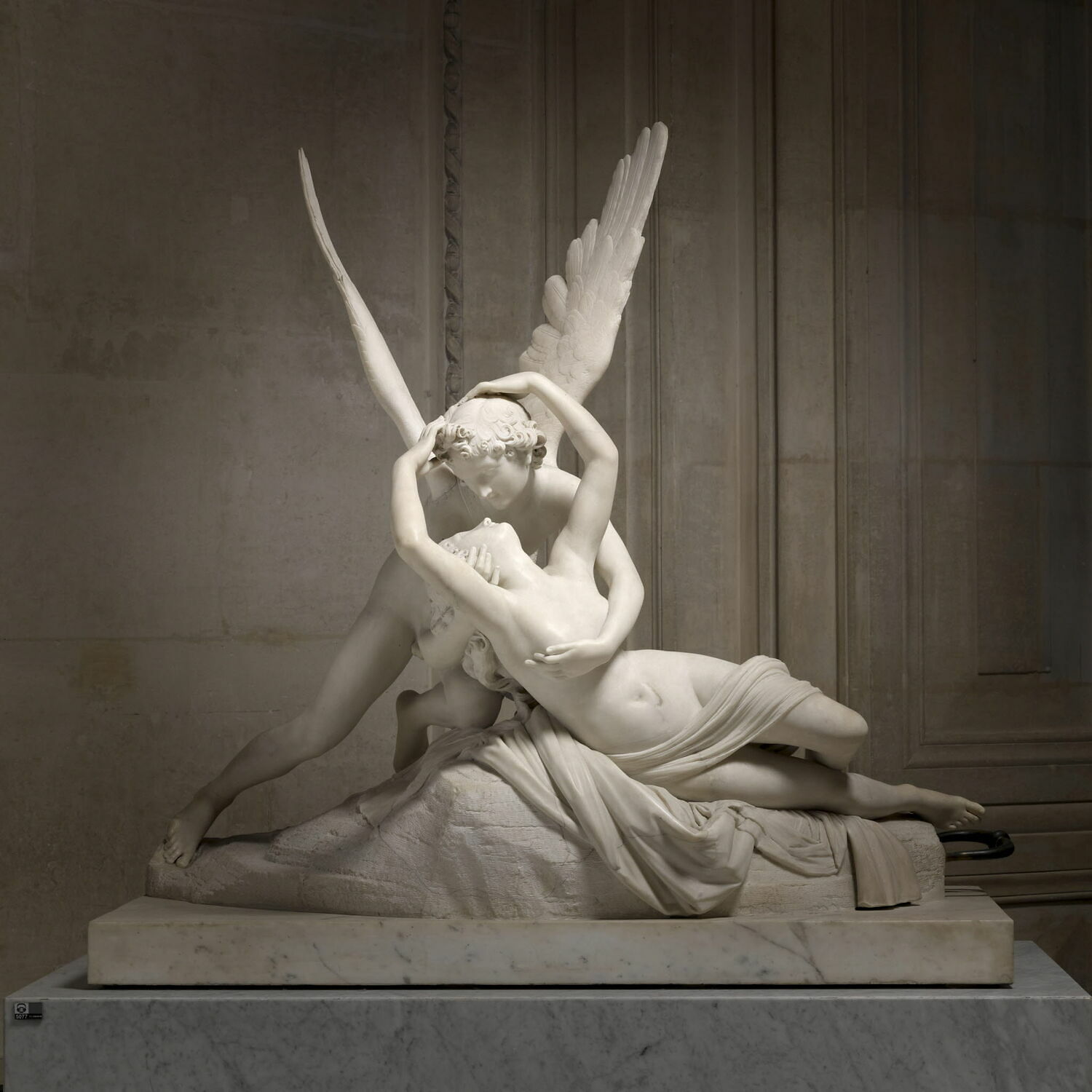
Cupid and Psyche, Antonio Canova, 1794
Antonio Canova, retratoAntonio CanovaItalia, 1757–1822

Cupid and Psyche

1794 · Sculpture

Ficha

1794 · a los 37 años
17571822
Número de inventario
05.46

Mientras tanto, en la vida de Antonio Canova

La vida entera
  1. 1775–1800

    Shows his statues by candlelight

    In the last quarter of the eighteenth century it became fashionable to view galleries at night by torchlight, and Canova seized on the fad: he displayed his works in his studio by candlelight and finished the statues by candlelight with special tools, softening the transitions between the parts of the nude. He then rubbed the marble with pumice, sometimes for weeks or months, and if need be with tripoli and lead.

  2. 1790–1795

    The monument to Titian is never built

    In 1790 he began work on a pyramid-shaped tomb for Titian in the church of the Frari, but by 1795 the project was abandoned for lack of funds. Canova reused the idea for the tomb of Archduchess Maria Christina in the Augustinian church in Vienna.

  3. 1790s

    Declines Catherine the Great’s invitation

    News of Canova’s work reached Russia, and Empress Catherine II tried to summon the sculptor to her court; he politely declined the honourable invitation and, in thanks, made a second version of “Cupid and Psyche”, now in the Hermitage in St Petersburg.

  4. 1791–1818

    Honorary member of many academies in Europe and America

    Canova was elected an honorary member of many academies: Florence (1791), Stockholm (1796), Verona (1803), Venice (1804), Siena (1805), Lucca (1806), St Petersburg (1804), Geneva (1804), Denmark (1805), Graz (1812), Marseille (1813), Monaco (1814), New York (1817), Antwerp and Vilnius (1818), and also Philadelphia.

  5. May 1792

Más obras de Antonio Canova

Todas las obras

En la misma sala · Gallery 627, Museo Metropolitano de Arte

Página del museo

Sobre el mismo tema · Male Nudes

Todas las obras sobre el tema

Returns to Possagno to recover his health

Strenuous work had weakened his health, and in May 1792 Canova decided to visit his family in Possagno; on his way back to Rome he stopped in Padua, Vicenza, Verona, Mantua, Parma, Modena and Bologna, winning general acclaim in every one of them.

  • 1794

    Makes an exception: restores sculptures for Zulian

    Canova disliked restoring ancient statues, but in 1794 he made an exception for his friend and early patron Zulian, restoring several sculptures that Zulian had moved from Rome to Venice.

  • ¿Se puede contemplar?

    Sí, recibe visitas

    Museo Metropolitano de Arte

    Nueva York, Estados Unidos

    Sala627

    Expuesta al público. Quién lo avala figura más abajo.

    Comprobado
    hace 3 días
    En este estado desde
    27 sept 2026
    Fuente
    El museo
    En el mapaPágina del museo

    Lo que muestra

    Male NudesCupidPsyche

    En el catálogo

    EsculturaYesoNeoclasicismoSiglo XVIII

    Fuentes

    • Museo Metropolitano de Arte
    • Imagen: Museo Metropolitano de Arte — Open Access (CC0)
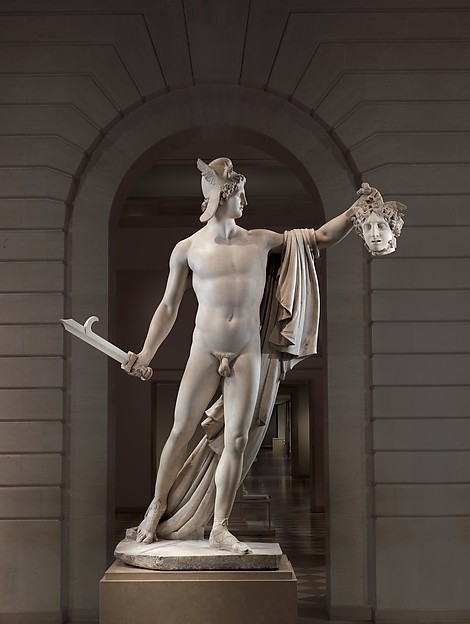
    Perseus with the Head of Medusa, Antonio Canova, 1804–6

    Perseus with the Head of Medusa

    1804–6 · Museo Metropolitano de Arte

    L'Amour et Psyché à demi couchée, Canova, Antonio, 1787 - 1793

    Psique reanimada por el beso del amor

    1787 - 1793 · Museo del Louvre

    Winged Victory, Antonio Canova, after the Antique, c. 1803/1806

    Winged Victory

    c. 1803/1806 · Galería Nacional de Arte

    Dancer with Finger on Chin, Antonio Canova, model 1809/1814, carved 1819/1823

    Dancer with Finger on Chin

    model 1809/1814, carved 1819/1823 · Galería Nacional de Arte

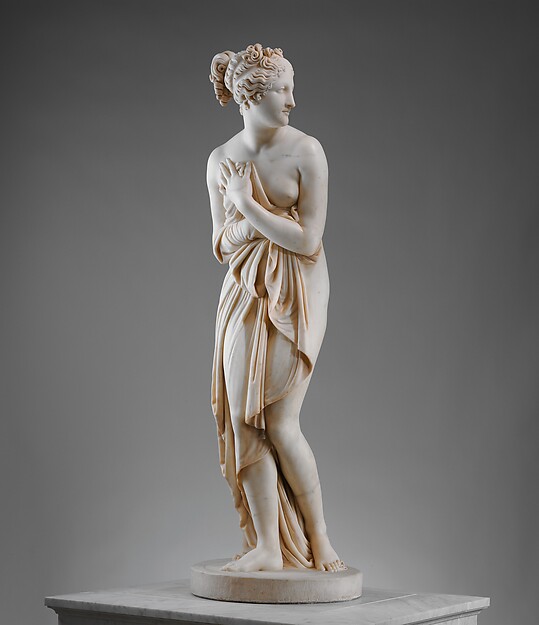
    Venus Italica, Antonio Canova, probably ca. 1822–23, variant of marble first executed 1810

    Venus Italica

    probably ca. 1822–23, variant of marble first executed 1810 · Museo Metropolitano de Arte

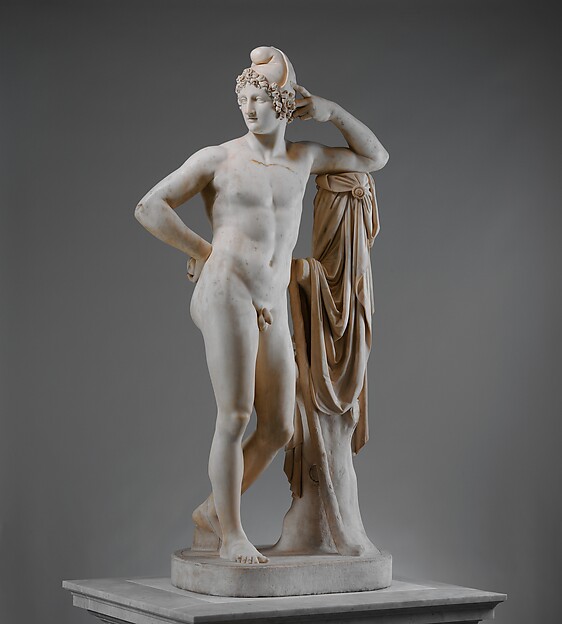
    Paris, Antonio Canova, ca. 1822–23, original marble version completed November 1812

    Paris

    ca. 1822–23, original marble version completed November 1812 · Museo Metropolitano de Arte

    Naiad, Antonio Canova, model 1815/1817, carved 1820/1823

    Naiad

    model 1815/1817, carved 1820/1823 · Galería Nacional de Arte

    Venus, after Antonio Canova, model 1817/1820, carved c. 1822/1823

    Venus

    model 1817/1820, carved c. 1822/1823 · Galería Nacional de Arte

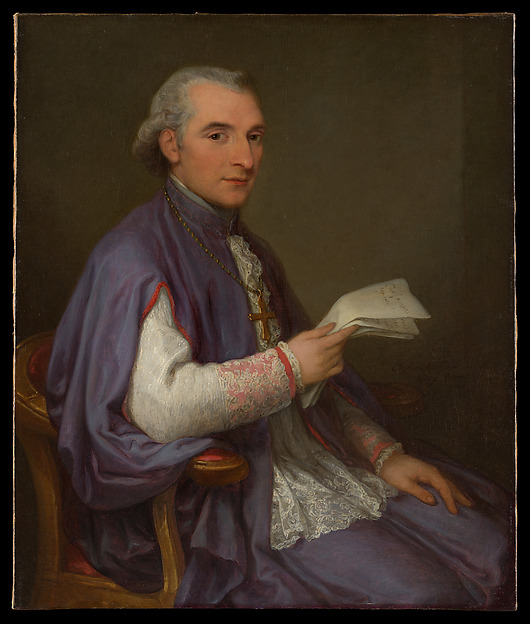
    Monsignor Giuseppe Spina (1756–1828), Angelica Kauffmann, 1798

    Angelica Kauffmann

    Monsignor Giuseppe Spina (1756–1828), 1798

    The Sorrow of Telemachus, Angelica Kauffmann, 1783

    Angelica Kauffmann

    The Sorrow of Telemachus, 1783

    Telemachus and the Nymphs of Calypso, Angelica Kauffmann, 1782

    Angelica Kauffmann

    Telemachus and the Nymphs of Calypso, 1782

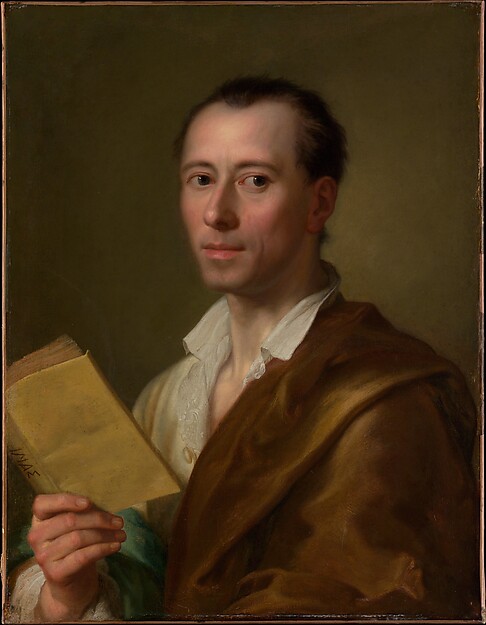
    Johann Joachim Winckelmann (1717–1768), Anton Raphael Mengs, ca. 1777

    Anton Raphael Mengs

    Johann Joachim Winckelmann (1717–1768), ca. 1777

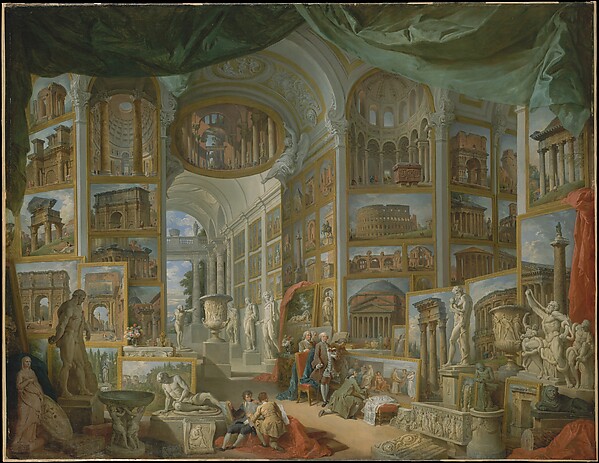
    Ancient Rome, Giovanni Paolo Panini, 1757

    Giovanni Paolo Panini

    Ancient Rome, 1757

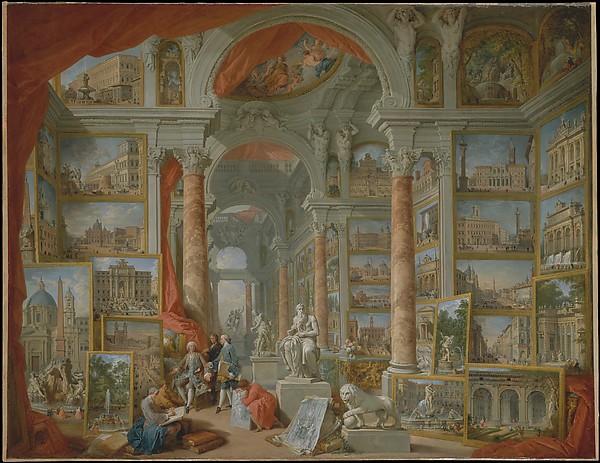
    Modern Rome, Giovanni Paolo Panini, 1757

    Giovanni Paolo Panini

    Modern Rome, 1757

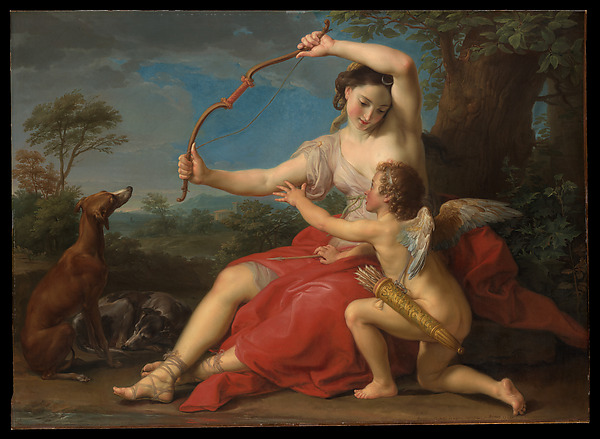
    Diana and Cupid, Pompeo Batoni, 1761

    Pompeo Batoni

    Diana and Cupid, 1761

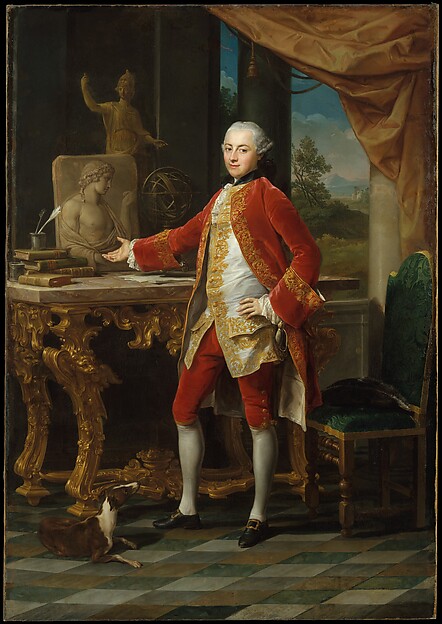
    Portrait of a Young Man, Pompeo Batoni, ca. 1760–65

    Pompeo Batoni

    Portrait of a Young Man, ca. 1760–65

    Adam, Auguste Rodin, modeled 1880 or 1881, cast 1910

    Auguste Rodin

    Adam, modeled 1880 or 1881, cast 1910

    Museo Metropolitano de Arte

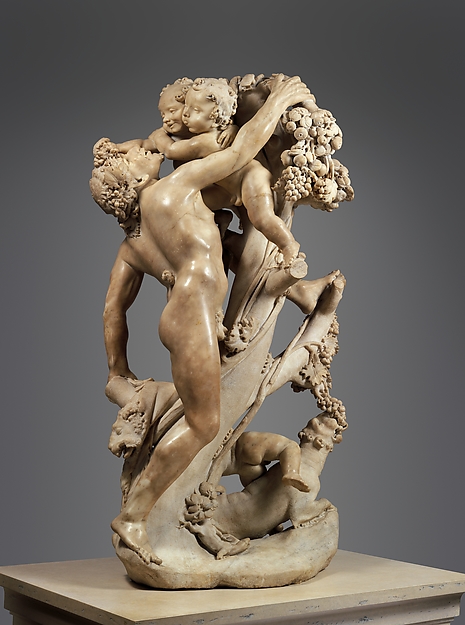
    Bacchanal: A Faun Teased by Children, Gian Lorenzo Bernini, ca. 1616–17

    Gian Lorenzo Bernini

    Fauno entretenido por cupidos, ca. 1616–17

    Museo Metropolitano de Arte

    Perseus with the Head of Medusa, Antonio Canova, 1804–6

    Antonio Canova

    Perseus with the Head of Medusa, 1804–6

    Museo Metropolitano de Arte

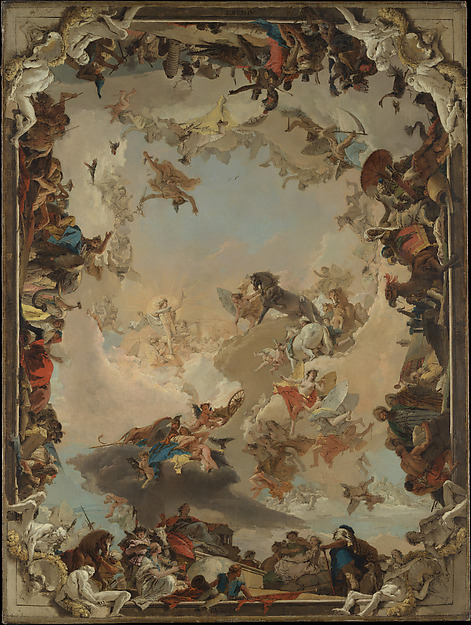
    Allegory of the Planets and Continents, Giovanni Battista Tiepolo, 1752

    Giovanni Battista Tiepolo

    Allegory of the Planets and Continents, 1752

    Museo Metropolitano de Arte

    Fragments of a marble statue of the Diadoumenos (youth tying a fillet around his head), Polykleitos, ca. 69–96 CE

    Polykleitos

    Fragments of a marble statue of the Diadoumenos (youth tying a fillet around his head), ca. 69–96 CE

    Museo Metropolitano de Arte

    The Feast of Acheloüs, Peter Paul Rubens, ca. 1615

    Peter Paul Rubens

    The Feast of Acheloüs, ca. 1615

    Museo Metropolitano de Arte

    Torso, Auguste Rodin, modeled ca. 1877–78, cast 1979

    Auguste Rodin

    Torso, modeled ca. 1877–78, cast 1979

    Museo Metropolitano de Arte

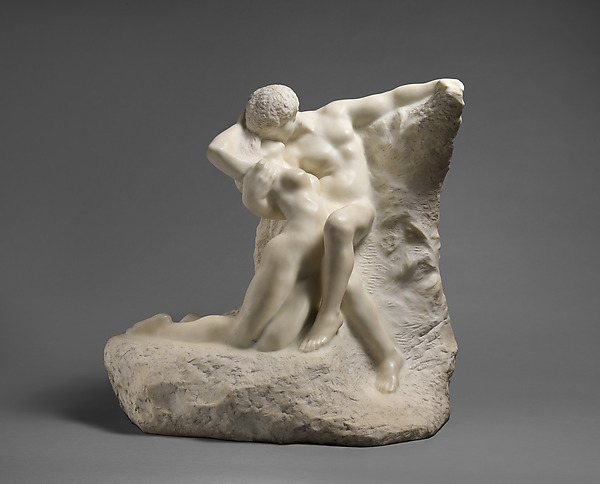
    Eternal Spring, Auguste Rodin, modeled ca. 1881, carved 1907

    Auguste Rodin

    Eternal Spring, modeled ca. 1881, carved 1907

    Museo Metropolitano de Arte