ART WIKI32.963 en sala
MapaColecciónArtistasMuseosExposicionesRevista
Acceder

ART WIKI

Dónde cuelga la obra maestra y cuándo le dejan pasar.

Colecciones: Galería Nacional de Arte, Galería Nacional de Dinamarca, Galería Nacional de Retratos, Galería Tretiakov, Harvard Art Museums, Instituto de Arte de Chicago, Instituto de Artes de Mineápolis, MoMA, Museo de Arte de Cleveland, Museo de Victoria y Alberto, Museo del Hermitage, Museo del Louvre, Museo Estatal Ruso, Museo Hirshhorn y Jardín de Esculturas, Museo J. Paul Getty, Museo Metropolitano de Arte, Museo Pushkin, Museo Smithsoniano de Arte Americano, Museo Whitney de Arte Estadounidense, National Museum of Asian Art, Rijksmuseum, Villa Getty, Catálogo Estatal del Fondo Museístico de Rusia (274 museos), Europeana (19 museos), Wikidata (6 museos), Paris Musées (12 museos) y Joconde, la base de museos del Ministerio de Cultura de Francia (495 museos). Las imágenes pertenecen a sus titulares de derechos.

Secciones

  • Mapa
  • Búsqueda
  • Colección
  • Obras maestras
  • Expuestas ahora
  • Artistas

Más

  • Museos y galerías
  • Exposiciones
  • Revista
  • De dónde salen los datos
  • Privacidad y cookies
InicioMapaCatálogo
  1. Colección/
  2. Museo Metropolitano de Arte/
  3. La parada del circo
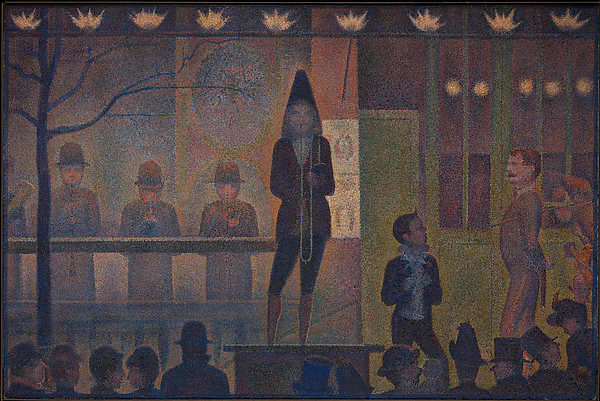
La parada del circo, Georges Seurat, 1887–88

La parada del circo

Circus Sideshow (Parade de cirque)

1887–88 · Painting

Sobre el cuadro

Parade de cirque (English: Circus Sideshow) is an 1887–88 Neo-Impressionist painting by Georges Seurat. It was first exhibited at the 1888 Salon de la Société des Artistes Indépendants (titled Parade de cirque, cat. no. 614) in Paris, where it became one of Seurat's least admired works. Parade de cirque represents the sideshow (or parade) of the Circus Corvi at place de la Nation, and was his first depiction of a nocturnal scene, and first painting of popular entertainment. Seurat worked on the theme for nearly six years before completing the final painting.

Art historian Alfred H. Barr Jr. described Parade de cirque as one of Seurat's most important paintings, its 'formality' and 'symmetry' as highly innovative, and placed it as "the most geometric in design as well as the most mysterious in sentiment" of Seurat's major canvases.

Seguir leyendo

Circus Sideshow influenced the Fauves, Cubists, Futurists and Orphists. It is located at the Metropolitan Museum of Art in New York (Bequest of Stephen C. Clark, 1960, accession number: 61.101.17, Gallery 826).

Wikipedia · CC BY-SA

Ficha

Mientras tanto, en la vida de Georges Seurat

La vida entera
  1. 1880s

    Charles Henry's lectures at the Sorbonne

    In the 1880s Seurat hears lectures by the mathematician Charles Henry at the Sorbonne on the emotional properties and symbolic meaning of lines and colour; there remains controversy over how far he adopted Henry's ideas.

  2. 1880s

    The colour theorists: Chevreul, Rood, Blanc

    Seurat finds the idea of separate strokes of pure colour that blend optically in the viewer's eye in “Modern Chromatics” (1879) by the American physicist Ogden Rood and in the chemist Michel Eugène Chevreul's work on the law of simultaneous contrast of colours; according to his friends, his bedside book is Charles Blanc's “Grammaire des arts du dessin” (1867).

  3. 1886

    Nine works, the public's mockery and the critics' defence

    At the last Impressionist exhibition Seurat presents nine works; the critics R. Marx and Félix Fénéon write favourable reviews, but the public ridicules the “pictures painted in dots”, and the Swiss critic Émile Hennequin finds them grey and poor in light. The Impressionists are sceptical: when Pissarro says that “La Grande Jatte” is very interesting, Degas replies that he would have noticed, but it is so large; Seurat himself blames the hall for being too dark and cramped to give the picture the necessary distance.

  4. 15 May – 15 June 1886

    “La Grande Jatte” is first shown at the eighth Impressionist exhibition

    “A Sunday Afternoon on the Island of La Grande Jatte” is shown to the public for the first time at the eighth Impressionist exhibition, held from 15 May to 15 June 1886. The painting will initiate Neo-Impressionism and alter the direction of modern art.

Más obras de Georges Seurat

Todas las obras

En la misma sala · Gallery 825, Museo Metropolitano de Arte

Página del museo

Sobre el mismo tema · Musical Instruments

Todas las obras sobre el tema
1887–88 · a los 28 años
18591891
Número de inventario
61.101.17

Fuentes

  • Museo Metropolitano de Arte
  • Imagen: Museo Metropolitano de Arte — Open Access (CC0)
  • 19 September 1886

    Fénéon names “Neo-Impressionism” and defends Seurat

    Félix Fénéon, who gives the new movement the name “Neo-Impressionism”, defends the artist in an article for the Belgian paper “L'Art Moderne” of 19 September 1886: here, he argues, no virtuosity of brushwork or impasto is needed, but the eye must be quick, sharp and perceptive.

  • 1889

    Madeleine Knobloch moves into Seurat's studio

    Seurat conceals his relationship with the artist's model Madeleine Knobloch (1868–1903); in 1889 she moves in with him in his studio on the seventh floor of 128 bis boulevard de Clichy.

  • Georges Seurat, retratoGeorges SeuratFrancia, 1859–1891

    ¿Se puede contemplar?

    Sí, recibe visitas

    Museo Metropolitano de Arte

    Nueva York, Estados Unidos

    Sala825

    Expuesta al público. Quién lo avala figura más abajo.

    Comprobado
    hace 3 días
    En este estado desde
    26 sept 2026
    Fuente
    El museo
    En el mapaPágina del museo
    A Sunday on La Grande Jatte — 1884, Georges Seurat, 1884–86, border added 1888–89

    Tarde de domingo en la isla de la Grande Jatte

    1884–86, border added 1888–89 · Instituto de Arte de Chicago

    Study for "A Sunday on La Grande Jatte", Georges Seurat, 1884

    Study for "A Sunday on La Grande Jatte"

    1884 · Museo Metropolitano de Arte

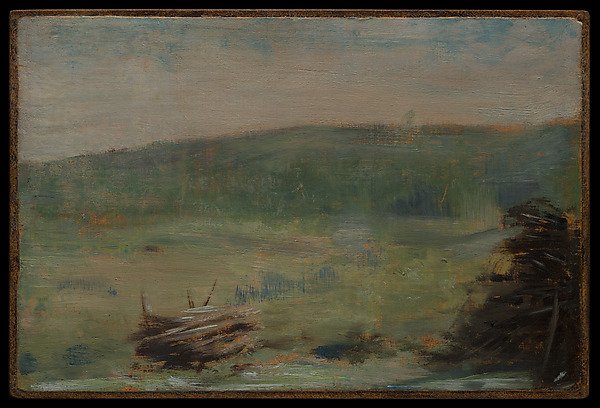
    Landscape at Saint-Ouen, Georges Seurat, 1878 or 1879

    Landscape at Saint-Ouen

    1878 or 1879 · Museo Metropolitano de Arte

    The Forest at Pontaubert, Georges Seurat, 1881

    The Forest at Pontaubert

    1881 · Museo Metropolitano de Arte

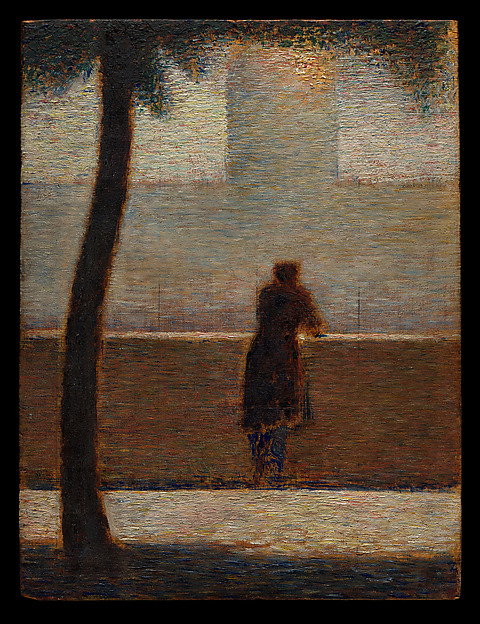
    A Man Leaning on a Parapet, Georges Seurat, ca. 1881

    A Man Leaning on a Parapet

    ca. 1881 · Museo Metropolitano de Arte

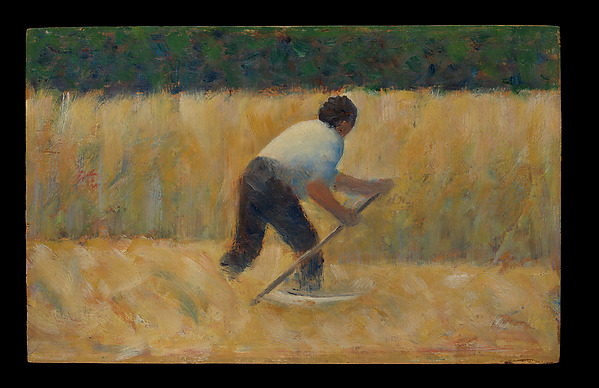
    The Mower, Georges Seurat, 1881–82

    The Mower

    1881–82 · Museo Metropolitano de Arte

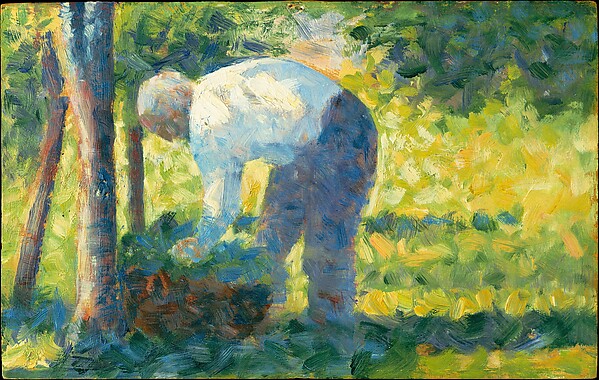
    The Gardener, Georges Seurat, 1882–83

    The Gardener

    1882–83 · Museo Metropolitano de Arte

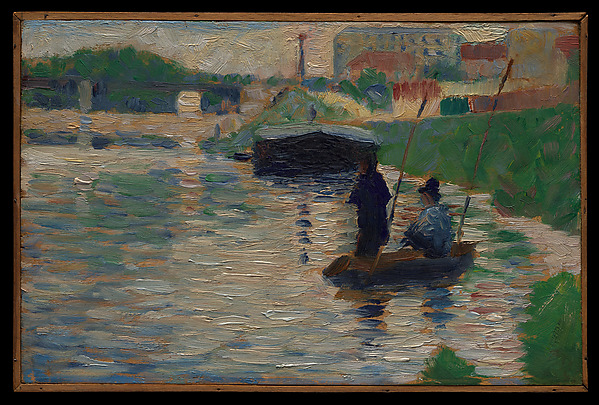
    View of the Seine, Georges Seurat, 1882–83

    View of the Seine

    1882–83 · Museo Metropolitano de Arte

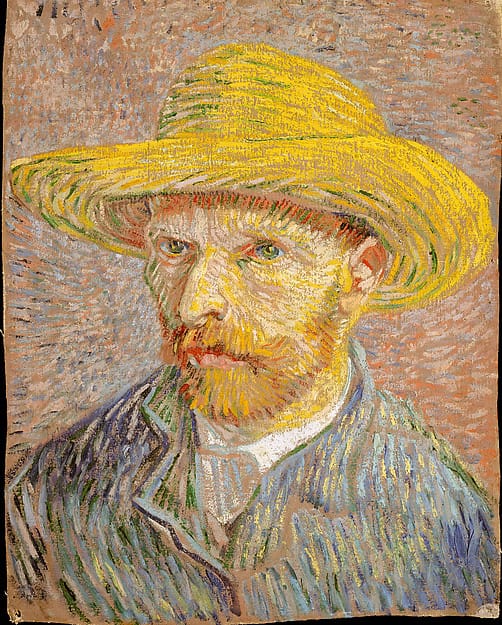
    Self-Portrait with a Straw Hat (obverse: The Potato Peeler), Vincent van Gogh, 1887

    Vincent van Gogh

    Self-Portrait with a Straw Hat (obverse: The Potato Peeler), 1887

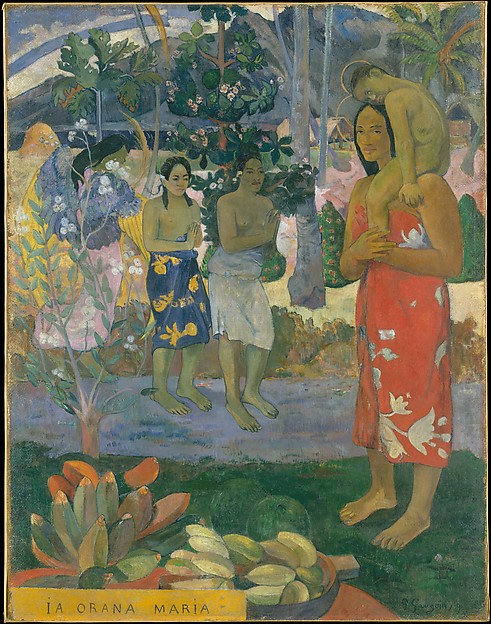
    Ia Orana Maria (Hail Mary), Paul Gauguin, 1891

    Paul Gauguin

    Ia Orana Maria (Hail Mary), 1891

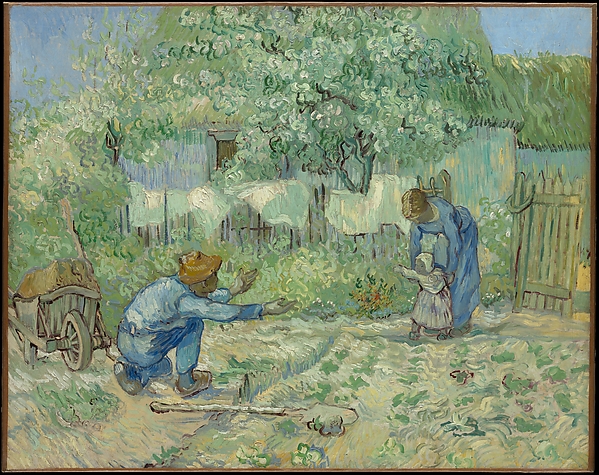
    First Steps, after Millet, Vincent van Gogh, 1890

    Vincent van Gogh

    First Steps, after Millet, 1890

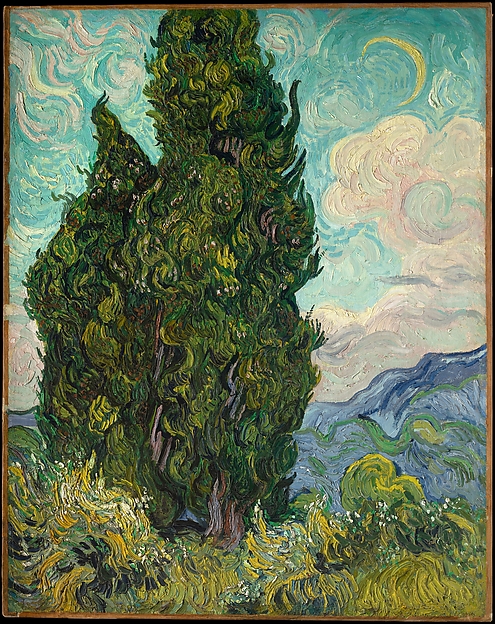
    Cypresses, Vincent van Gogh, 1889

    Vincent van Gogh

    Cypresses, 1889

    Oleanders, Vincent van Gogh, 1888

    Vincent van Gogh

    Oleanders, 1888

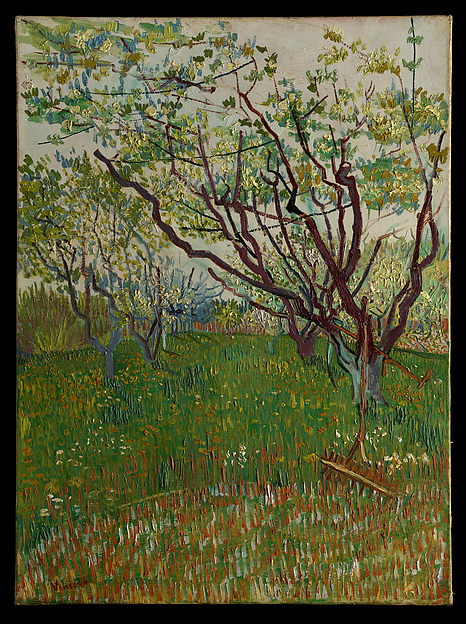
    The Flowering Orchard, Vincent van Gogh, 1888

    Vincent van Gogh

    The Flowering Orchard, 1888

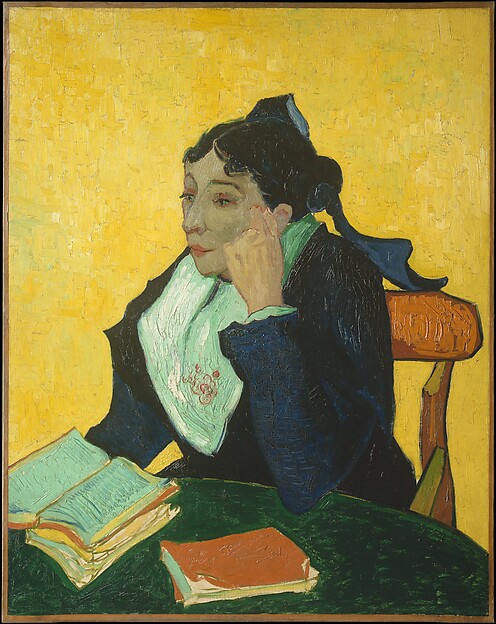
    L'Arlésienne: Madame Joseph-Michel Ginoux (Marie Julien, 1848–1911), Vincent van Gogh, 1888–89

    Vincent van Gogh

    L'Arlésienne: Madame Joseph-Michel Ginoux (Marie Julien, 1848–1911), 1888–89

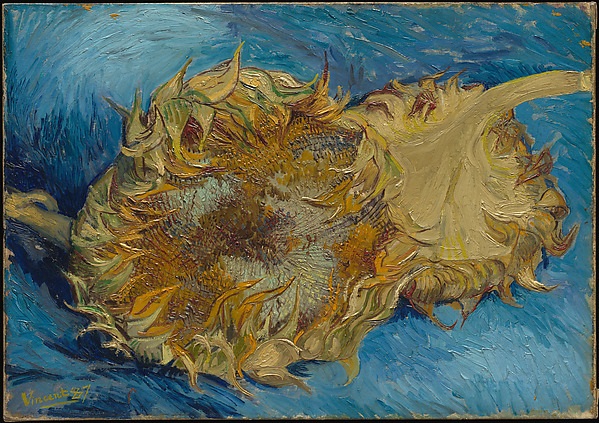
    Sunflowers, Vincent van Gogh, 1887

    Vincent van Gogh

    Sunflowers, 1887

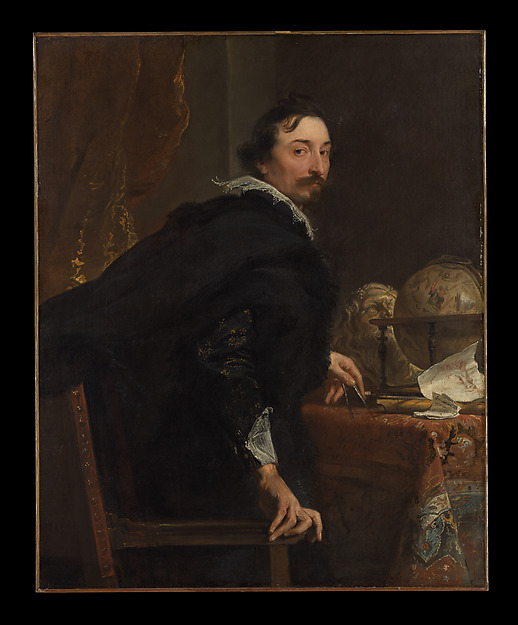
    Lucas van Uffel (died 1637), Anthony van Dyck, ca. 1622

    Anthony van Dyck

    Lucas van Uffel (died 1637), ca. 1622

    Museo Metropolitano de Arte

    The Old Guitarist, Pablo Picasso, late 1903–early 1904

    Pablo Picasso

    El viejo guitarrista ciego, late 1903–early 1904

    No expuesta · Instituto de Arte de Chicago

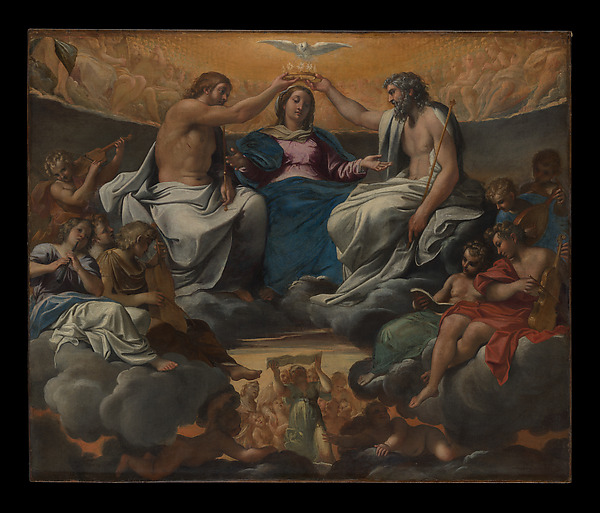
    The Coronation of the Virgin, Annibale Carracci, after 1595

    Annibale Carracci

    The Coronation of the Virgin, after 1595

    Museo Metropolitano de Arte

    Job and His Family Restored to Prosperity, William Blake, 1825

    William Blake

    Job and His Family Restored to Prosperity, 1825

    No expuesta · Galería Nacional de Arte

    Job and His Wife Restored to Prosperity, William Blake, 1825

    William Blake

    Job and His Wife Restored to Prosperity, 1825

    No expuesta · Galería Nacional de Arte

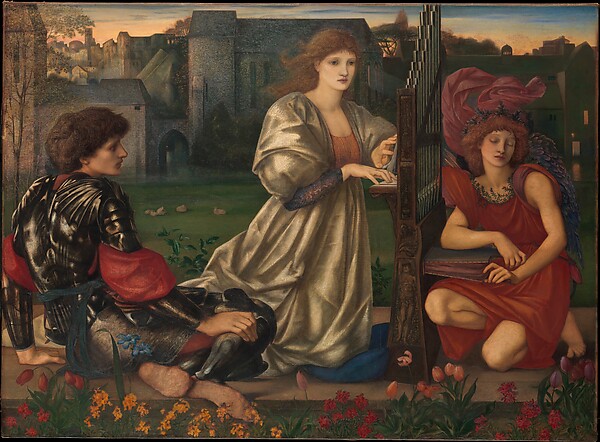
    The Love Song, Sir Edward Burne-Jones, 1868–77

    Edward Burne-Jones

    The Love Song, 1868–77

    Museo Metropolitano de Arte

    Paardenstaart-haar, Katsushika Hokusai, 1822

    Katsushika Hokusai

    Paardenstaart-haar, 1822

    Rijksmuseum

    Dancers in the Rehearsal Room with a Double Bass, Edgar Degas, ca. 1882–85

    Edgar Degas

    Dancers in the Rehearsal Room with a Double Bass, ca. 1882–85

    Museo Metropolitano de Arte

    Lo que muestra

    Musical InstrumentsVarónMujerCircusMusicians

    En el catálogo

    PinturaÓleoPintura francesaImpresionismoSiglo XIX