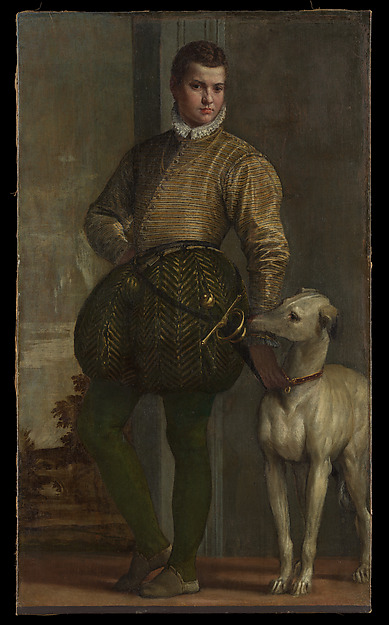
 Paolo VeroneseItalia, 1528–1588
Boy with a Greyhound
¿Se puede contemplar?
Sí, recibe visitas

Nueva York, Estados Unidos
Expuesta al público.
- Comprobado
- En este estado desde
- Fuente
- El museo
Ficha
- Número de inventario
- 29.100.105
Lo que muestra
En el catálogo
Fuentes
- Museo Metropolitano de Arte
- Imagen: Museo Metropolitano de Arte — Open Access (CC0)
Mientras tanto, en la vida de Paolo Veronese
La vida entera1568
Vasari includes Veronese in his “Lives”
The second edition of Giorgio Vasari's “Lives of the Most Excellent Painters, Sculptors, and Architects” (1568), with improved coverage of the Venetian school, included a biography of Paolo Veronese.
7 de septiembre de 1568
Son born: Gabriele Caliari
1570
Son born: Carlo Caliari
18 July 1573
Summoned before the Holy Inquisition over the “Last Supper”
On 18 July 1573 Veronese was summoned before the Venetian Inquisition, which objected to figures, animals and indecorum unsuited to a Last Supper in his canvas. He answered that painters take the same liberties as poets and madmen; the tribunal ordered him to repaint the picture, but he refused, and in the end it was merely re-titled the “Feast in the House of Levi”.
1576
Commissions from Emperor Rudolf II
From 1576 Veronese worked on commissions from the Emperor Rudolf II of Habsburg; in this way the Venetian painter also influenced the “Rudolfine” artists of the Prague court.
after 1580
The family workshop increasingly works without his hand
Veronese headed a family workshop: his brother Benedetto, his sons Carlo and Gabriele, and his nephew Luigi Benfatto. According to Nicholas Penny, the workshop's role grew steadily, and after 1580 it is rare that one can be confident that Veronese was the sole hand involved.