Edvard MunchNoruega, 1863–1944
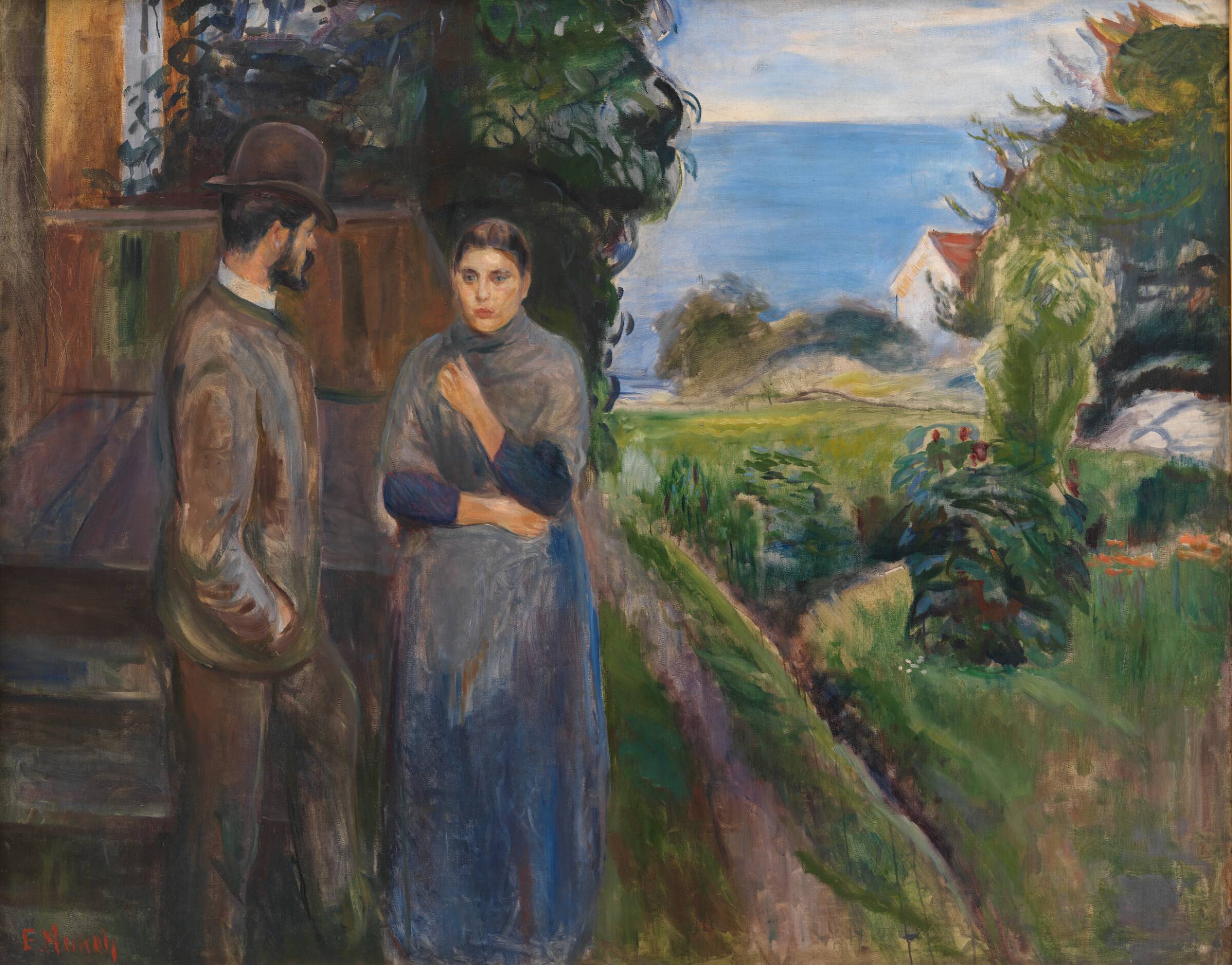
Beach Landscape
¿Puedo verla?
Se desconoce
¿Dónde está «Beach Landscape» hoy? Colección: Museo Wallraf-Richartz, Colonia. Se desconoce si hoy está expuesta.
Colonia, Alemania
Se conoce el propietario; no se sabe si hoy está expuesta.
- En este estado desde
- Fuente
- El museo
Ficha
- Número de inventario
- Dep. 0718 FC
En el catálogo
Fuentes
- Wikidata
- Imagen: Museo Wallraf-Richartz — Edvard Munch · Public domain · Wikimedia Commons
En la vida de Edvard Munch
La vida entera1880
Decision to Become an Artist
He left the technical college he had entered in 1879 and decided to become an artist, against his father's displeasure. The young man was supported by his aunt Karen and the painter Frits Thaulow.
1881
Mentor Christian Krohg and the Bohemian Circle
At the Royal School of Drawing Munch's mentor was the naturalist Christian Krohg, who introduced him to the circle of the capital's bohemians led by the anarchist writer Hans Jæger, whose influence the artist later acknowledged.
1883
Public Debut
He showed the painting "Study of a Head" at the exhibition of industrial goods and works of art in the Palace Park; in the autumn he presented "Girl Kindling a Stove" at the Autumn Exhibition.
1886
Scandal over "The Sick Child"
"The Sick Child," based on memories of his sister Sophie's death, caused a scandal at the Autumn Exhibition: critics called it "a miscarriage" and "a barely daubed sketch." Munch himself considered it his first "soul painting."
1889
First Solo Exhibition
He held his first solo exhibition of nearly all his works; the recognition brought him a two-year state scholarship to study in Paris under Léon Bonnat.
1889
Death of His Father and the Saint-Cloud Manifesto
News of his father's death after a stroke was a heavy blow: Munch fell into depression and withdrew into himself. His rethinking of life resulted in the "Saint-Cloud Manifesto" and the painting "Night in Saint-Cloud."