ART WIKI33.040 en sala
MapaColecciónArtistasMuseosExposicionesRevista
Acceder

ART WIKI

Dónde cuelga la obra maestra y cuándo le dejan pasar.

Colecciones: Galería Nacional de Arte, Galería Nacional de Dinamarca, Galería Nacional de Retratos, Galería Tretiakov, Harvard Art Museums, Instituto de Arte de Chicago, Instituto de Artes de Mineápolis, MoMA, Museo de Arte de Cleveland, Museo de Victoria y Alberto, Museo del Hermitage, Museo del Louvre, Museo Estatal Ruso, Museo Hirshhorn y Jardín de Esculturas, Museo J. Paul Getty, Museo Metropolitano de Arte, Museo Pushkin, Museo Smithsoniano de Arte Americano, Museo Whitney de Arte Estadounidense, National Museum of Asian Art, Rijksmuseum, Villa Getty, Catálogo Estatal del Fondo Museístico de Rusia (274 museos), Europeana (19 museos), Wikidata (6 museos), Paris Musées (12 museos) y Joconde, la base de museos del Ministerio de Cultura de Francia (495 museos). Las imágenes pertenecen a sus titulares de derechos.

Secciones

  • Mapa
  • Búsqueda
  • Colección
  • Obras maestras
  • Expuestas ahora
  • Artistas

Más

  • Museos y galerías
  • Exposiciones
  • Revista
  • De dónde salen los datos
  • Privacidad y cookies
InicioMapaCatálogo
  1. Colección/
  2. Museo Metropolitano de Arte/
  3. Bashi-Bazouk
Bashi-Bazouk, Jean-Léon Gérôme, 1868–69
Jean-Léon Gérôme, retratoJean-Léon GérômeFrancia, 1824–1904

Bashi-Bazouk

1868–69 · Painting

Sobre el cuadro

Bashi-Bazouk (possibly titled Bachi-Bouzouk nègre) is an oil on canvas painting by French artist Jean-Léon Gérôme, from 1869. It depicts a Bashi-bazouk, who was an irregular soldier of the Ottoman Empire. The painting is on display at the Metropolitan Museum of Art, in New York.

Wikipedia · CC BY-SA

Ficha

1868–69
18241904
Número de inventario
2008.547.1

Mientras tanto, en la vida de Jean-Léon Gérôme

La vida entera
  1. 1864–1904

    The studio everyone wanted to join

    Places in Gérôme’s atelier were limited and keenly sought: only the best students were admitted. Students progressed from drawing after antique works and casts to drawing from the live model and only then were allowed to paint in oils; he attended every Wednesday and Saturday and was known as a severe critic, but helped his students outside the school too, inviting them to his own studio and recommending them to the Salon.

  2. 1867

    The World’s Fair: twelve canvases and “The Death of Caesar”

    At the 1867 World’s Fair Gérôme showed twelve canvases in the French pavilion; “The Death of Caesar” stood out, once again drawing immoderate praise from Gautier. That same year he was promoted to officer of the Legion of Honour.

  3. 1868

    “The Execution of Marshal Ney”: asked to withdraw the picture

    “The Execution of Marshal Ney” at the Salon of 1868 prompted Ney’s descendants to ask Gérôme to withdraw it, but he refused. Opinion was sharply split, and this Salon marked the beginning of a lasting divide between Gérôme and many French critics, who accused him of relying on literary devices, of commercialising art and of bringing politics into it.

  4. 1 January 1868

    Leaves for the Near East with eight friends

    On 1 January 1868 Gérôme left his students in the care of Gustave Boulanger and set off for the Near East with eight fellow artists and writers. In Cairo he was received by the Khedive Ismail Pasha, then visited Giza and the Faiyum oasis.

Más obras de Jean-Léon Gérôme

Todas las obras

En la misma sala · Gallery 804, Museo Metropolitano de Arte

Página del museo

Sobre el mismo tema · Varón

Todas las obras sobre el tema

1870–1871

The war: refuge in England

For the duration of the Franco-Prussian War Gérôme took refuge in England with his family but could hardly work: his catalogues list only “Pifferari”, showing street musicians in London. He returned to Paris in June 1871: his house and studio had been damaged in the shelling, but his country villa was untouched, and he soon resumed teaching at the École des Beaux-Arts.

  • 1870s

    Rising popularity in the United States

    In the 1870s Gérôme’s works were particularly sought after by wealthy Americans: over his career he sold American patrons 144 paintings, nearly a quarter of his output; among his American students was Thomas Eakins.

  • ¿Se puede contemplar?

    Sí, recibe visitas

    Museo Metropolitano de Arte

    Nueva York, Estados Unidos

    Sala804

    Expuesta al público. Quién lo avala figura más abajo.

    Comprobado
    hace 9 días
    En este estado desde
    26 sept 2026
    Fuente
    El museo
    En el mapaPágina del museo

    Lo que muestra

    VarónRetratoProfilesOrientalist

    En el catálogo

    PinturaÓleoPintura francesaRealismoImpresionismoSiglo XIX

    Fuentes

    • Museo Metropolitano de Arte
    • Imagen: Museo Metropolitano de Arte — Open Access (CC0)
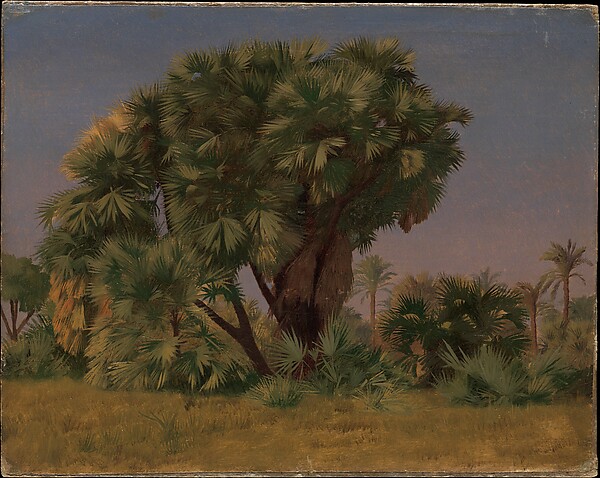
    Study of Palm Trees, Jean-Léon Gérôme, 1855/56

    Study of Palm Trees

    1855/56 · Museo Metropolitano de Arte

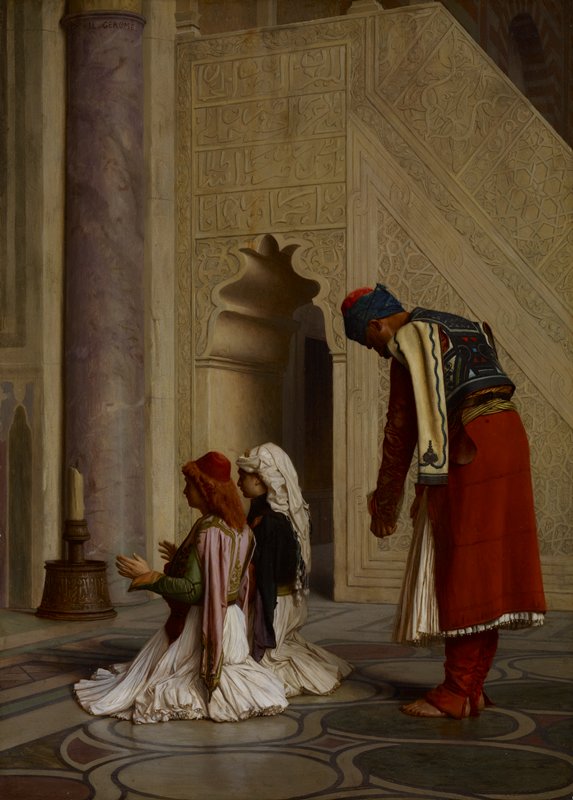
    Young Greeks in the Mosque, Jean-Léon Gérôme, 1865

    Young Greeks in the Mosque

    1865 · Instituto de Artes de Mineápolis

    View of Medinet El-Fayoum, Jean-Léon Gérôme, c. 1868/1870

    View of Medinet El-Fayoum

    c. 1868/1870 · Galería Nacional de Arte

    Bashi-Bazouk, Jean-Léon Gérôme, ca. 1868–69

    Bashi-Bazouk

    ca. 1868–69 · Museo Metropolitano de Arte

    Prayer in the Mosque, Jean-Léon Gérôme, by 1874

    Prayer in the Mosque

    by 1874 · Museo Metropolitano de Arte

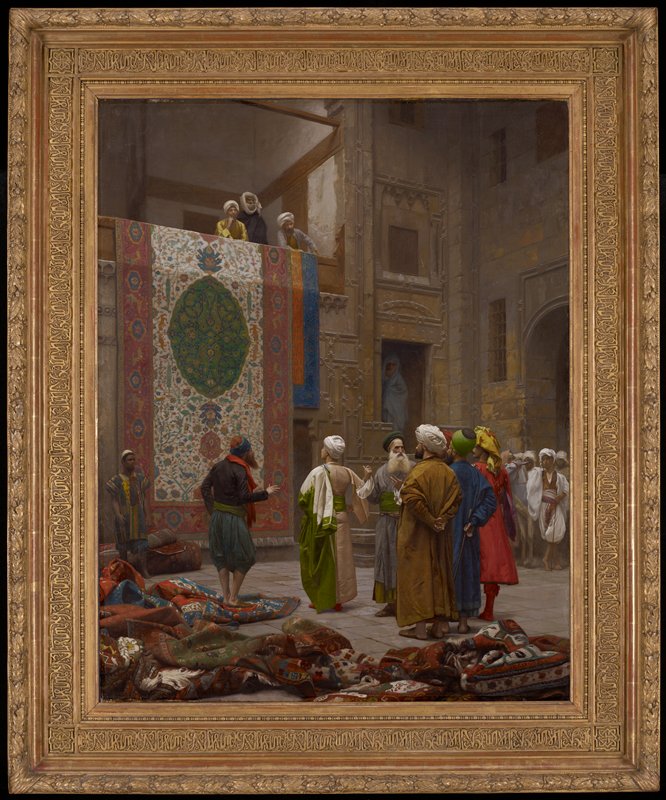
    The Carpet Merchant, Jean-Léon Gérôme, c. 1887

    The Carpet Merchant

    c. 1887 · Instituto de Artes de Mineápolis

    Chariot Race, Jean Léon Gérôme, 1876

    Chariot Race

    1876 · Instituto de Arte de Chicago

    Portrait of a Woman, Jean Léon Gérôme, 1851

    Portrait of a Woman

    1851 · Instituto de Arte de Chicago

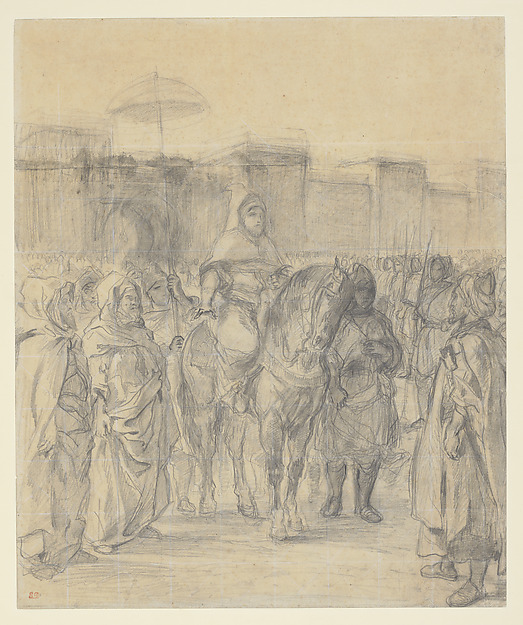
    Study for "The Sultan of Morocco and His Entourage", Eugène Delacroix, 1845

    Eugène Delacroix

    Study for "The Sultan of Morocco and His Entourage", 1845

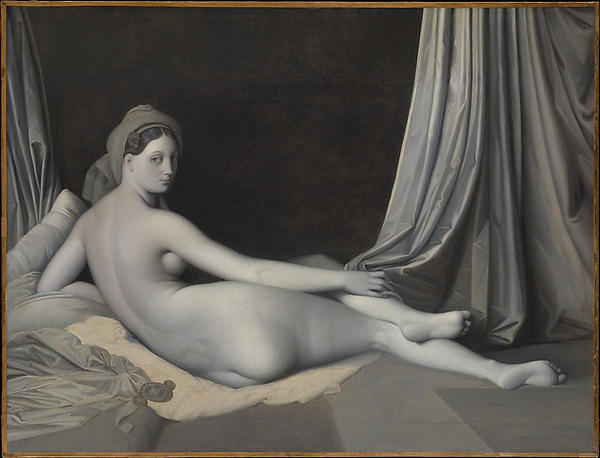
    Odalisque in Grisaille, Jean Auguste Dominique Ingres, ca. 1824–34

    Jean-Auguste-Dominique Ingres

    Odalisque in Grisaille, ca. 1824–34

    Bashi-Bazouk, Jean-Léon Gérôme, ca. 1868–69

    Jean-Léon Gérôme

    Bashi-Bazouk, ca. 1868–69

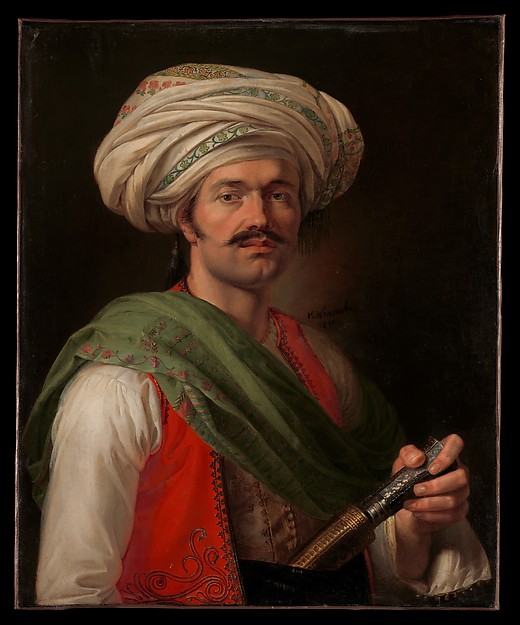
    Portrait of a "Mamelouk", Horace Vernet, 1810

    Vernet, Horace

    Portrait of a "Mamelouk", 1810

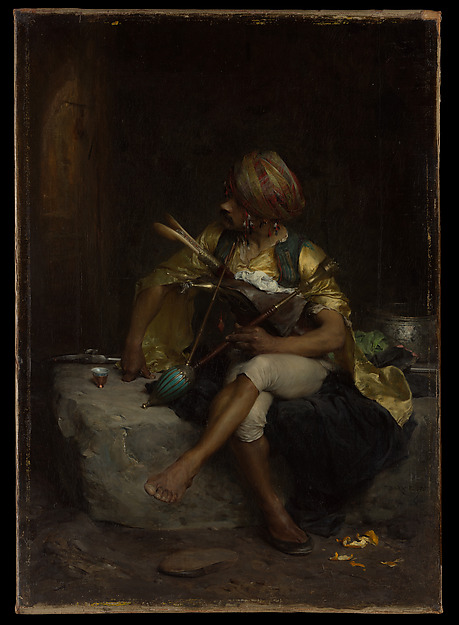
    A Bashi-Bazouk, Charles Bargue, 1875

    Charles Bargue

    A Bashi-Bazouk, 1875

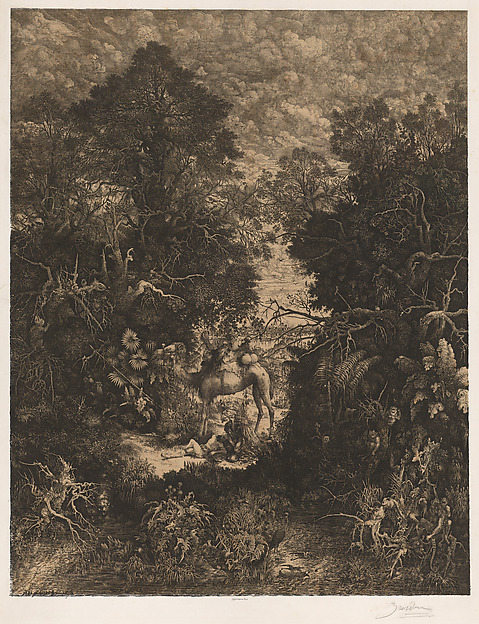
    The Good Samaritan, Rodolphe Bresdin, 1861

    Rodolphe Bresdin

    The Good Samaritan, 1861

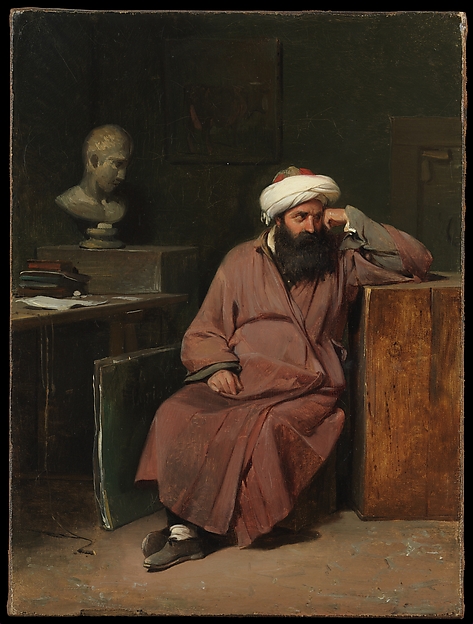
    An Ottoman Man in the Artist's Studio, Auguste-Xavier Leprince, ca. 1823–26

    Auguste Xavier Leprince

    An Ottoman Man in the Artist's Studio, ca. 1823–26

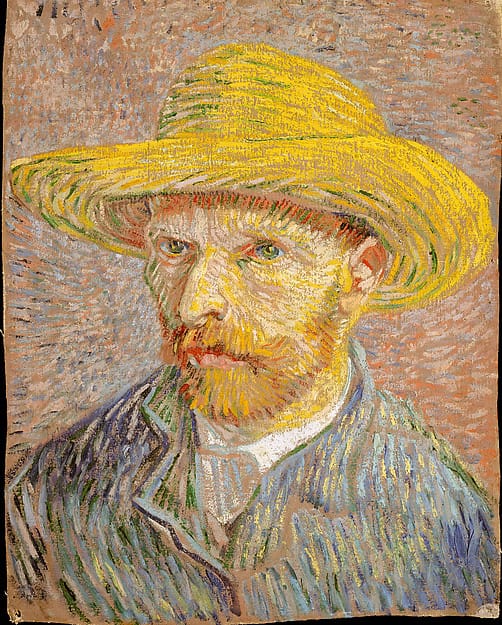
    Self-Portrait with a Straw Hat (obverse: The Potato Peeler), Vincent van Gogh, 1887

    Vincent van Gogh

    Self-Portrait with a Straw Hat (obverse: The Potato Peeler), 1887

    Museo Metropolitano de Arte

    Garden at Sainte-Adresse, Claude Monet, 1867

    Claude Monet

    La terraza de Sainte-Adresse, 1867

    Museo Metropolitano de Arte

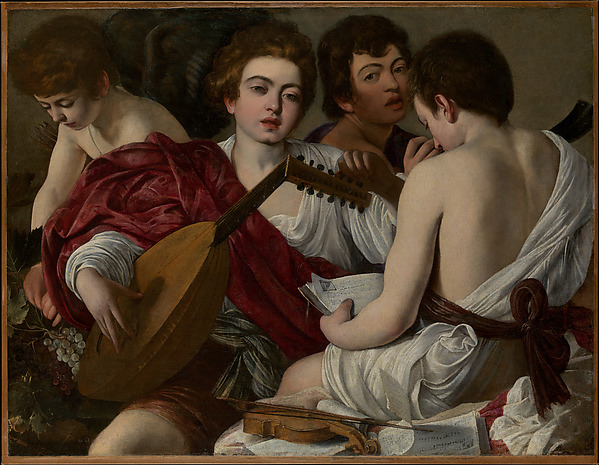
    The Musicians, Caravaggio, 1597

    Caravaggio

    Los músicos, 1597

    Museo Metropolitano de Arte

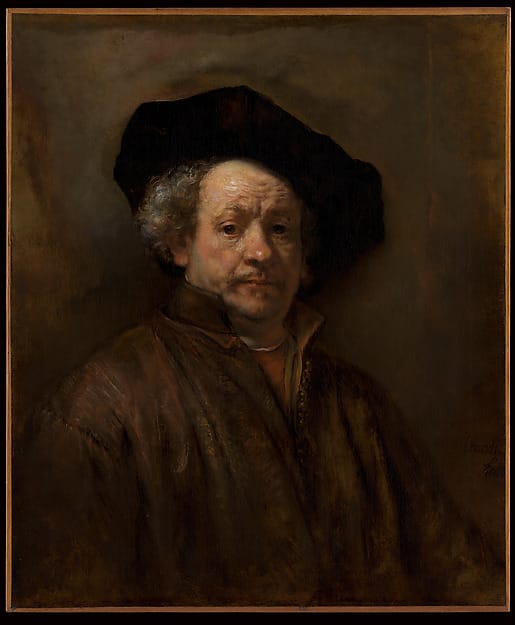
    Self-Portrait, Rembrandt van Rijn, 1660

    Rembrandt van Rijn

    Self-Portrait, 1660

    Museo Metropolitano de Arte

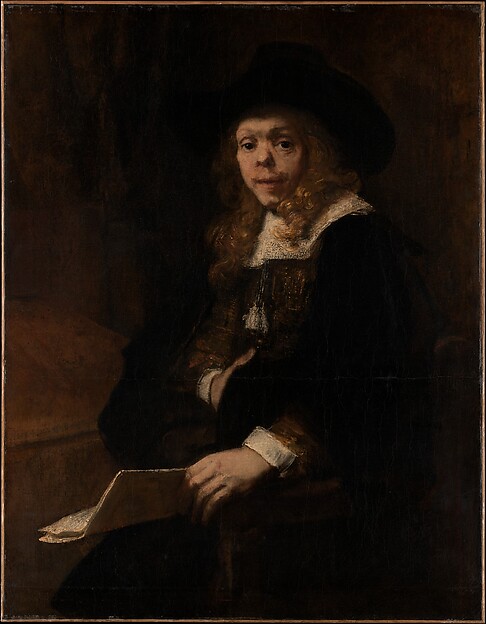
    Portrait of Gerard de Lairesse, Rembrandt van Rijn, 1665–67

    Rembrandt van Rijn

    Portrait of Gerard de Lairesse, 1665–67

    Museo Metropolitano de Arte

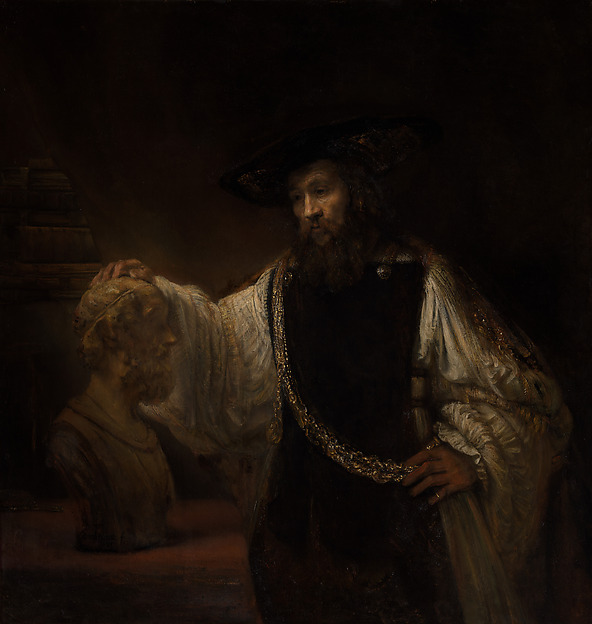
    Aristotle with a Bust of Homer, Rembrandt, 1653

    Rembrandt van Rijn

    Aristóteles contemplando el busto de Homero, 1653

    Museo Metropolitano de Arte

    Young Sailor II, Henri Matisse, 1906

    Henri Matisse

    Young Sailor II, 1906

    Museo Metropolitano de Arte

    Rubens, Helena Fourment (1614–1673), and Their Son Frans (1633–1678), Peter Paul Rubens, ca. 1635

    Peter Paul Rubens

    Rubens, Helena Fourment (1614–1673), and Their Son Frans (1633–1678), ca. 1635

    Museo Metropolitano de Arte