ART WIKI32,963 on view
MapCollectionArtistsMuseumsExhibitionsJournal
Sign in

ART WIKI

Where the masterpiece hangs, and when they let you in.

Collections: Art Institute of Chicago, Getty Villa, Harvard Art Museums, Hirshhorn Museum and Sculpture Garden, J. Paul Getty Museum, Minneapolis Institute of Art, Musée du Louvre, National Gallery of Art, National Museum of Asian Art, National Portrait Gallery (Smithsonian), Pushkin State Museum of Fine Arts, Rijksmuseum, Smithsonian American Art Museum, SMK — National Gallery of Denmark, State Hermitage Museum, State Russian Museum, The Cleveland Museum of Art, The Metropolitan Museum of Art, The Museum of Modern Art, Tretyakov Gallery, Victoria and Albert Museum, Whitney Museum of American Art, State Catalogue of the Museum Fund of Russia (274 museums), Europeana (19 museums), Wikidata (6 museums), Paris Musées (12 museums), and Joconde, the French Ministry of Culture's museum database (495 museums). Images belong to their rights holders.

Sections

  • Map
  • Search
  • Collection
  • Masterpieces
  • On view now
  • Artists

More

  • Museums & galleries
  • Exhibitions
  • Journal
  • Where the data comes from
  • Privacy & cookies
HomeMapBrowse
  1. Collection/
  2. Rijksmuseum/
  3. Winter Landscape
Winter Landscape, Gustave Courbet, 1850 - 1877
Gustave Courbet, portraitGustave CourbetFrench, 1819–1877

Winter Landscape

1850 - 1877 · Painting

May one see it?

Unknown: the museum keeps its counsel

Rijksmuseum

Amsterdam, Netherlands

The owner is known. Whether it is on view today, the museum does not say, and we were not trained to guess.

Source
The museum's own collection data
On the mapMuseum page

About the painting

In the museum's own words — in Dutch

Winterlandschap. Gezicht in een besneeuwd bos.

Rijksmuseum

Particulars

1850 - 1877
18191877
Accession number
SK-A-3295

What it shows

Forest, woodSnow

In the catalog

PaintingsOilFrench paintingRealism19th century

Sources

  • Rijksmuseum: the museum's own open data · fetched 8 days ago
  • Image: Rijksmuseum — public domain

Meanwhile, in the life of Gustave Courbet

The whole life
  1. 1849

    Gold medal at the Salon of 1849

    Courbet's first Salon success came with “After Dinner at Ornans”, reminiscent of Chardin and Le Nain; it earned him a gold medal and was purchased by the state. The medal exempted his works from jury approval at the Salon until 1857, when the rule changed.

  2. 1850–1851

    Salon of 1850–1851: “A Burial at Ornans”

    At the Salon of 1850–1851 Courbet showed “The Stone Breakers”, “The Peasants of Flagey” and “A Burial at Ornans”: the canvas, about 3 by 6.7 metres, drew both praise and fierce denunciation, with critics accusing him of a deliberate pursuit of ugliness. Courbet became a celebrity, spoken of as a genius, a “terrible socialist” and a “savage”.

  3. 1855

    Stages the “Pavilion of Realism”

    Refusing to accept the jury's decision, Courbet asked museums and private owners to lend his paintings, had a separate building erected and showed about forty canvases there, without state permission, under the Second Empire. The public was baffled and laughed at the “crude art”, and the critics mocked him; the paintings were appreciated by Delacroix and Baudelaire.

  4. 16 May 1871

    The fall of the Vendôme Column

    On 16 May 1871, nine days before the fall of the Commune, the column whose removal Courbet had requested back in September 1870 was pulled down in a large ceremony with military bands and photographers and broke into pieces. Some witnesses said Courbet was there, others denied it.

  5. 1873

    Leaves for Switzerland to escape the debt for the column

    In 1873 the newly elected president of the Republic, Patrice de MacMahon, announced plans to rebuild the column at Courbet's expense. Unable to pay, he went into self-imposed exile in Switzerland to avoid bankruptcy and remained there until his death.

  6. 31 December 1877

    Died

More by Gustave Courbet

All works
Young Ladies of the Village, Gustave Courbet, 1851–52

Young Ladies of the Village

1851–52 · The Metropolitan Museum of Art

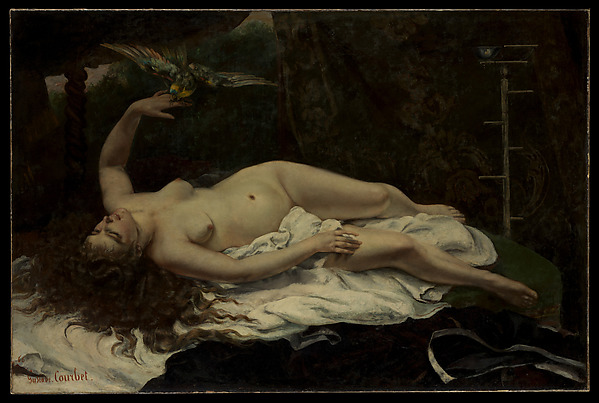
Woman with a Parrot, Gustave Courbet, 1866

Woman with a Parrot

1866 · The Metropolitan Museum of Art

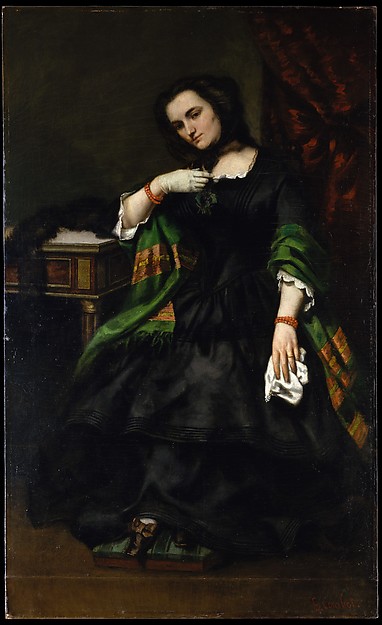
Madame Auguste Cuoq (Mathilde Desportes, 1827–1910), Gustave Courbet, ca. 1852–57

Madame Auguste Cuoq (Mathilde Desportes, 1827–1910)

ca. 1852–57 · The Metropolitan Museum of Art

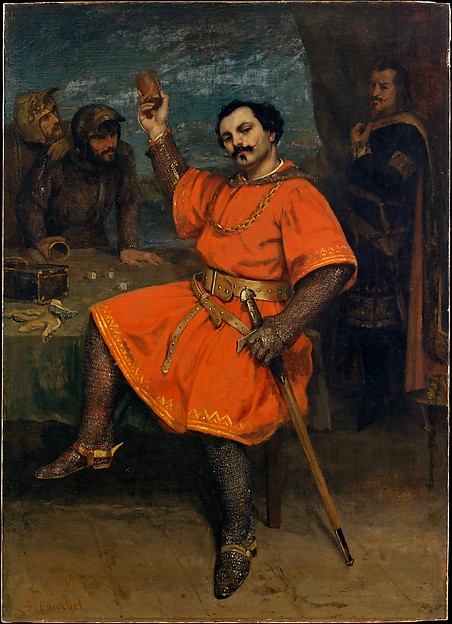
Louis Gueymard (1822–1880) as Robert le Diable, Gustave Courbet, 1857

Louis Gueymard (1822–1880) as Robert le Diable

1857 · The Metropolitan Museum of Art

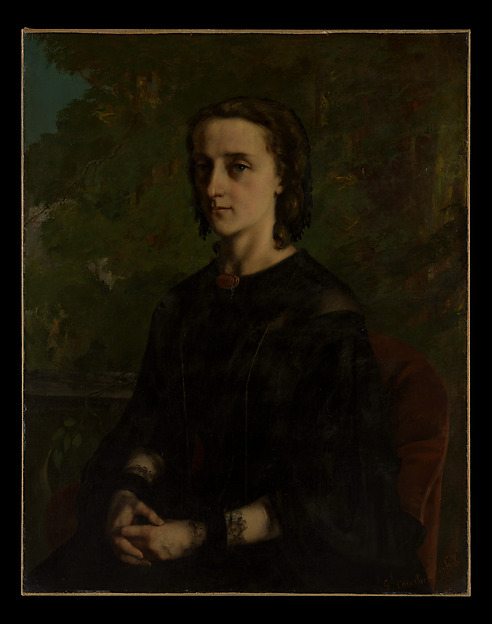
Madame Frederic Breyer (Fanny Hélène Van Bruyssel, 1830–1894), Gustave Courbet, 1858

Madame Frederic Breyer (Fanny Hélène Van Bruyssel, 1830–1894)

1858 · The Metropolitan Museum of Art

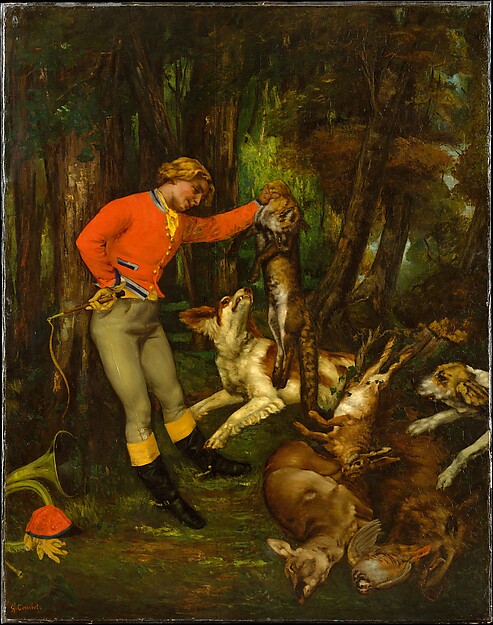
After the Hunt, Gustave Courbet, ca. 1859

After the Hunt

ca. 1859 · The Metropolitan Museum of Art

The Source, Gustave Courbet, 1862

The Source

1862 · The Metropolitan Museum of Art

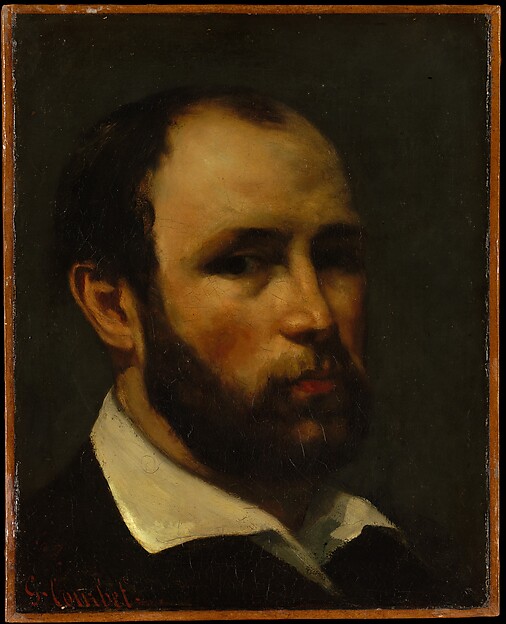
Portrait of a Man, Gustave Courbet, probably ca. 1862

Portrait of a Man

probably ca. 1862 · The Metropolitan Museum of Art

Neighbors at Rijksmuseum

Museum page
Self-portrait, Vincent van Gogh, 1887

Vincent van Gogh

Self-portrait, 1887

La Corniche near Monaco, Claude Monet, 1884

Claude Monet

La Corniche bij Monaco, 1884

De Nachtwacht, Rembrandt van Rijn, 1642

Rembrandt van Rijn

The Night Watch, 1642

Portrait of a Woman, Probably Maria Trip (1619-1683), Rembrandt van Rijn, 1639

Rembrandt van Rijn

Portrait of Maria Trip, 1639

Still Life with Peacocks, Rembrandt van Rijn, c. 1639

Rembrandt van Rijn

Still Life with Peacocks, c. 1639

Landscape with a Stone Bridge, Rembrandt van Rijn, c. 1638

Rembrandt van Rijn

The Stone Bridge, c. 1638

Man in Oriental Dress, Rembrandt van Rijn, 1635

Rembrandt van Rijn

Man in Oriental Dress, 1635

Portrait of Haesje Jacobsdr van Cleyburg, Rembrandt van Rijn, 1634

Rembrandt van Rijn

Portrait of Haesje Jacobsdr van Cleyburg, 1634