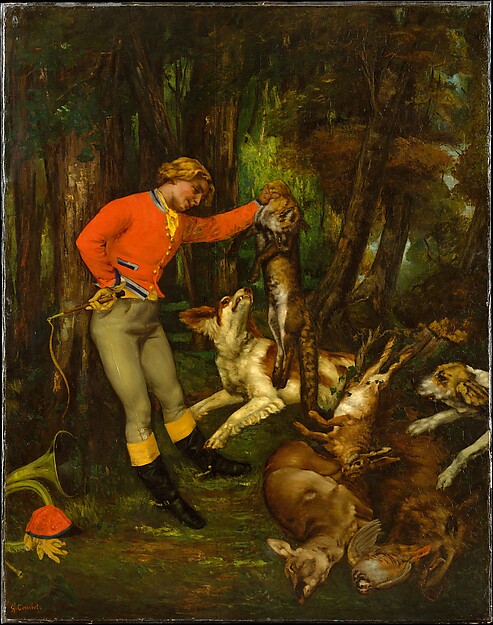
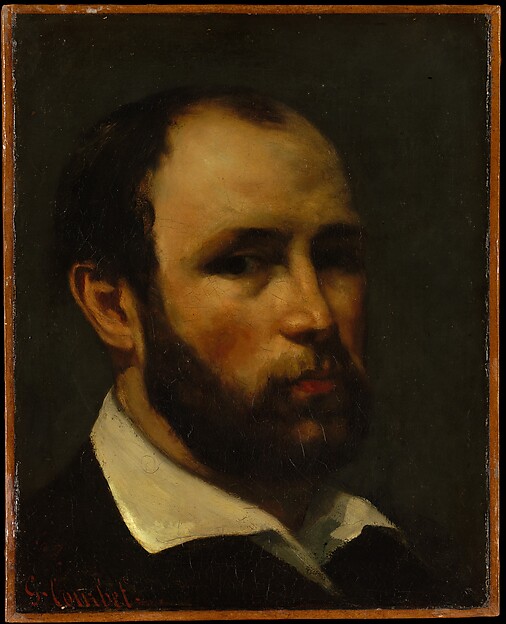
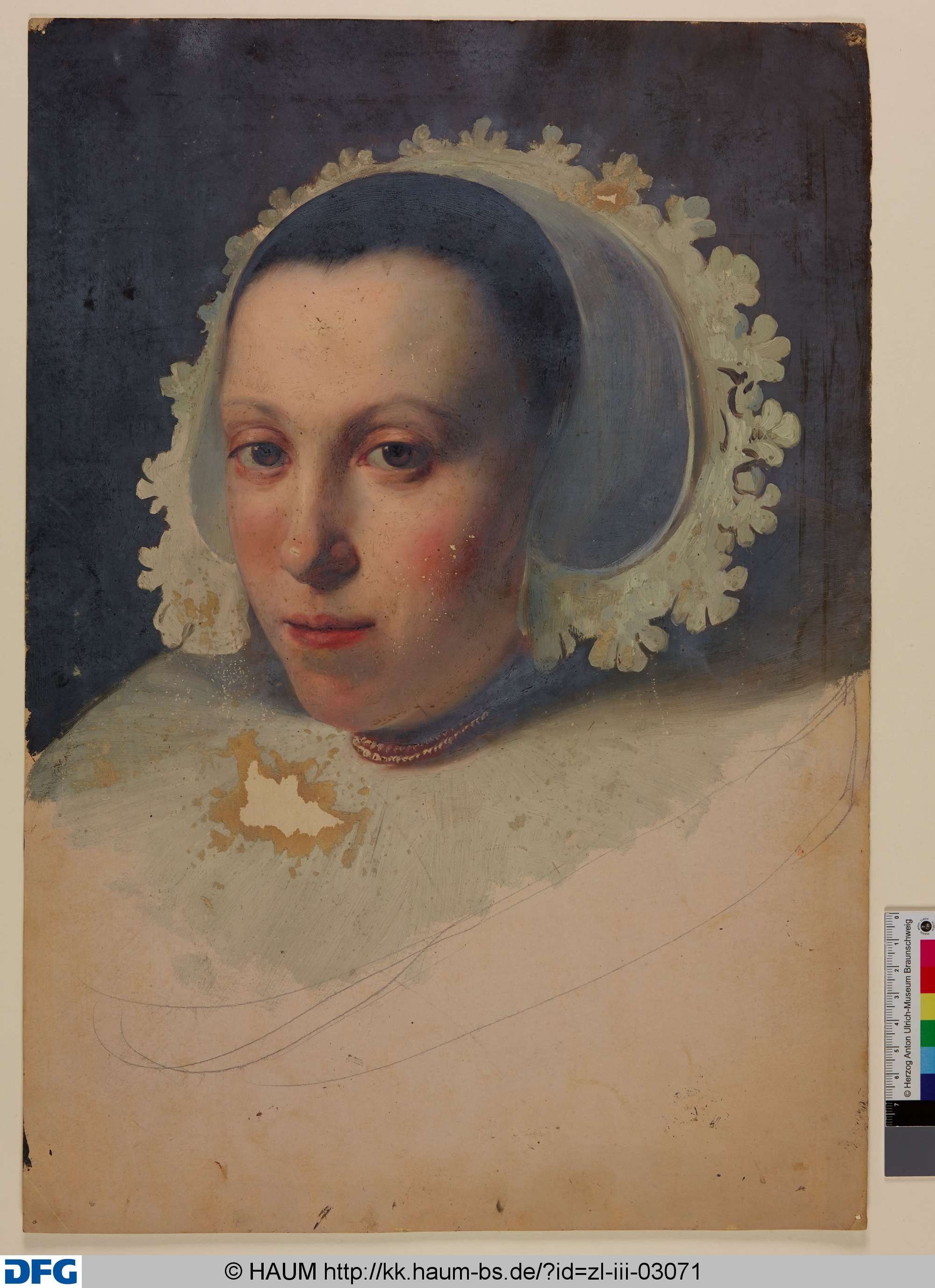
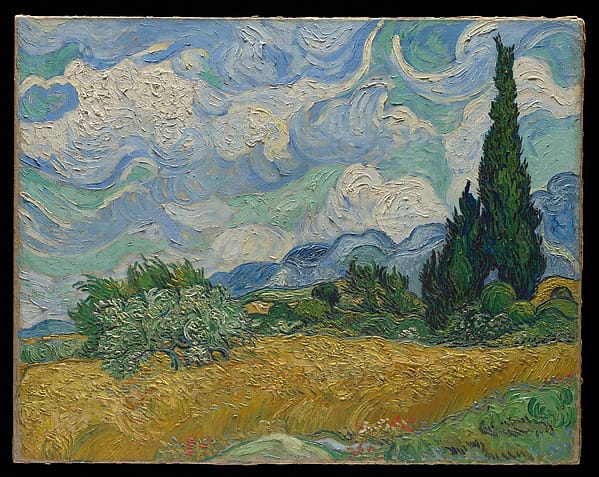
Gustave CourbetFrench, 1819–1877
Wildbach
May one see it?
Unknown

Braunschweig, Germany
The owner is known; whether it is on view today is not.
- In this state since
- Source
- The museum
Particulars
What it shows
In the catalog
Sources
- Herzog Anton Ulrich Museum
- Image: Herzog Anton Ulrich Museum — CC BY-NC-SA 4.0
Meanwhile, in the life of Gustave Courbet
The whole life1849
Gold medal at the Salon of 1849
Courbet's first Salon success came with “After Dinner at Ornans”, reminiscent of Chardin and Le Nain; it earned him a gold medal and was purchased by the state. The medal exempted his works from jury approval at the Salon until 1857, when the rule changed.
1850–1851
Salon of 1850–1851: “A Burial at Ornans”
At the Salon of 1850–1851 Courbet showed “The Stone Breakers”, “The Peasants of Flagey” and “A Burial at Ornans”: the canvas, about 3 by 6.7 metres, drew both praise and fierce denunciation, with critics accusing him of a deliberate pursuit of ugliness. Courbet became a celebrity, spoken of as a genius, a “terrible socialist” and a “savage”.
1855
Stages the “Pavilion of Realism”
Refusing to accept the jury's decision, Courbet asked museums and private owners to lend his paintings, had a separate building erected and showed about forty canvases there, without state permission, under the Second Empire. The public was baffled and laughed at the “crude art”, and the critics mocked him; the paintings were appreciated by Delacroix and Baudelaire.
1855
The “Realist Manifesto” in the exhibition catalogue
The catalogue of the Pavilion of Realism opened with a manifesto in which Courbet claimed the right to artistic freedom and the right to show his works to the public on his own. He defined his aim as conveying the customs, ideas and appearance of his time, to be not only a painter but a man as well: to “create living art”.
16 May 1871
The fall of the Vendôme Column
On 16 May 1871, nine days before the fall of the Commune, the column whose removal Courbet had requested back in September 1870 was pulled down in a large ceremony with military bands and photographers and broke into pieces. Some witnesses said Courbet was there, others denied it.
1873
Leaves for Switzerland to escape the debt for the column
In 1873 the newly elected president of the Republic, Patrice de MacMahon, announced plans to rebuild the column at Courbet's expense. Unable to pay, he went into self-imposed exile in Switzerland to avoid bankruptcy and remained there until his death.