ART WIKI32,963 on view
MapCollectionArtistsMuseumsExhibitionsJournal
Sign in

ART WIKI

Where the masterpiece hangs, and when they let you in.

Collections: Art Institute of Chicago, Getty Villa, Harvard Art Museums, Hirshhorn Museum and Sculpture Garden, J. Paul Getty Museum, Minneapolis Institute of Art, Musée du Louvre, National Gallery of Art, National Museum of Asian Art, National Portrait Gallery (Smithsonian), Pushkin State Museum of Fine Arts, Rijksmuseum, Smithsonian American Art Museum, SMK — National Gallery of Denmark, State Hermitage Museum, State Russian Museum, The Cleveland Museum of Art, The Metropolitan Museum of Art, The Museum of Modern Art, Tretyakov Gallery, Victoria and Albert Museum, Whitney Museum of American Art, State Catalogue of the Museum Fund of Russia (274 museums), Europeana (19 museums), Wikidata (6 museums), Paris Musées (12 museums), and Joconde, the French Ministry of Culture's museum database (495 museums). Images belong to their rights holders.

Sections

  • Map
  • Search
  • Collection
  • Masterpieces
  • On view now
  • Artists

More

  • Museums & galleries
  • Exhibitions
  • Journal
  • Where the data comes from
  • Privacy & cookies
HomeMapBrowse
  1. Collection/
  2. Art Institute of Chicago/
  3. Wick-Ey
Wick-Ey, Elbridge Ayer Burbank, 1898
Elbridge Ayer Burbank, portraitElbridge Ayer BurbankAmerican, 1858–1949

Wick-Ey

1898 · Painting

May one see it?

Not receiving at present

Art Institute of Chicago

Chicago, United States

It belongs to the collection, but is not on display at present.

Checked
3 days ago
In this state since
Aug 19, 2026
Source
The museum
On the mapMuseum page

About the painting

In 1897 the Chicago artist Elbridge Ayer Burbank traveled west on behalf of his uncle, the philanthropist Edward E. Ayer, to paint a portrait of the famed Apache chief Geronimo, who was then living in captivity at Fort Sill in the Oklahoma territory. During his subsequent travels throughout the West, Burbank depicted individuals from numerous Native American tribes in ethnographic portraits, nevertheless focusing a sensitive artistic eye on his sitters. Like Hermon Atkins MacNeil before him, Burbank witnessed the Hopi Snake Dance in Arizona and followed the dance’s nine-day progress, ultimately producing more than 19 paintings of the participants. The Art Institute owns eight of these portraits. Each element of paint and dress carries a specific meaning in Burbank’s portraits.

Read on

In his depictions of the Hopi priests Ko-Pe-Ley and Ho-Mo-Vi, for example, the black paint on the upper parts of their faces represents heavy rain clouds, and the white around their mouths stands for purity and faith. Eagle feathers, used in the ceremony to soothe the snakes, adorn their hair. Thus costumed, the priests would have removed the snakes from a special bag and placed the reptiles crosswise in their mouths. Despite his slightly loose brushwork, Burbank carefully depicted the priests’ ceremonial garb, giving his images anthropological authenticity as well as aesthetic power. He inscribed each portrait with the sitter's name and tribal affiliation, using "Moqui," an obsolete term for the Hopi people that is now considered offensive.

Art Institute of Chicago · CC BY 4.0

Particulars

1898 · aged 40
18581949
Accession number
2004.11

What it shows

ChicagoPeoplePortrait

In the catalog

PaintingsOilAmerican paintingImpressionism19th centuryThe West

Sources

  • Art Institute of Chicago
  • Image: Art Institute of Chicago — © the artist or rights holder

More by Elbridge Ayer Burbank

All works
Geronimo, Elbridge Ayer Burbank, 1899

Geronimo

1899 · Smithsonian American Art Museum

Estzan-Nap-Pa, Elbridge Ayer Burbank, 1910

Estzan-Nap-Pa

1910 · Smithsonian American Art Museum

Tlo-be-nel-ly, Elbridge Ayer Burbank, 1910

Tlo-be-nel-ly

1910 · Smithsonian American Art Museum

Shu-Pe-La, Elbridge Ayer Burbank, 1898

Shu-Pe-La

1898 · Not on view · Art Institute of Chicago

Wick-Ah-Te-Wah, Elbridge Ayer Burbank, 1898

Wick-Ah-Te-Wah

1898 · Not on view · Art Institute of Chicago

Pah-Puh, Elbridge Ayer Burbank, 1898

Pah-Puh

1898 · Not on view · Art Institute of Chicago

Ho-Mo-Vi, Elbridge Ayer Burbank, 1898

Ho-Mo-Vi

1898 · Not on view · Art Institute of Chicago

Kah-Kap-Tee, Elbridge Ayer Burbank, 1898

Kah-Kap-Tee

1898 · Not on view · Art Institute of Chicago

Neighbors at Art Institute of Chicago

Museum page
The Bedroom, Vincent van Gogh, 1889

Vincent van Gogh

The Bedroom, 1889

A Sunday on La Grande Jatte — 1884, Georges Seurat, 1884–86, border added 1888–89

Georges Seurat

A Sunday Afternoon on the Island of La Grande Jatte, 1884–86, border added 1888–89

Paris Street; Rainy Day, Gustave Caillebotte, 1877

Gustave Caillebotte

Paris Street; Rainy Day, 1877

Two Sisters (On the Terrace), Pierre-Auguste Renoir, 1881

Pierre-Auguste Renoir

Two Sisters (On the Terrace), 1881

The Basket of Apples, Paul Cézanne, c. 1893

Paul Cézanne

The Basket of Apples, c. 1893

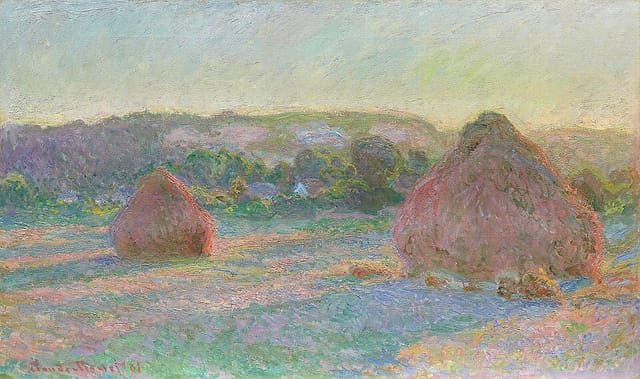
Stacks of Wheat (End of Summer), Claude Monet, 1890–91

Claude Monet

Stacks of Wheat (End of Summer), 1890–91

American Gothic, Grant Wood, 1930

Grant Wood

American Gothic, 1930

Nighthawks, Edward Hopper, 1942

Edward Hopper

Nighthawks, 1942

On the same theme · Chicago

All works on the theme
American Gothic, Grant Wood, 1930

Grant Wood

American Gothic, 1930

Art Institute of Chicago

Langston Hughes, Chicago, Gordon Parks, December 1941

Gordon Parks

Langston Hughes, Chicago, December 1941

Not on view · National Gallery of Art

Political rally—Chicago, Robert Frank, 1956

Robert Frank

Political rally—Chicago, 1956

Not on view · National Gallery of Art

View of Chicago in 1837, George Catlin, 1861/1869

George Catlin

View of Chicago in 1837, 1861/1869

Not on view · National Gallery of Art

Gezicht op het administratiegebouw vanaf een prieel in de tuin van Sears, Robuck & Co. in Chicago, anonymous, c. 1906

anonymous

Gezicht op het administratiegebouw vanaf een prieel in de tuin van Sears, Robuck & Co. in Chicago, c. 1906

Rijksmuseum

Gezicht op werkneemsters die dagelijks het geld tellen van Sears Roebuck & Co., anonymous, c. 1906

anonymous

Gezicht op werkneemsters die dagelijks het geld tellen van Sears Roebuck & Co., c. 1906

Rijksmuseum

Gezicht op het landbouwgebouw, ontworpen door Charles McKim op de World's Columbian Exposition in Chicago in 1893, anonymous, 1893

anonymous

Gezicht op het landbouwgebouw, ontworpen door Charles McKim op de World's Columbian Exposition in Chicago in 1893, 1893

Rijksmuseum

Gezicht op Randolph Street in Chicago, anonymous, 1893

anonymous

Gezicht op Randolph Street in Chicago, 1893

Rijksmuseum