 Nicholas RoerichRussian, 1874–1947
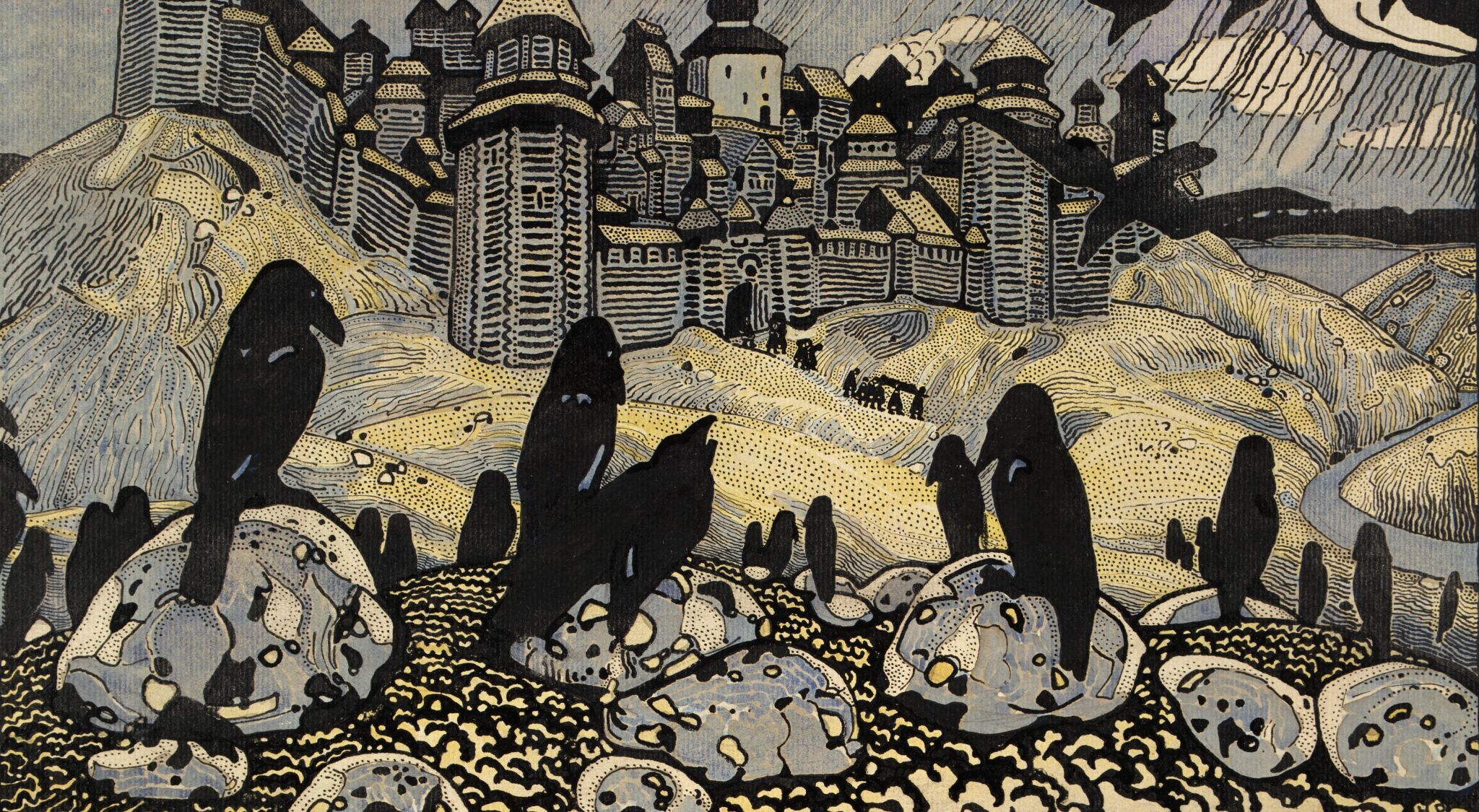
Вороны
May one see it?
Unknown

Moscow, Russia
The owner is known; whether it is on view today is not.
- In this state since
- Source
- The museum
About the work
In the museum's own words — in Russian
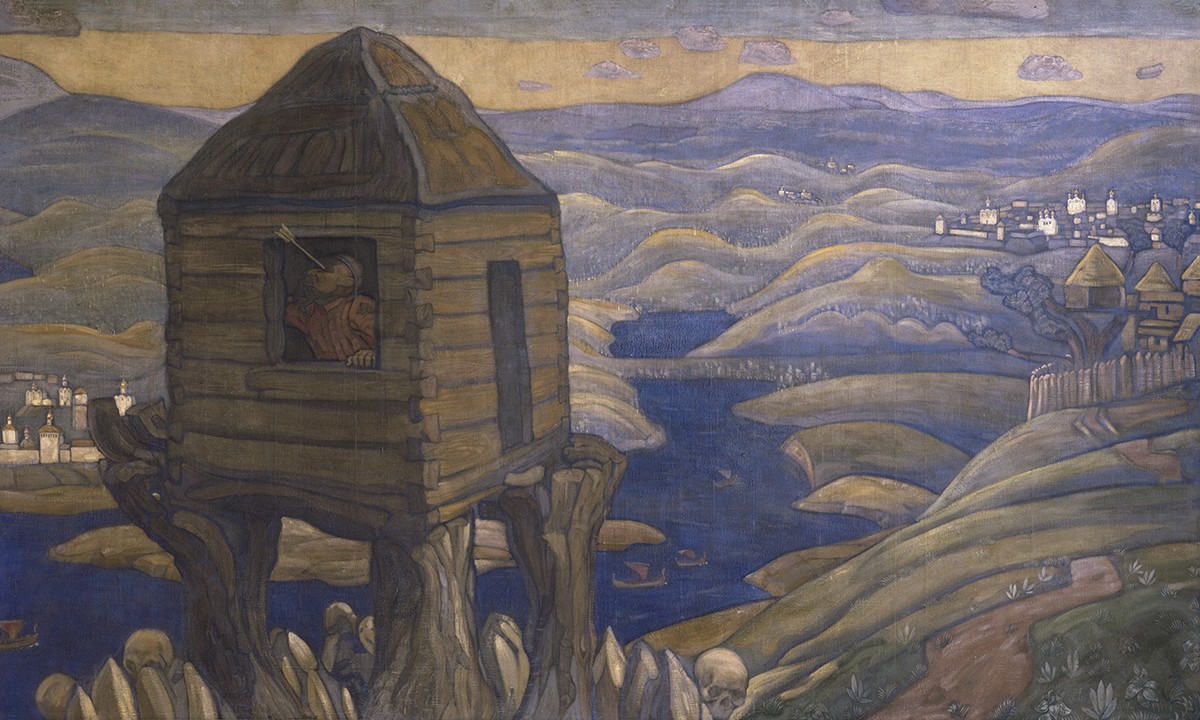
В опубликованной под названием «Город» в литературно-художественном альманахе издательства «Шиповник» (1907. Кн. 1, с. 193) композиции соединились мотивы двух ранних картин Николая Рериха –«Зловещие» (1901, Русский музей) и «Город. Утро» (СГХМ им. А.Н. Радищева). Рисунок иллюстрировал одноименный раздел «Город». Живописные полотна художник написал на сюжет своего собственного рассказа «На кургане» (1895). В процессе раскопок старинного кургана воображению Рериха открываются картины далекого прошлого.
Read on
«Из-под облака всё видит ворон; смотрит поверх высокого тына городка, что торчит на соседнем бугре. На этом холме и поставили город. Отсчитали от мыса шагов сотни две, перерыли холм канавой, рвом – землю сложили валом; на валу тын поставили из славных рудовых бревен; концы обтесали, натыкали на них черепа звериные, а то и людские на устрашение врагу! По углам срубы поставили, покрыли их соломой и речным тростником. Состроили вышку – смотреть и наблюдать за вражьими силами или чтобы поднять на ней высокий шест с привязанным пуком зажженной соломы, окрестность повестить об опасности. Город – место военное, в мирное время тут не живут. Видел ворон и другое! Видел, как пылал тын города, шла сеча! Грызлись и резались насмерть! Напрасно варом кипящим обливали напавшую рать: город пал! Помнил это ворон – пировал он тут сыто».
Tretyakov Gallery
Particulars
- Accession number
- 9080
In the catalog
Sources
- Tretyakov Gallery
- Image: Tretyakov Gallery — © State Tretyakov Gallery
Meanwhile, in the life of Nicholas Roerich
The whole life1904–1905
Neolithic sites on the Valdai and a Stone Age collection
In 1904, with Prince Putyatin, Roerich finds several Neolithic sites on the Valdai Hills near Lake Piros, and from 1905 he builds a collection of Stone Age antiquities, which is highly praised that same year at the French Prehistoric Congress in Périgueux. By 1910 it holds more than 30,000 items from Russia, Germany, Italy and France; today they are in the Hermitage.
1905
Eastern motifs: Japan and India
From 1905, alongside the ancient Russian theme, Eastern motifs begin to appear in Roerich's work: he publishes essays on Japan and India, paints pictures on Indian subjects, collects Japanese art, reads Ramakrishna, Vivekananda and Tagore, and studies the philosophy of the East.
1906
Exhibitions abroad and the Salon d'Automne
From 1906 Roerich regularly takes part in exhibitions abroad: Paris, Venice, Berlin, Rome, Brussels, Vienna and London get to know his work, and his paintings are bought by the Luxembourg Museum, the National Museum in Rome, the Louvre and other museums. In 1907 he is elected a member of the Société du Salon d'Automne in France.
1906
Director of the Society's Drawing School
On taking up his post as director of the Drawing School, Roerich enlarges its premises, opens new classes and workshops — for icon painting, ceramics, chasing and weaving — restores the rights of the teaching council and founds a Museum of Russian Art at the school; he hopes to reorganise it as a Free People's Academy.
1909
Elected an academician
In 1909 Roerich is elected an academician of the Imperial Academy of Arts, as well as a member of the Council of the Society for the Protection and Preservation of Monuments of Art and Antiquity in Russia and chairman of the Commission of the Museum of Pre-Petrine Art and Life.
1909–1913
Diaghilev's Russian Seasons: sets and a libretto
In Paris, Borodin's “Polovtsian Dances” from “Prince Igor” and Rimsky-Korsakov's “The Maid of Pskov” are staged in Roerich's designs; for the ballet “The Rite of Spring”, to music by Stravinsky, he creates the costumes and sets and also writes the libretto.