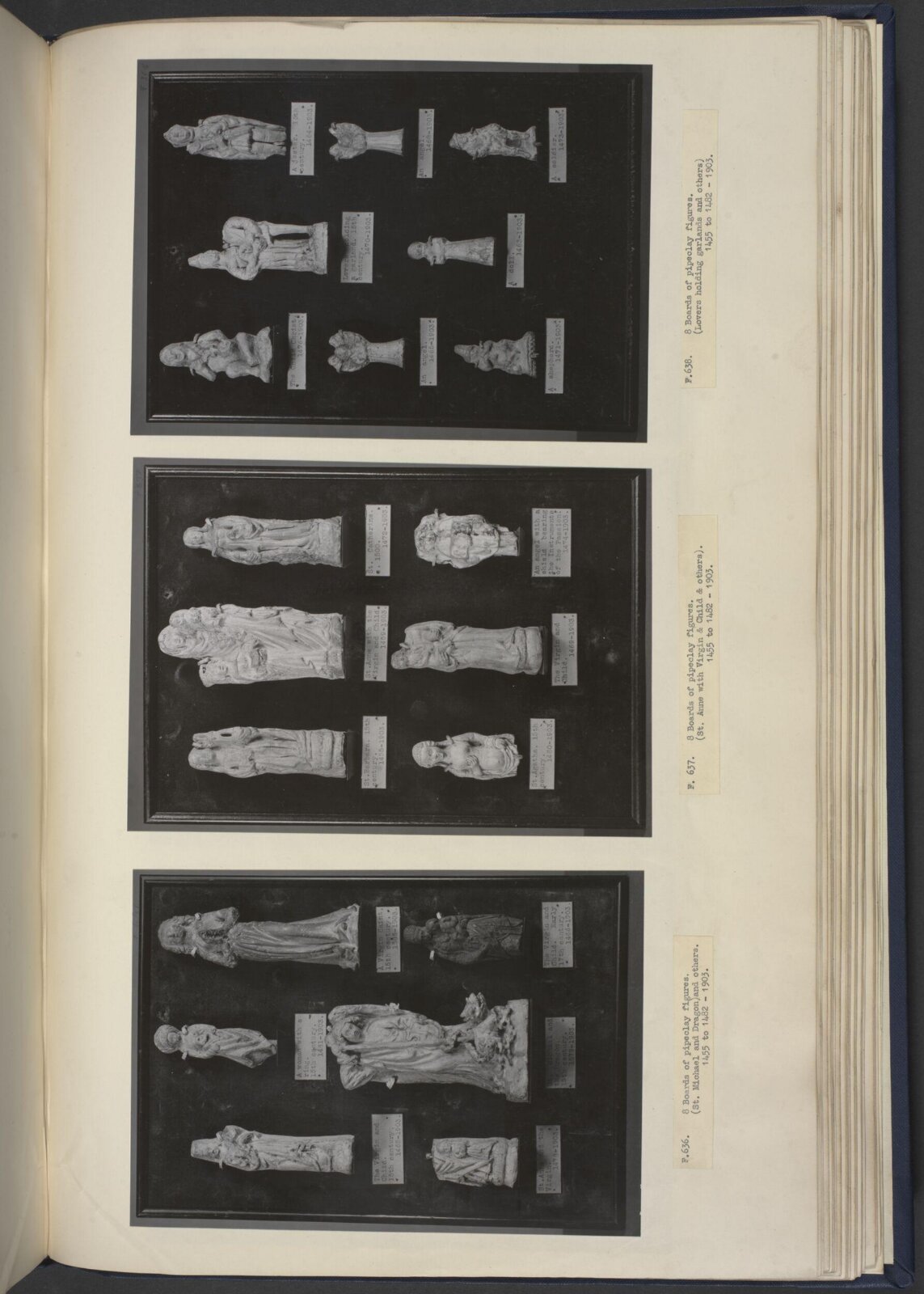
Virgin and Child
May one see it?
Not receiving at present

Victoria and Albert Museum
London, United Kingdom
It belongs to the collection, but is not on display at present.
- Checked
- In this state since
- Source
- The museum's own collection data
About the sculpture
This statuette is made by an unknwo artist in the early 16th century in Germany.
The group shows the Virgin standing with the Infant Christ in her left arm. On her right is St. Catherine crowned and holding a book in her right hand and a flower in her left, which she puts out towards the Child.
It is made of pipeclay, which is a fine white clay used to make tobacco pipes and pottery.
Conveniently situated on a major trading route, Siegburg was a centre of ceramic production with well-organised workshops and kilns in which also pipe-clay figures were fired.
Saint Catherine of Alexandria, also called St Catherine of the Wheel or the Great Martyr Saint Catherine. She is a Christian Saint and Martyr. Her principal symbol is a spiked wheel and her feast day is 25th November by most Christian churches.
Read on
Following the Golden Legend she showed great erudition from an early age. She became queen, converted to Christianity and had a vision of marrying Christ. Maxentius, the Roman Emperor desired her and sent out 50 philosophers to try to interfere in her faith. Instead the philosophers were all converted to Christianity themselves.
The legend tells that she was to be condemned to death on a torture wheel with iron spikes, which broke, when she touched it. She was then beheaded instead. There is doubt about her historical authenticity.
Victoria and Albert Museum
Particulars
- Accession number
- 1459-1903
What it shows
In the catalog
Sources
- Victoria and Albert Museum: the museum's own open data · fetched 10 days ago
- Image: Victoria and Albert Museum — © Victoria and Albert Museum, London