 Beatrix Potter1866–1943
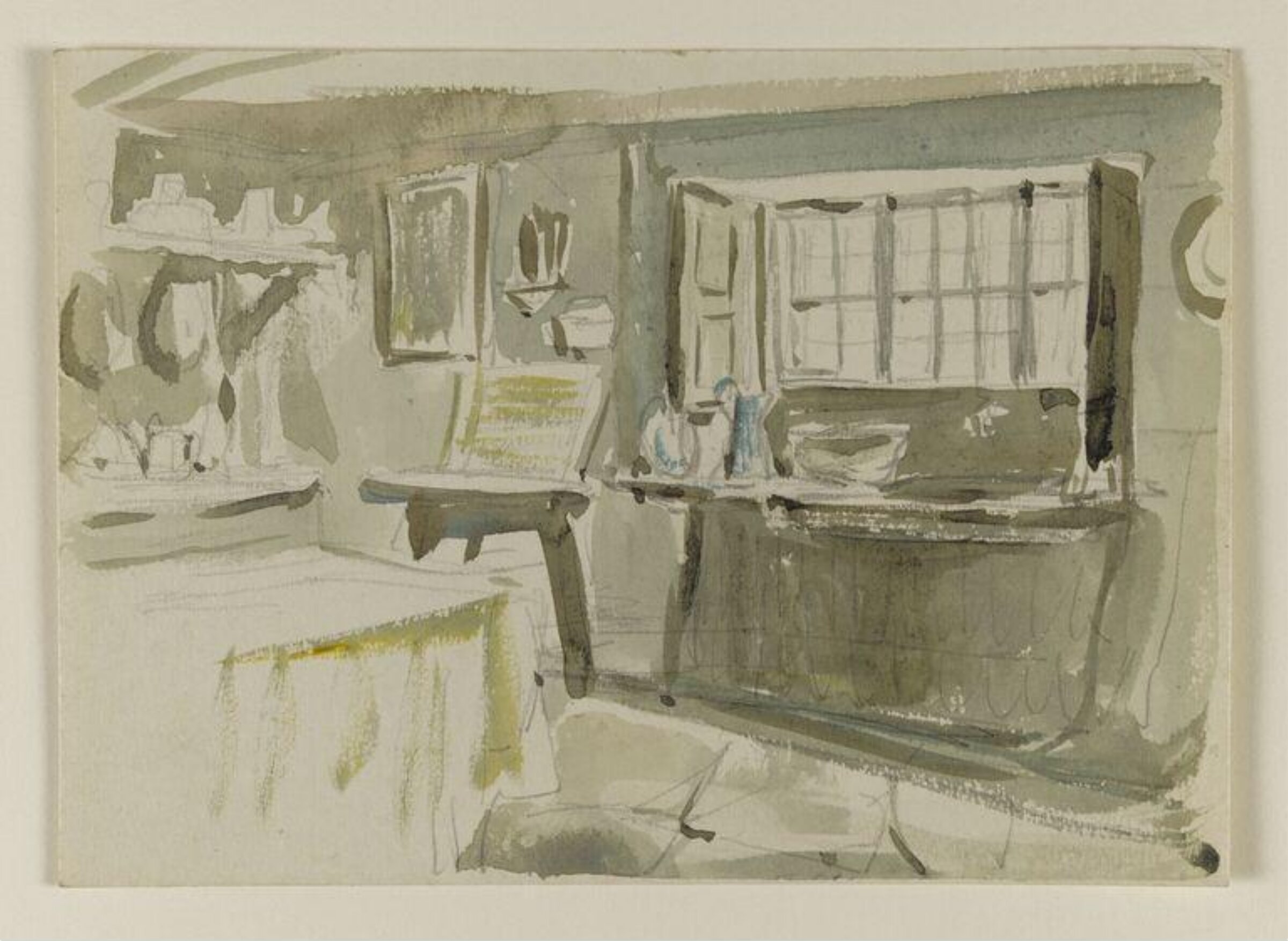
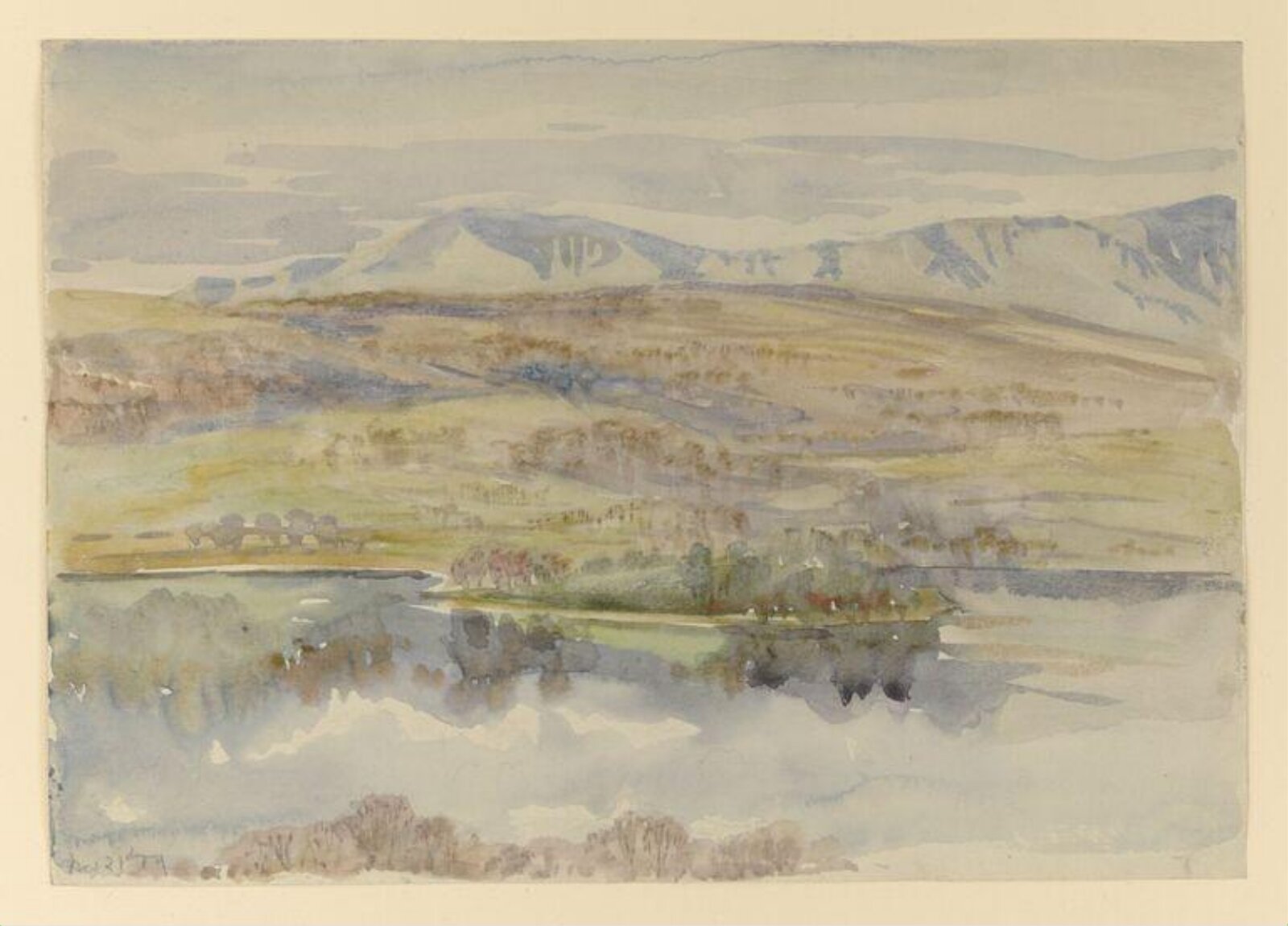
View across Esthwaite Water
Can I see it?
Not on view at present
Where is “View across Esthwaite Water” now? Collection: Victoria and Albert Museum, London. Not on view at present. Checked September 25, 2026.

London, United Kingdom
It belongs to the collection, but is not on display at present.
- Checked
- In this state since
- Source
- The museum
About the work
Beatrix Potter (1866-1943) is one of the world's best-loved children's authors and illustrators. She wrote the majority of the twenty-three Original Peter Rabbit Books between 1901 and 1913. The Tale of Peter Rabbit (Frederick Warne, 1902) is her most famous and best-loved tale.
Beatrix Potter enjoyed sketching the British landscape in all seasons. From the age of 16 she visited the Lake District regularly with her parents. Many years later, in 1905, she purchased Hill Top Farm, situated by her favourite lake, Esthwaite Water; from this time she made many drawings of the area surrounding the farm. This watercolour study shows the view across Esthwaite Water on a November day in 1909. Beatrix Potter settled permanently in the Lake District in 1913 following her marriage to Lakeland solicitor William Heelis.
Victoria and Albert Museum
Details
- Accession number
- BP.1079
What it shows
In the catalog
Sources
- Victoria and Albert Museum
- Image: Victoria and Albert Museum — © Victoria and Albert Museum, London
In the life of Beatrix Potter
The whole life1903–1922
Two or three books a year with the editor Norman Warne
“The Tale of Squirrel Nutkin” and “The Tailor of Gloucester” followed “Peter Rabbit” in 1903 — both also began as picture letters to the Moore children. Working with the editor Norman Warne, Beatrix published two or three little books a year — 23 in all in that format, the last, in 1922, being “Cecily Parsley’s Nursery Rhymes”; the royalties gave her a degree of independence, though she still lived with her parents.
1905–1909
Learning to farm: a tenant, sheep and Castle Farm
The tenant farmer John Cannon and his family stayed on to run the farm while Beatrix made improvements and learned the techniques of fell farming and livestock; the following year she added sheep. To protect her boundaries she turned to the Hawkshead solicitors W. H. Heelis & Son and, with William Heelis acting for her, bought adjoining pasture — in 1909 the 20 acres of Castle Farm across the road from Hill Top.
1905–1913 · Education
governance