George Keyt
Untitled
May one see it?
Not receiving at present

Victoria and Albert Museum
London, United Kingdom
It belongs to the collection, but is not on display at present.
- Checked
- 8 days ago
- In this state since
- Sep 25, 2026
- Source
- The museum's own collection data
About the work
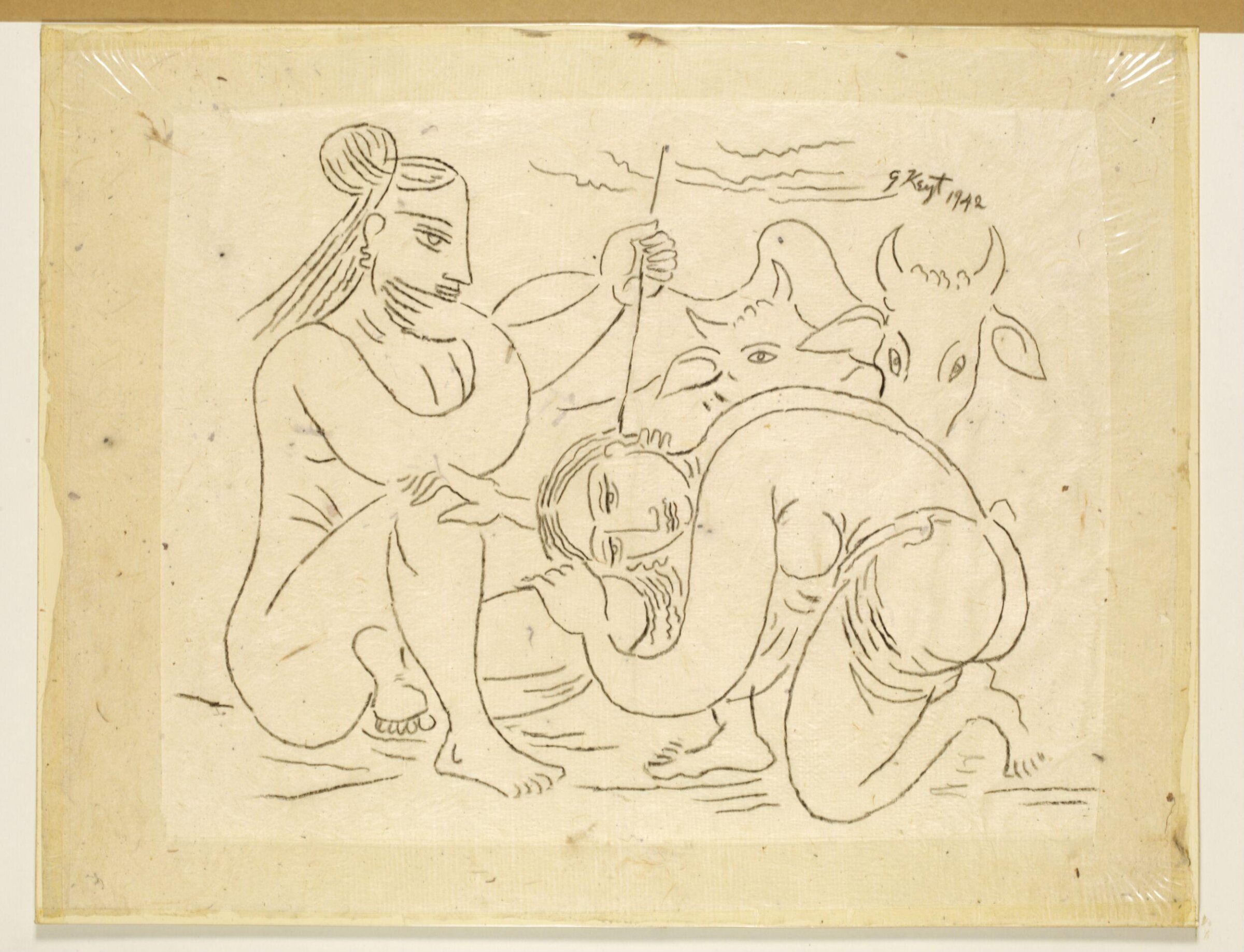
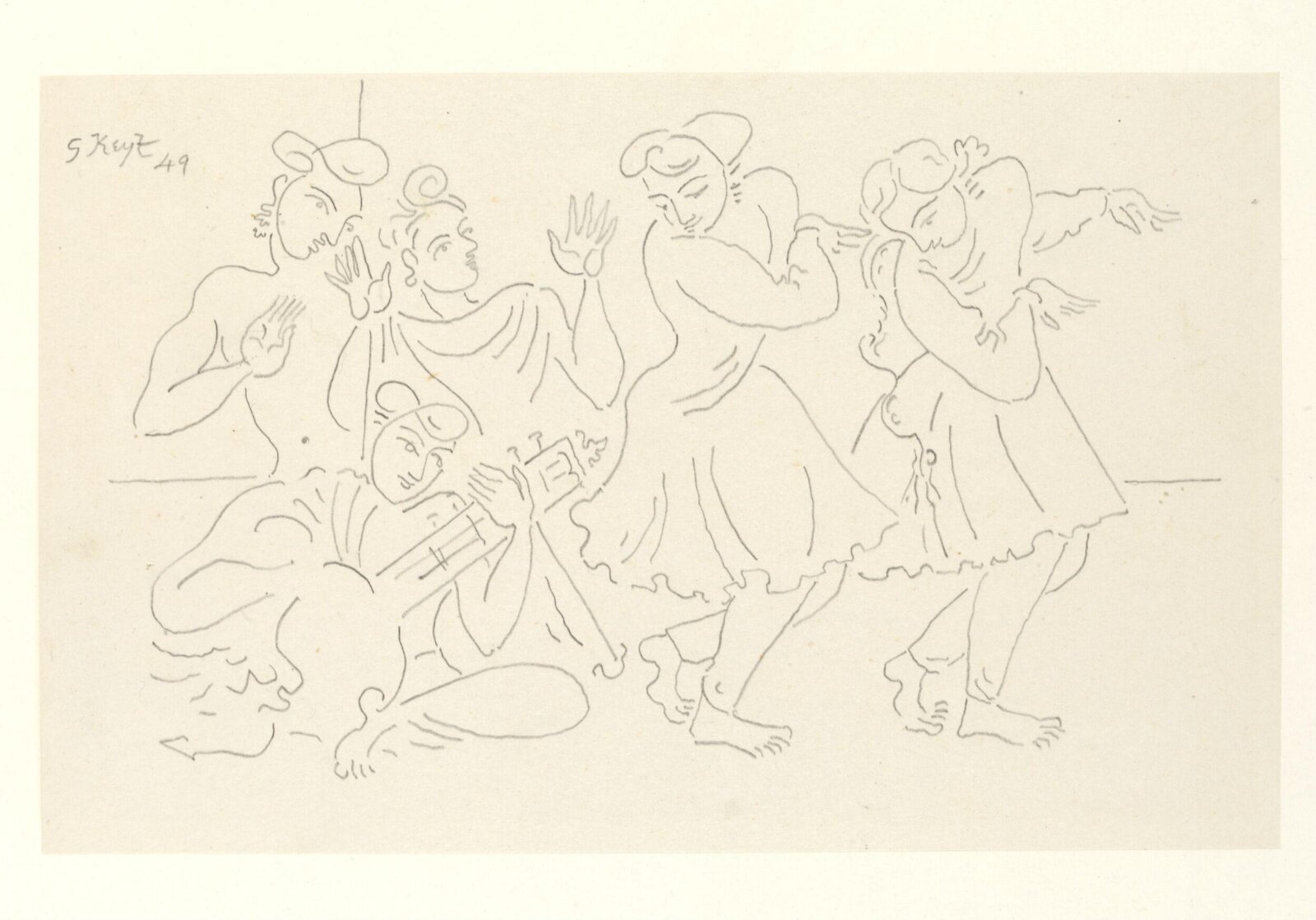
The drawing depicts two Kathak dancers and three musicians performing in an open space. The artist has used simple and minimal lines creating figures that appear somewhat stylised yet dynamic. The drawing reflects Keyt's commitment to support the revival of indigenous art forms. Kathak, which is one of the eight forms of Indian classical dances, originated from northern India. This dance form traces its origins to the the nomadic bards of ancient northern India, known as Kathaks, or story tellers. These bards, performing in village squares and temple courtyards, mostly specialized in recounting mythological and moral tales from the scriptures and embellished their recitals with hand gestures and facial expressions. Performers used theatrical and stylized gestures and musicians often played instruments and sang along, to enliven the stories.
Read on
George Keyt (1901–1993) was born in Sri Lanka (Ceylon). The ancient hill capital of Malwatte Vihareand with its Buddhist temples came to exercise a powerful and lasting influence on his artistic and literary output. Increasingly, the artist became greatly drawn towards Sri Lankan Buddhist philosophy, leading him to champion the Buddhist revival cause. This interest spurred the young painter to reject the Western cultural values he had been brought up with and explore both Hindu mythology and Indian literary works.
Towards the end of his career, the artist assimilated Western elements into his visual vocabulary such as Picasso’s cubism and Henri Matisse’s painterly flatness to paint Hindu mythological figures.
Victoria and Albert Museum
Particulars
- Accession number
- IS.580-1952
What it shows
In the catalog
Sources
- Victoria and Albert Museum: the museum's own open data · fetched 8 days ago
- Image: Victoria and Albert Museum — © Victoria and Albert Museum, London