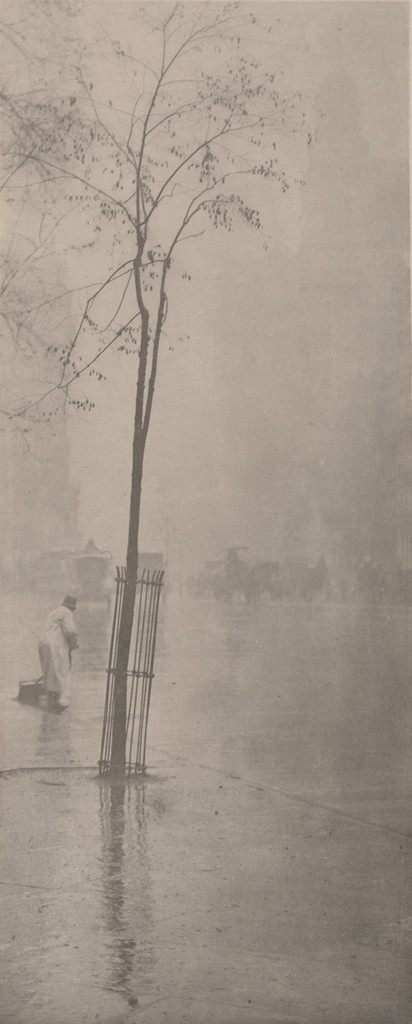
 Alfred StieglitzAmerican, 1864–1946
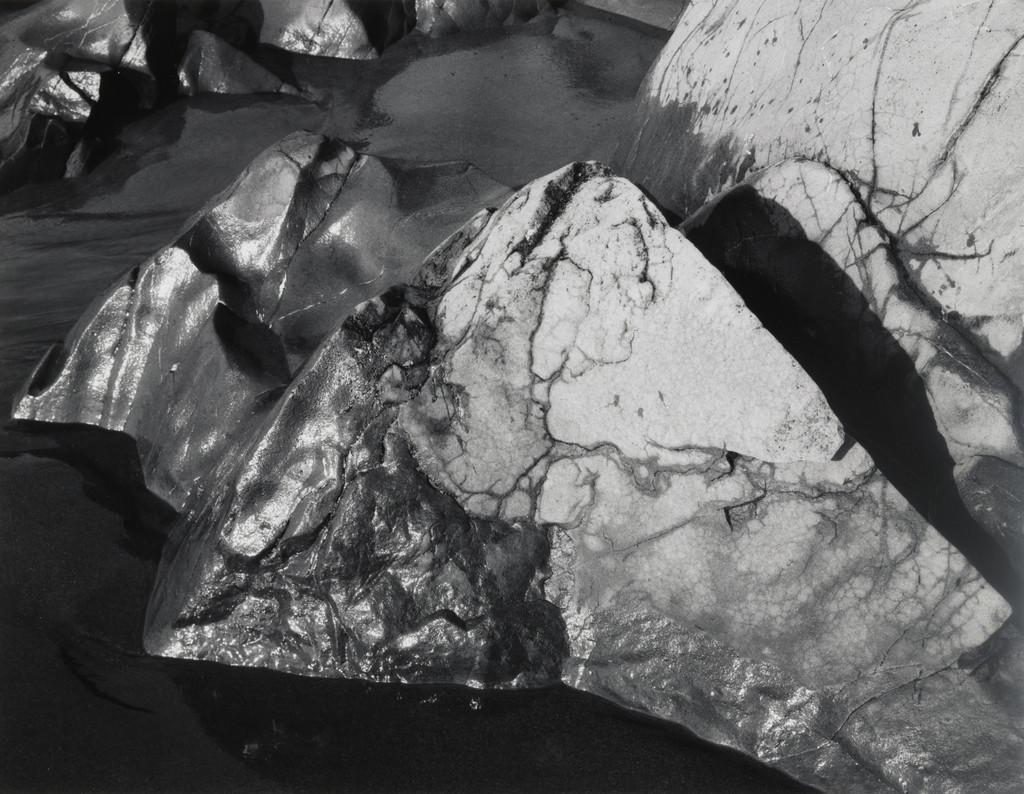
Untitled
May one see it?
Not receiving at present

New York, United States
It belongs to the collection, but is not on display at present.
- Checked
- Source
- The museum
Particulars
- Accession number
- 397.1976
In the catalog
Sources
- The Museum of Modern Art
- Image: The Museum of Modern Art — © the artist or rights holder
Meanwhile, in the life of Alfred Stieglitz
The whole life27 September 1898
Daughter born: Katherine Stieglitz
May 1899
A one-man show of 87 prints
In May 1899 the Camera Club gave Stieglitz a one-man exhibition of eighty-seven prints. Preparing it while producing Camera Notes took a toll on his health; he brought in his friends Joseph Keiley and Dallet Fuguet, who were not Club members, as associate editors, and older members began campaigning against him, embroiling him throughout 1900 in protracted administrative battles.
1901
Breakdown and resignation from Camera Notes
Worn down by the strain of managing the Camera Club, in 1901 Stieglitz collapsed in the first of several mental breakdowns and spent much of the summer recuperating at Oaklawn, the family home on Lake George. Back in New York, he announced his resignation as editor of Camera Notes.
1902
Founds the Photo-Secession
In December 1901 Charles DeKay of the National Arts Club invited Stieglitz to put together an exhibition with “full power to follow his own inclinations”. Within two months he had assembled prints from a close circle of friends and, in homage to the Munich photographers, called the group the Photo-Secession, a secession not only from the artistic restrictions of the era but from the official oversight of the Camera Club.
December 1902
First issue of Camera Work
Having fully left Camera Notes, in December 1902 Stieglitz published the first issue of the independent magazine Camera Work, with hand-pulled photogravures, criticism and essays on art (other accounts date it from 1903). The gravures were so fine that when a set of prints failed to arrive for a Photo-Secession exhibition in Brussels, gravures from the magazine were hung instead, and most viewers took them for the original photographs.