 Paul DelarocheFrench, 1797–1856
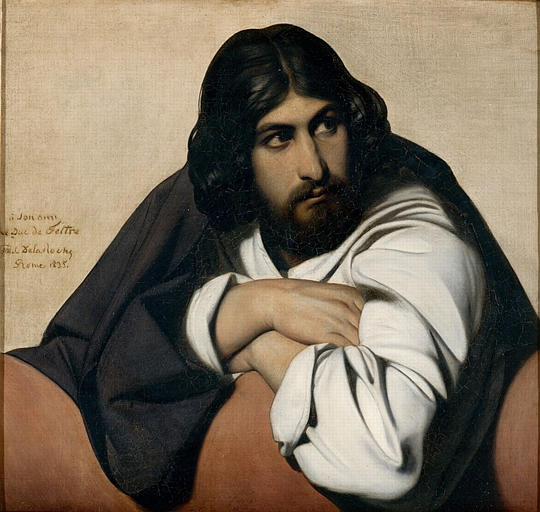
Un Apôtre
May one see it?
Unknown
Nantes, France
The owner is known; whether it is on view today is not.
- In this state since
- Source
- The museum
About the painting
In the museum's own words — in French
Couché en avant, les bras croisés ; la tête de 3/4 à gauche. ; Huile sur toile
Musée d'Arts de Nantes
Particulars
- Accession number
- 897
In the catalog
Sources
- Musée d'Arts de Nantes
- Image: Musée d'Arts de Nantes — Gérard Blot; Ministère de la Culture (France), base Joconde
Meanwhile, in the life of Paul Delaroche
The whole life1833
Becomes a professor at the École des Beaux-Arts
A year after his election to the Académie, he takes up a professorship at the school where he himself once studied. His pupils include Jean-Léon Gérôme, Jean-François Millet and Thomas Couture.
1833
Commissioned to paint a mural in the Madeleine
He is commissioned to paint a large mural for the central nave of the church of the Madeleine in Paris. Aware of his lack of experience in religious painting, he spends a year in Italy studying the religious art of the past; on his return he is told he is to work with Jules-Claude Ziegler and abandons the project altogether, thinking Ziegler would spoil the image he already had in mind.
1834
Leaves for Italy
Sets off for Italy, where he marries the following year.
1835
Marries Louise Vernet
Marries, in Italy, Louise, daughter of the battle painter Horace Vernet, director of the French Academy in Rome.
after 1837
Stops exhibiting at the Salons
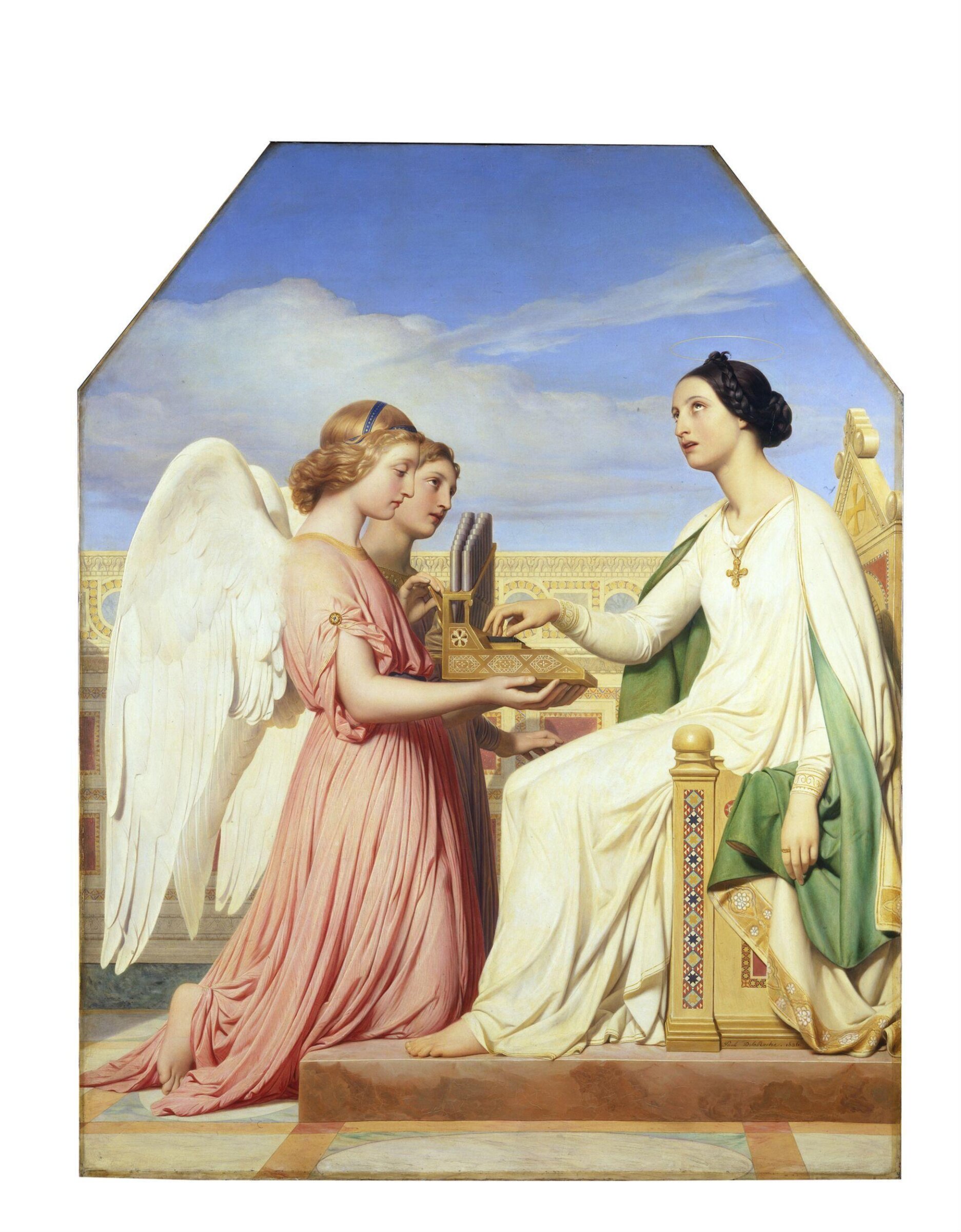
After “St. Cecilia” he stops showing his work altogether: the cool reception of the painting, together with his rejection of Davidian values in French society and government, leads to a self-imposed exile from the state-sponsored Salons.
1837
Receives the commission for “The Hemicycle”
The École’s architect, Félix Duban, entrusts him with a monumental mural for the school’s ceremonial hall, later known as the Hémicycle. Four of his pupils assist him.