 Mikhail Vrubel1856–1910
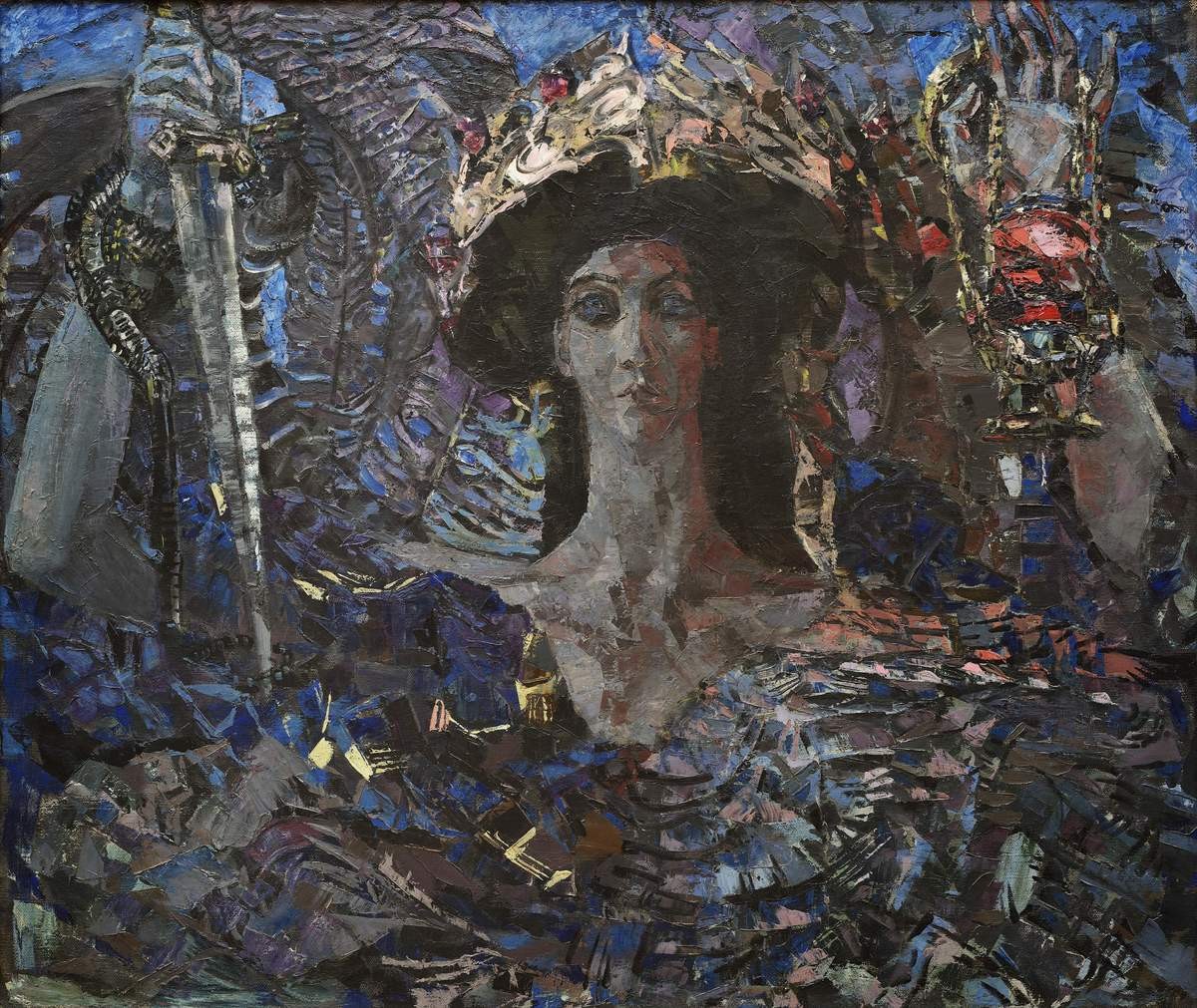
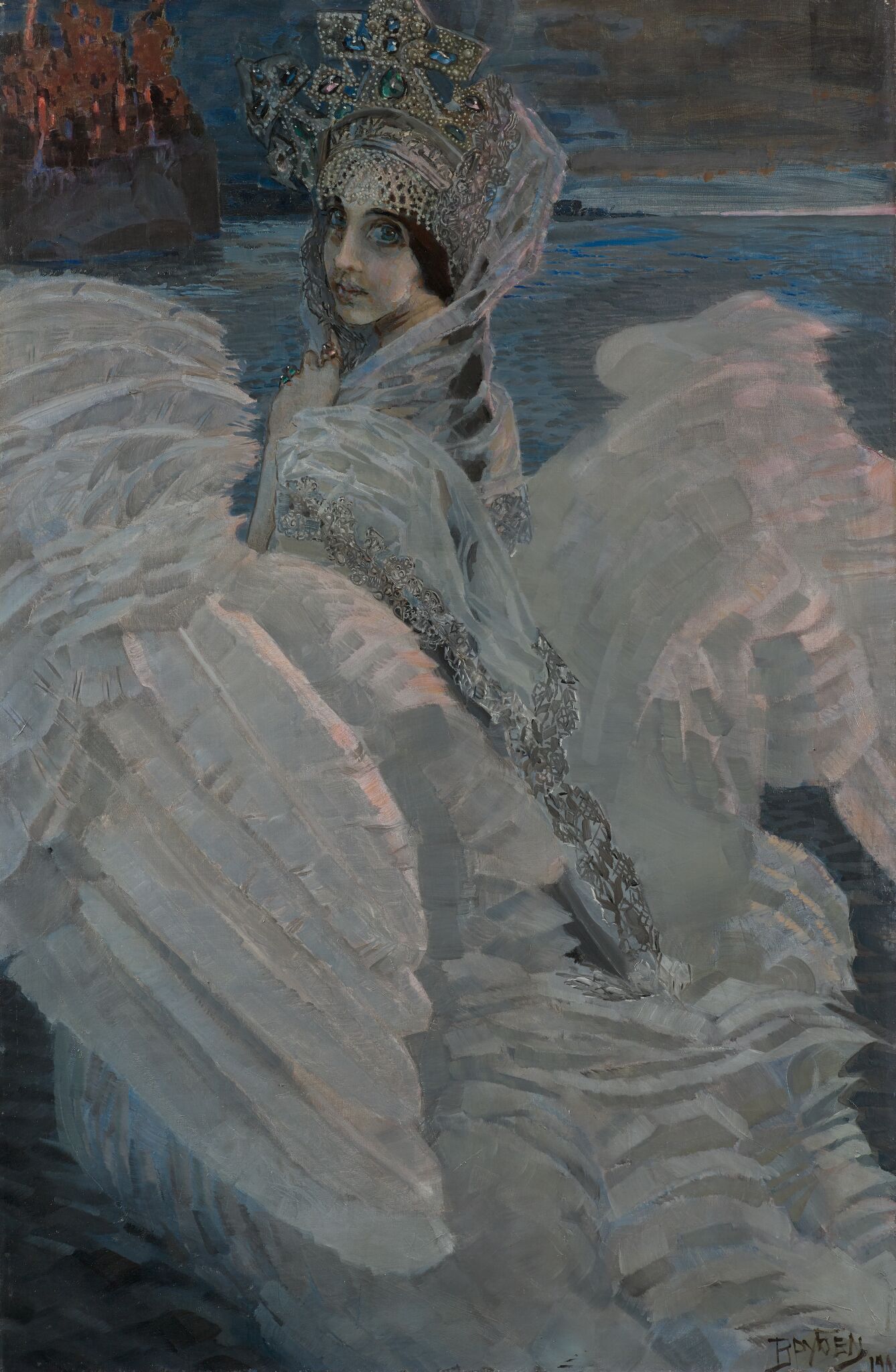
Царевна-Лебедь
May one see it?
Unknown

Tretyakov Gallery
Moscow, Russia
The owner is known; whether it is on view today is not.
- Source
- The museum
About the painting
In the museum's own words — in Russian
«Царевна-Лебедь» была написана Михаилом Врубелем в период его работы над художественным оформлением оперы Николая Римского-Корсакова по мотивам сказки Александра Пушкина «Сказка о Царе Салтане». Партия царевны-лебедь была создана специально для супруги художника, оперной певицы Надежды Забелы-Врубель.
Работу над картиной мастер завершил весной 1900 года, и она практически сразу была приобретена известным коллекционером Михаилом Морозовым. Премьера оперы Римского-Корсакова «Сказка о Царе Салтане» состоялась 21 октября (2 ноября) 1900 года, публика с восторгом приняла постановку. Надежда Забела-Врубель писала своей сестре: «…Миша очень отличился в декорациях «Салтана», и даже его страшные враги – газетчики говорят, что декорации красивы, а доброжелатели прямо находят, что он сказал новое слово в этом жанре, и все это при такой скорости: в две с половиною недели все было написано».
Read on
Запечатленный Михаилом Врубелем на картине сказочный образ «Царевны-Лебедь», нераздельно принадлежит образному миру своего творца. В его многогранной кристаллической структуре присутствуют черты главной героини сказки Пушкина, воплощенной на сцене его музой Надеждой Забелой-Врубель. В то же время он лишен условной иллюстративности. С царевной из сказки его роднит лишь тонкая перекличка между золотым веком романтизма и неоромантизма, обращенных к древнерусской мифологии. В этом произведении соединены воедино главные пластические и эстетические особенности творческого метода мастера. Его художественный язык, рожденный в тесном переплетении разных традиций изобразительности, был нов для своего времени. Только Врубелю оказалось под силу запечатлеть дуальность образа девы-птицы в момент ее превращения, когда реальное встречается с фантастическим.
Художник обладал мастерством изображения особого мистического взгляда, который он приобрел в начале своего творческого пути, работая над образами святых Кирилловской церкви в Киеве. Выразительные глаза Царевны-Лебедь, полные неизъяснимой тайны, исполнены художником с таким же глубоким чувством как и глаза на эскизе к иконе “Богоматерь” (1884). Прекрасно владевший академическим рисунком, Врубель искусно изобразил естественную материю невесомой ткани, окутывающей фигуру царевны и блеск сверкающих драгоценных камней, обрамляющих ее головной убор. Легкая, музыкальная, построенная на тональных контрастах ритмичная фактура ниспадающих крыльев лебедя, окружает ее светлым сияющим ореолом совершившегося чуда превращения. Позднее, подобный звучный мотив легкого “шороха” крыльев будет использован мастером в произведении “Шестикрылый Серафим (Азраил)” (1904, Государственный Русский музей).
Впервые картина «Царевна-Лебедь» Михаила Врубеля из коллекции Михаила Морозова была представлена в 1901 году на выставке «36-ти художников». В 1910 году она поступила по завещанию в Третьяковскую галерею.
Tretyakov Gallery
Particulars
- Accession number
- Ж-42
In the catalog
Sources
- Tretyakov Gallery
- Image: Tretyakov Gallery — © State Tretyakov Gallery
Meanwhile, in the life of Mikhail Vrubel
The whole lifesummer 1898
First symptoms of illness
During a summer stay in Ukraine the first symptoms of his future illness appeared: his migraines grew so severe that he took phenacetin in huge quantities — up to 25 grains or more, according to his sister-in-law. A previously unknown irritability set in too, especially when someone disagreed with his opinion of a work of art.
January 1898
“Morning” at Diaghilev’s exhibition
In St Petersburg Ilya Repin advised Vrubel not to destroy his panel “Morning”, which a client had turned down, but to show it at an exhibition. So the canvas went into Sergei Diaghilev’s exhibition of Russian and Finnish artists at the museum of the Stieglitz School.
summer 1900
A gold medal at the Paris World’s Fair
In midsummer the Vrubels learned that he had won a gold medal at the Exposition Universelle for the fireplace “Volga Svyatoslavich and Mikula Selyaninovich”; his ceramics and majolica were shown in the Handicrafts Pavilion. Serov won the Grand Prix that year, and Korovin and Malyavin gold medals.
1 September 1901
Birth of his son Savva
Nadezhda Zabela-Vrubel gave birth to a son, Savva — a sturdy baby with a cleft lip; for his sake she left the stage for a time, and the family’s keep fell entirely on Vrubel. In the thick of his work on the “Demon” the artist painted a large watercolour portrait of his six-month-old son in a pram.
1902
Bekhterev’s diagnosis
In St Petersburg Vrubel went on repainting the “Demon” without pause, ruining it in his friends’ view, and his family took him to the psychiatrist Vladimir Bekhterev, who diagnosed “incurable progressive paralysis” — tertiary syphilis; the artist himself was told nothing. In Moscow, although the collector Vladimir von Meck bought the painting for 3,000 roubles, he grew worse still: he drank and squandered money, and his wife and son tried to take refuge from him with relatives in Ryazan.
April 1902
First hospitalisation
In early April, with symptoms of acute mental disorder, Vrubel was admitted to F. A. Savey-Mogilevich’s private clinic; until August his condition was so grave that even his wife and sister were not allowed to see him. In September he was moved to Vladimir Serbsky’s clinic at Moscow University, and Serbsky confirmed the diagnosis, establishing that the infection dated back to 1892.