 Mikhail Vrubel1856–1910
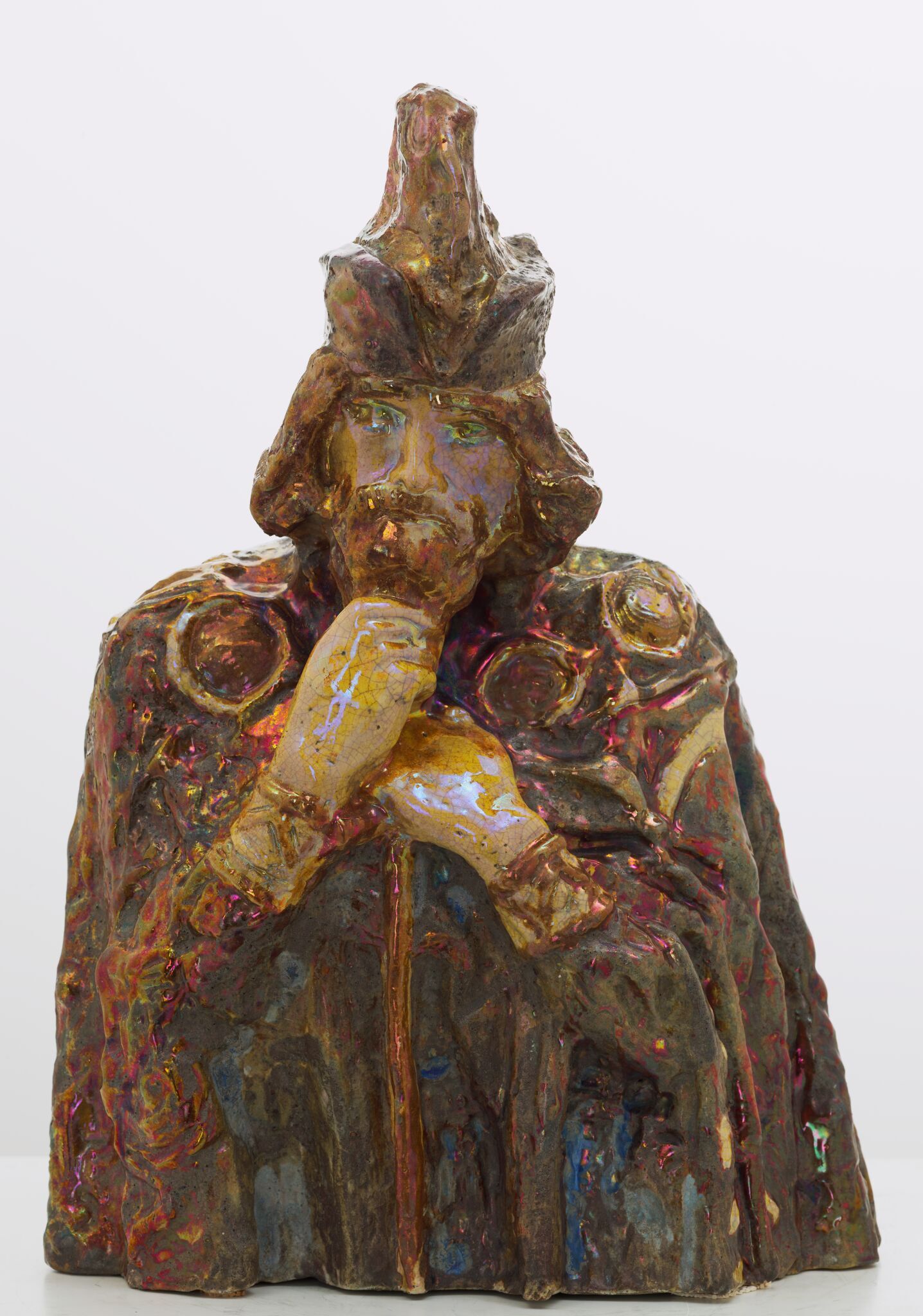
Царь Берендей
May one see it?
Unknown

Moscow, Russia
The owner is known; whether it is on view today is not.
- In this state since
- Source
- The museum
About the sculpture
In the museum's own words — in Russian
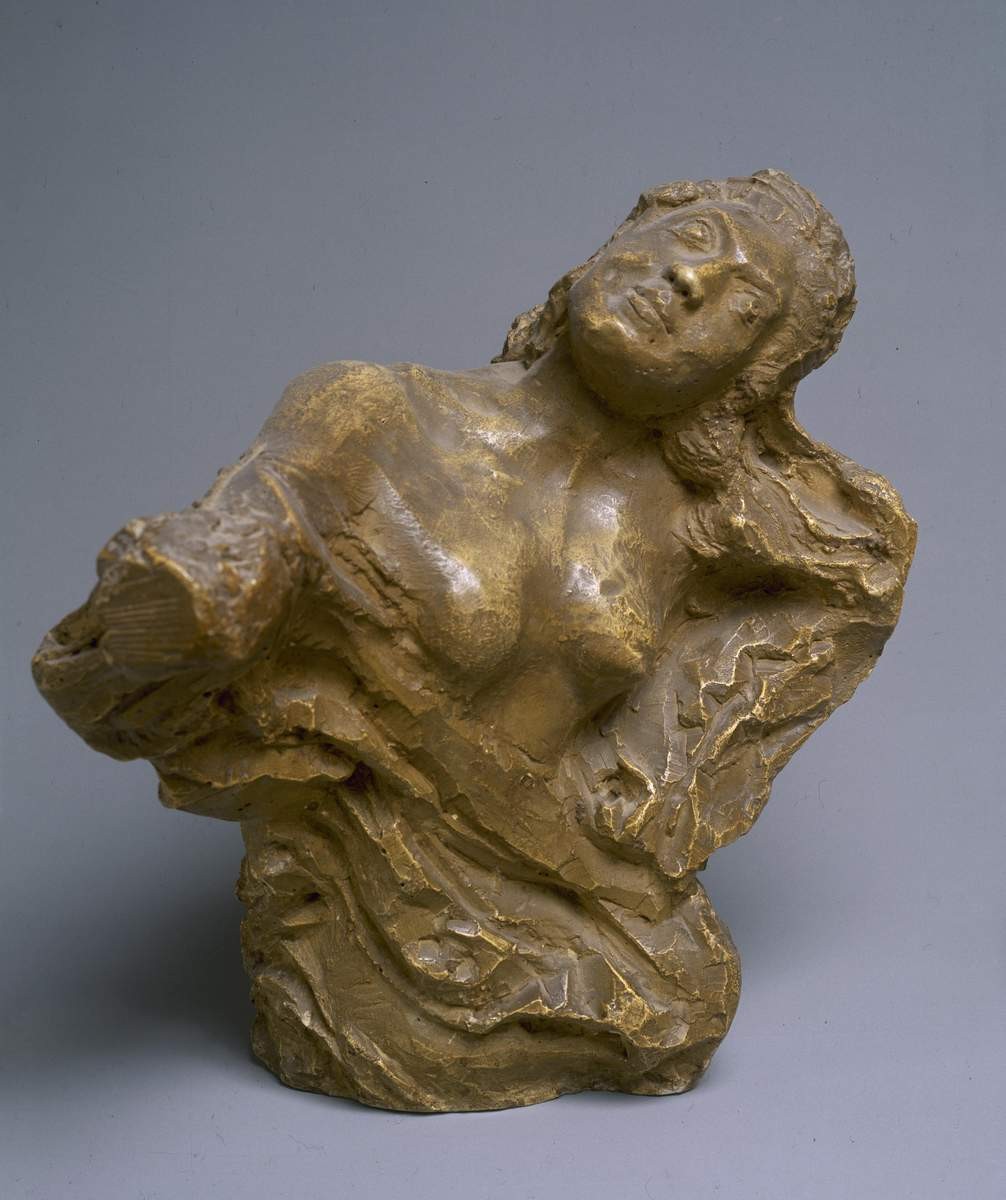
Михаил Врубель – выдающийся русский художник конца XIX – начала ХХ века. Как представитель эпохи модерна, он реализовал творческий потенциал практически во всех видах изобразительного искусства. В области скульптуры Врубель также сумел воплотить свои новаторские творческие идеи.
Художник увлекся изготовлением керамической скульптуры, когда в 1890 году начал работать в гончарной мастерской в усадьбе Абрамцево. На создание яркой, красочной майолики М.А. Врубеля вдохновляли образы русских народных сказок, которые вскоре стали сюжетами современных театральных постановок в Русской частной опере С.И. Мамонтова в Москве.
Read on
В начале 1898 года у художника возникли первые замыслы выполнения в скульптуре основных персонажей оперы «Снегурочка». В это же время у него завязались дружеские отношения с автором музыки – Н.А. Римским-Корсаковым. Заглавную партию в спектакле исполнила супруга живописца, певица Н.И. Забела-Врубель.
В пьесе А.Н. Островского царь Берендей – справедливый и мудрый правитель, который стремится к благополучию и миру для всех жителей своей страны. В этом произведении Врубель изобразил его в облике сказочного старца, погруженного в глубокие раздумья.
Созвучие русской народной культуре придает образу костюм персонажа – ало-бордовый парчовый кафтан и стрелецкая шапка. Ощущение великолепия и волшебства возникает благодаря золотым переливам глазури на цветной поверхности скульптуры. Особенной выразительности полихромии художник добился, освоив новую технологию восстановительного обжига.
Текучесть форм и утонченность колористического решения в керамических фигурах – органичное выражение в пластическом искусстве поэтического мира Врубеля.
Tretyakov Gallery
Particulars
- Accession number
- СК-415
In the catalog
Sources
- Tretyakov Gallery
- Image: Tretyakov Gallery — © State Tretyakov Gallery
Meanwhile, in the life of Mikhail Vrubel
The whole lifeSeptember 1889
The move to Moscow
After rushing to Kazan to his gravely ill father, in September Vrubel went to Moscow to see friends — and stayed for fifteen years; most likely he was drawn there by an infatuation with a circus horsewoman. He settled in Konstantin Korovin’s studio on Dolgorukovskaya Street; a plan for the two of them to work together with Serov came to nothing, as relations with Serov did not work out.
December 1889
Meeting Savva Mamontov
Korovin introduced Vrubel to the industrialist and patron Savva Mamontov, and in December the artist moved into his house on Sadovaya-Spasskaya Street. Mamontov became his steady patron, though Mamontov’s wife openly called Vrubel “a blasphemer and a drunkard”, and the painter soon moved to a rented flat.
early 1896
Meeting Nadezhda Zabela
In St Petersburg Vrubel stepped in for the ailing Korovin as designer of Humperdinck’s opera “Hansel and Gretel”, which Mamontov was financing, and at a rehearsal he first heard, then saw, the singer of Gretel — Nadezhda Zabela. Rushing up to her in the interval with the cry “What a lovely voice!”, he proposed almost on the day they met, and later told his sister that had she refused, he would have killed himself on the spot.
22 May 1896
The Academy rejects his Nizhny Novgorod panels
Mamontov secured Vrubel a commission for two huge panels for the art section of the All-Russian Exhibition — “Mikula Selyaninovich” and “The Princess of the Dream”, a hundred square metres in three months. But the academician Albert Benois, in charge of the pavilion, demanded sketches, a telegram went to St Petersburg — “Vrubel’s panels are monstrous, they must be removed” — the Academy’s commission ruled them unfit to show, and on 22 May the works were carried out of the pavilion.
April 1902
First hospitalisation
In early April, with symptoms of acute mental disorder, Vrubel was admitted to F. A. Savey-Mogilevich’s private clinic; until August his condition was so grave that even his wife and sister were not allowed to see him. In September he was moved to Vladimir Serbsky’s clinic at Moscow University, and Serbsky confirmed the diagnosis, establishing that the infection dated back to 1892.
3 May 1903
Death of his son Savva
Vrubel had been discharged from the clinic in February, and von Meck invited the family to spend the summer on his estate in Kiev province, but on the eve of departure two-year-old Savva fell ill, and in Kiev the child died. Vrubel at once shook off his apathy, busied himself with the funeral and supported his wife, who would not say a word; their son was buried on Baikove Hill.