 John ConstableBritish, 1776–1837
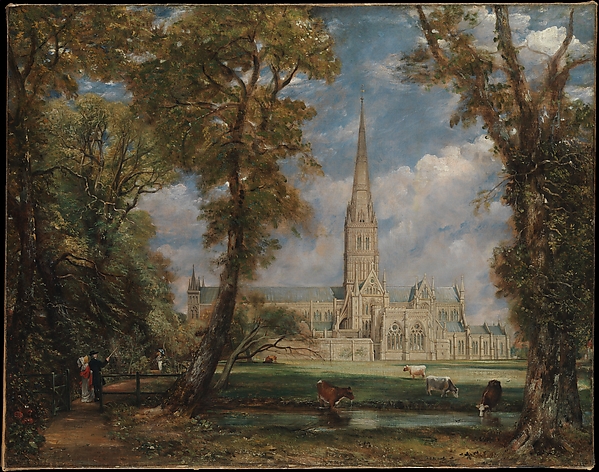
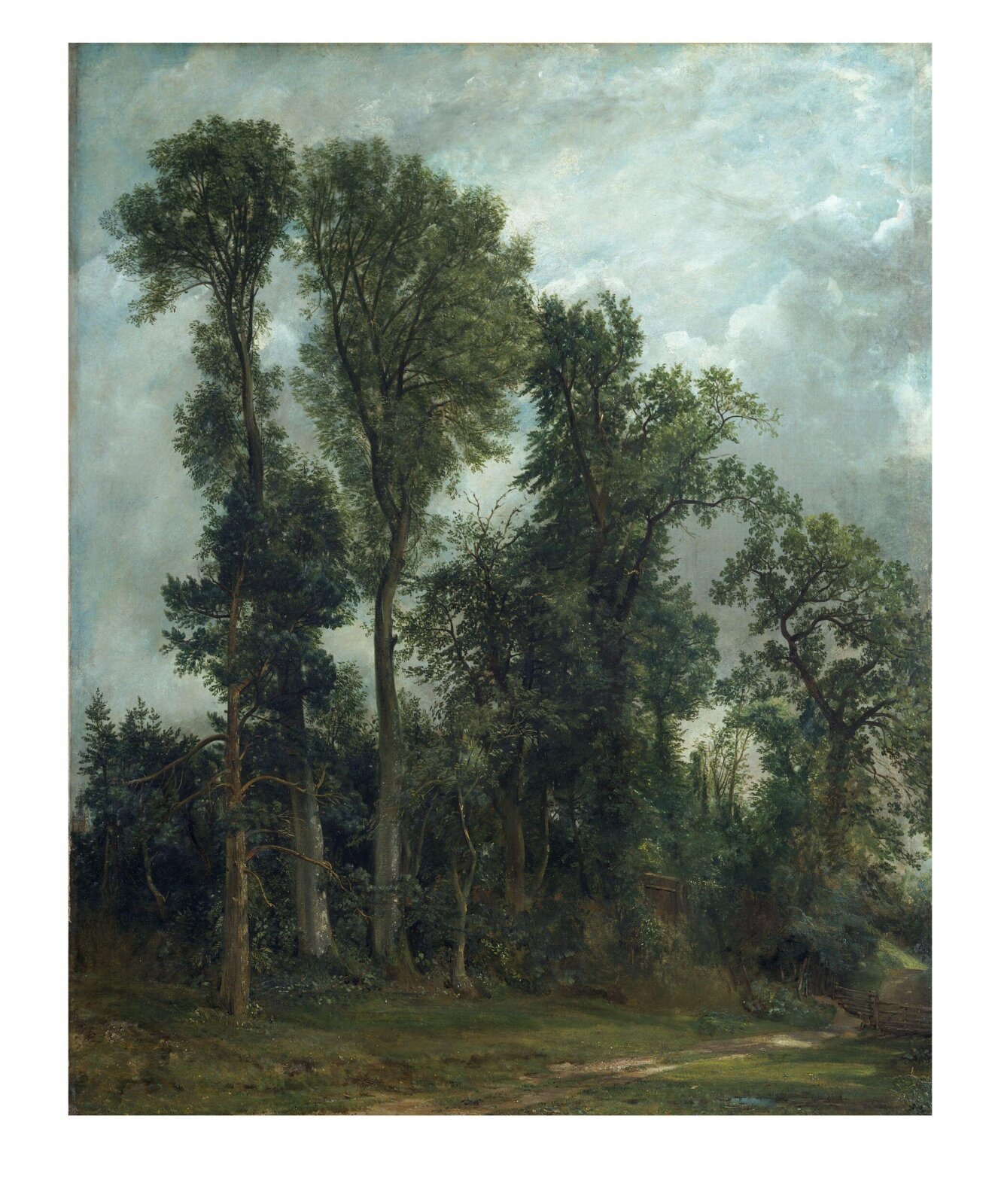
Trees at Hampstead: The Path to Church
May one see it?
Yes, receiving visitors

Victoria and Albert Museum
RoomPaintings, Room 87, The Edwin and Susan Davies GalleriesLondon, United Kingdom
On public display.
- Checked
- 7 days ago
- In this state since
- Sep 25, 2026
- Source
- The museum's own collection data
About the painting
The artist described the view as 'a natural (but highly elegant) group of trees, ashes, elms, & oak &c - which will be of quite as much service as if I had bought the field and hedge row'. The spire of Hampstead parish church can be seen at the bottom left. Constable and his wife lie buried in the graveyard.
Victoria and Albert Museum
Particulars
- Accession number
- 1630-1888
What it shows
In the catalog
Sources
- Victoria and Albert Museum: the museum's own open data · fetched 7 days ago
- Image: Victoria and Albert Museum — © Victoria and Albert Museum, London
Meanwhile, in the life of John Constable
The whole life1821
“The Hay Wain” at the Royal Academy
The picture, shown as “Landscape: Noon”, found no buyer, but it was seen by the painter Théodore Géricault and the writer Charles Nodier. According to Delacroix, Géricault went back to France quite stunned and invited Constable to Paris, while Nodier urged French artists to look to nature rather than to trips to Rome.
1821
“I should paint my own places best”
In a letter to his friend John Fisher in 1821 Constable wrote that he should paint his own places best, and that painting is but another word for feeling. The Dedham Vale around his home came to be known as “Constable Country”.
1821
Son born: Charles Golding Constable
23 October 1821
To Fisher: “I have done a good deal of skying”
Constable wrote to Fisher that he had done a good deal of skying and was determined to conquer all the difficulties that remained. He made cloud studies, noting the weather, direction of light and time of day on the back, and held the sky to be the key note of a landscape, drawing on the meteorologist Luke Howard’s classification of clouds.
1822/1823
Daughter born: Isabel Constable



![Vallon à Helmingham [Helmingham Dell], Constable, John, 1e quart du XIXe siècle (peint à l'été 1823 (selon Beckett)) (1823)](https://collections.louvre.fr/media/cache/large/0000000021/0000065616/0000312650_OG.JPG)