CanalettoItalian, 1697–1768
Title Page, from Vedute
Can I see it?
Not on view at present
Where is “Title Page, from Vedute” now? Collection: Art Institute of Chicago, Chicago. Not on view at present. Checked September 29, 2026.

Chicago, United States
It belongs to the collection, but is not on display at present.
- Checked
- In this state since
- Source
- The museum
About the work
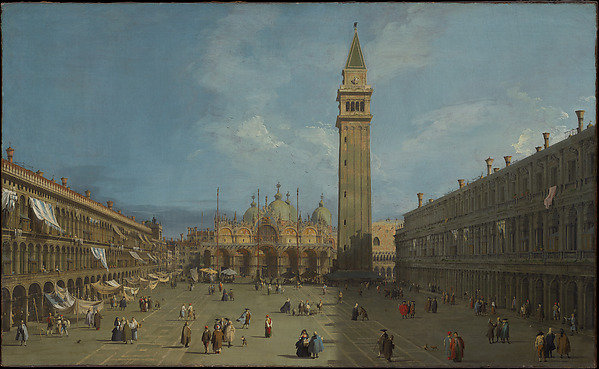
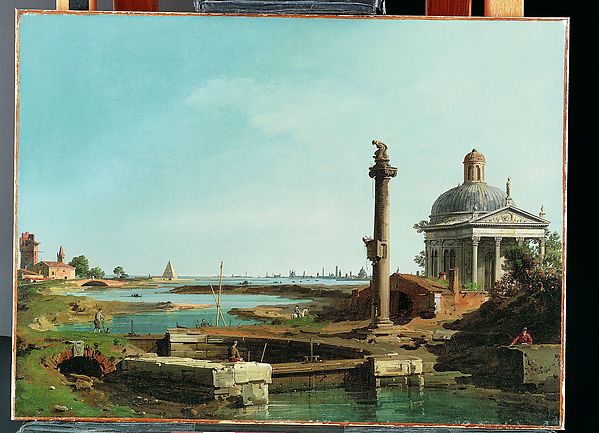
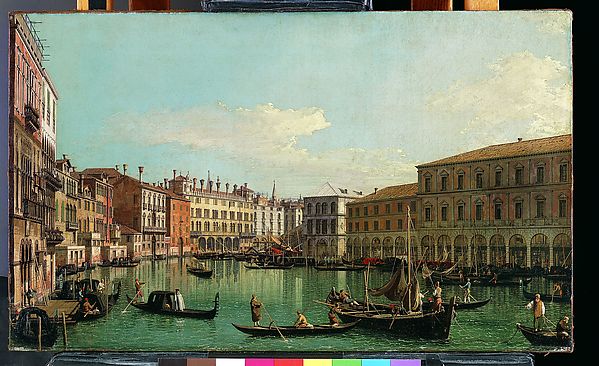
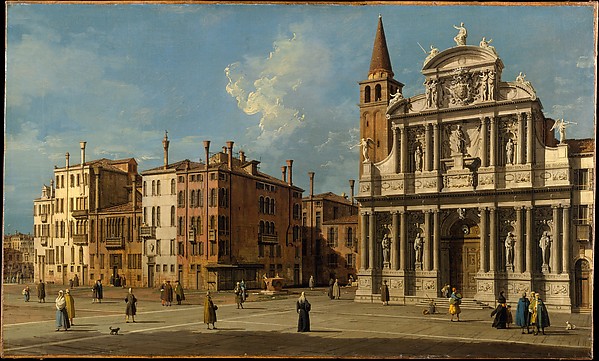
The Venetian artist Canaletto was the preeminent painter of vedute (views) of Italian cities and landscapes in the 18th century. Between 1735 and 1744, he focused on publishing etchings of similar scenes, many of which were partially or entirely fanciful. He dedicated this portfolio to his major patron, the connoisseur Joseph Smith (here Italianized as Giuseppe Smith), who may have supported the project. A resident of Venice from 1700, Smith became the British consul in 1744 and acted as an agent of sorts, finding commissions for the artist. Smith later sold his large collection of Canaletto’s works to King George III.
Art Institute of ChicagoCC BY 4.0
Details
- Accession number
- 1922.1381.1
In the catalog
Sources
- Art Institute of Chicago
- Image: Art Institute of Chicago — CC0
In the life of Canaletto
The whole life1720–1746 · Workplace
Venice
1728–1735
Visentini's etchings after thirty-eight of Canaletto's views
In 1728–35 Smith arranges for thirty-eight of Canaletto's painted vedute to be reproduced in etchings by Antonio Visentini and published under the title “Urbis Venetiarum Prospectus Celebriores ex Antonii Canal”.
c. 1729 – 1735
Smith as agent: a “market of taste” for the Venetian veduta
Joseph Smith — a banker, art dealer and later British consul in Venice — creates a “market of taste” for the Venetian veduta among British aristocrats touring Italy and, as Canaletto's commercial agent from about 1729 to 1735, in effect controls the artist's work to the benefit of them both. Among the young painter's buyers is also the Prince of Liechtenstein.