 August MackeGerman, 1887–1914
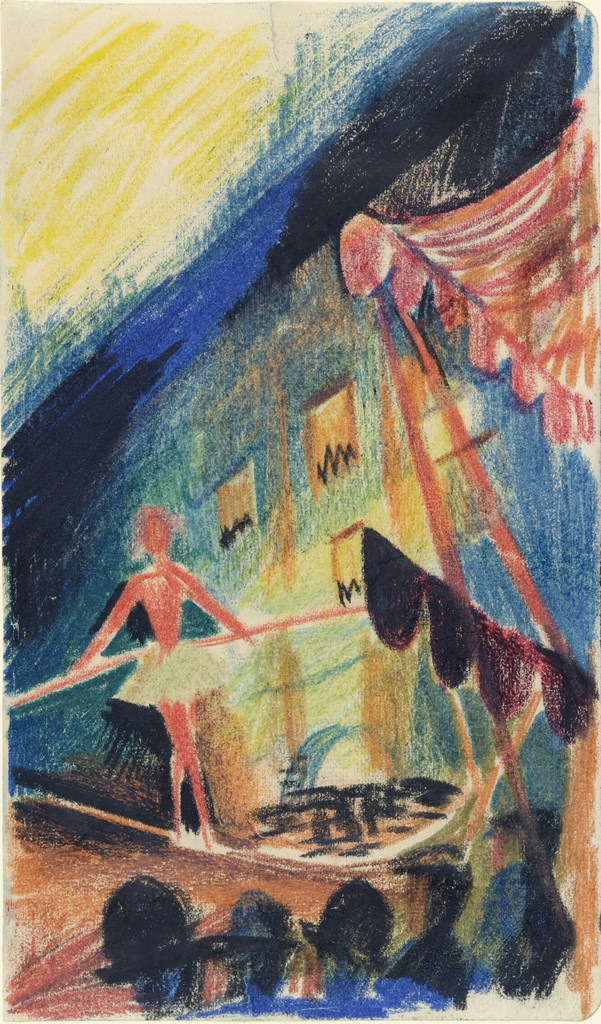
Tightrope Walker I (Seiltänzer I)
May one see it?
Not receiving at present

New York, United States
It belongs to the collection, but is not on display at present.
- Checked
- Source
- The museum
Particulars
- Accession number
- 142.1951
In the catalog
Sources
- The Museum of Modern Art
- Image: The Museum of Modern Art — © the artist or rights holder
Meanwhile, in the life of August Macke
The whole life1911
The Blue Rider: three works in the first exhibition
Macke founds the association of Expressionist artists Der Blaue Reiter together with Wassily Kandinsky, Alfred Kubin and Franz Marc; three of his works are shown at the Blue Rider exhibition in Munich in 1911.
1912
Back to real life: the break with abstraction
Abstraction remains an exception in Macke’s work: the metaphysical speculations that preoccupy the members of the group are alien to him, he is really interested in real life, and in 1912 he returns to the painting more natural to him. In his compositions he uses construction principles borrowed from the Cubists and the Blue Rider artists and is influenced by the Fauves and Delaunay’s Orphism, but always remains an independent master.
April 1914
Tunisia with Klee and Moilliet: landmark watercolours
In April 1914 Macke makes a two-week trip to Tunisia with Paul Klee and Klee’s school friend, the painter Louis Moilliet, and brings back a large number of landmark watercolours. The exotic atmosphere of Tunisia becomes fundamental to the luminist approach of his final period; the sketches and photographs will serve as material for “Tunisian Landscape”, “Landscape with Cows and a Camel” and other works, but Macke will not manage to use them fully.
8 August 1914
Mobilisation: to the front as a reservist
Almost immediately after the outbreak of the First World War, on 8 August 1914, Macke, a reservist, is called up for the front. Far, as Elisabeth wrote years later, from the “hurrah-patriotism” that seized many, he nevertheless considers it his duty to go; in his letters from the front he describes the horror and cruelty of the war.
26 September 1914
Killed in battle at twenty-seven
On the morning of 26 September 1914 Macke is killed in battle in Champagne at the age of 27; his remains are not found, and his name appears among those of other dead on a gravestone at the military cemetery at Souain (other accounts say he is buried in the German military cemetery at Souain-Perthes-lès-Hurlus). In one of his last letters he remarks that only the steadfastness of the defenders of the Western Front will spare Germany the devastation by war that the front-line regions of France have suffered.
26 September 1914
Died


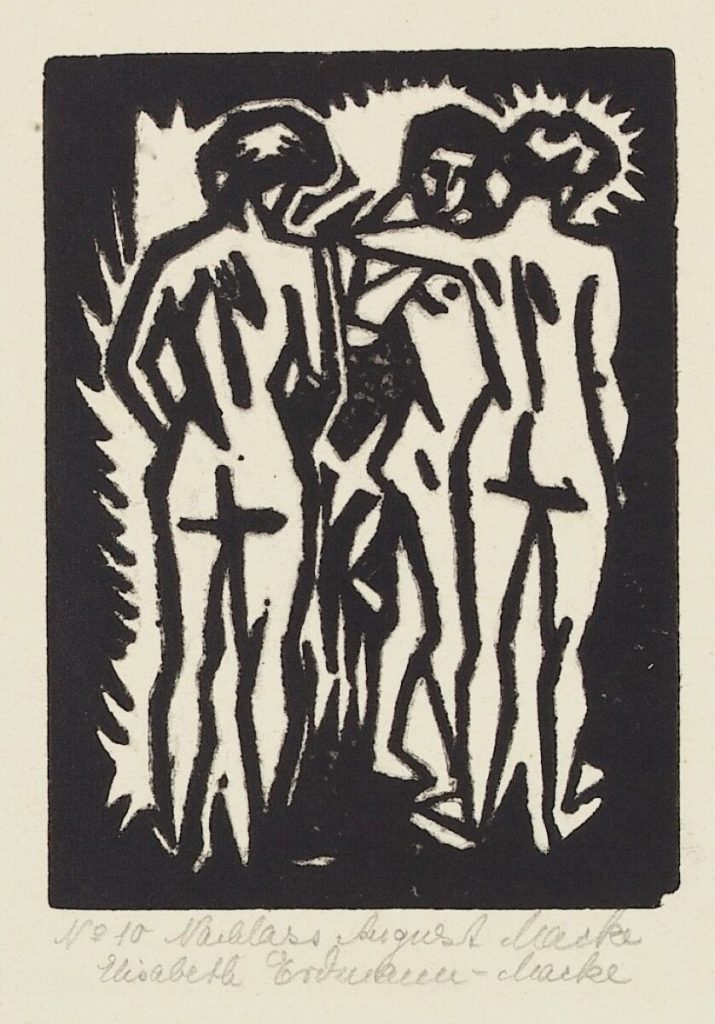
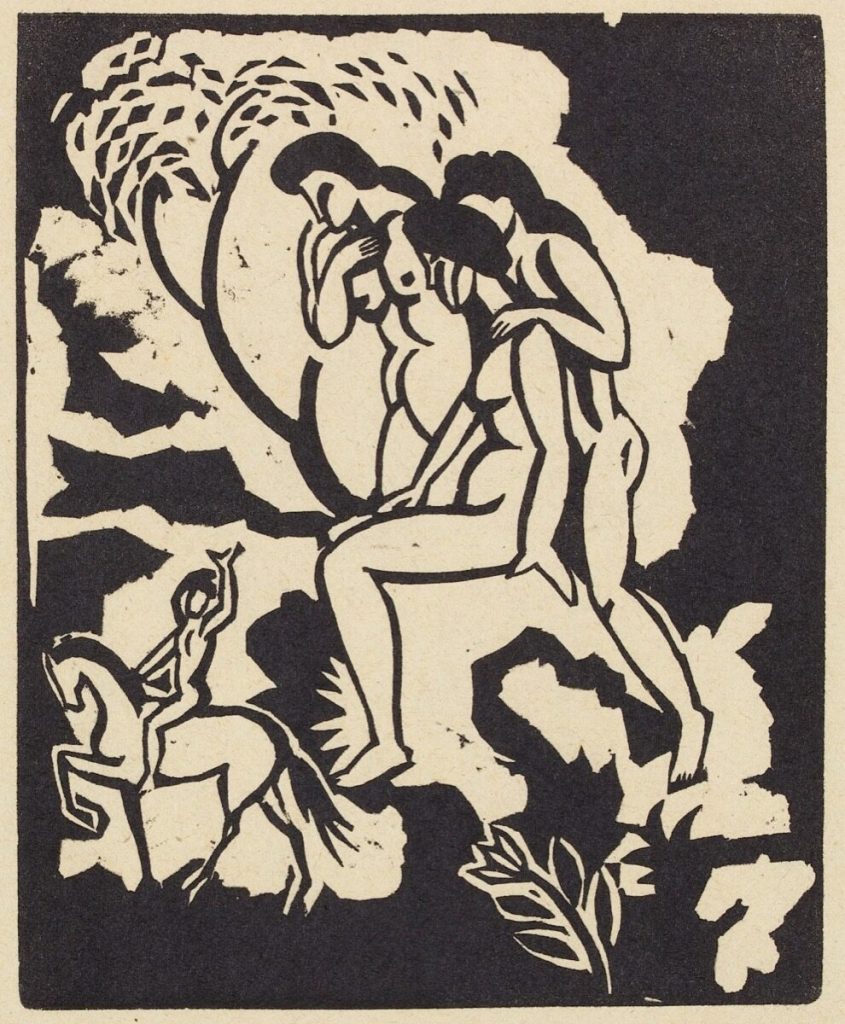
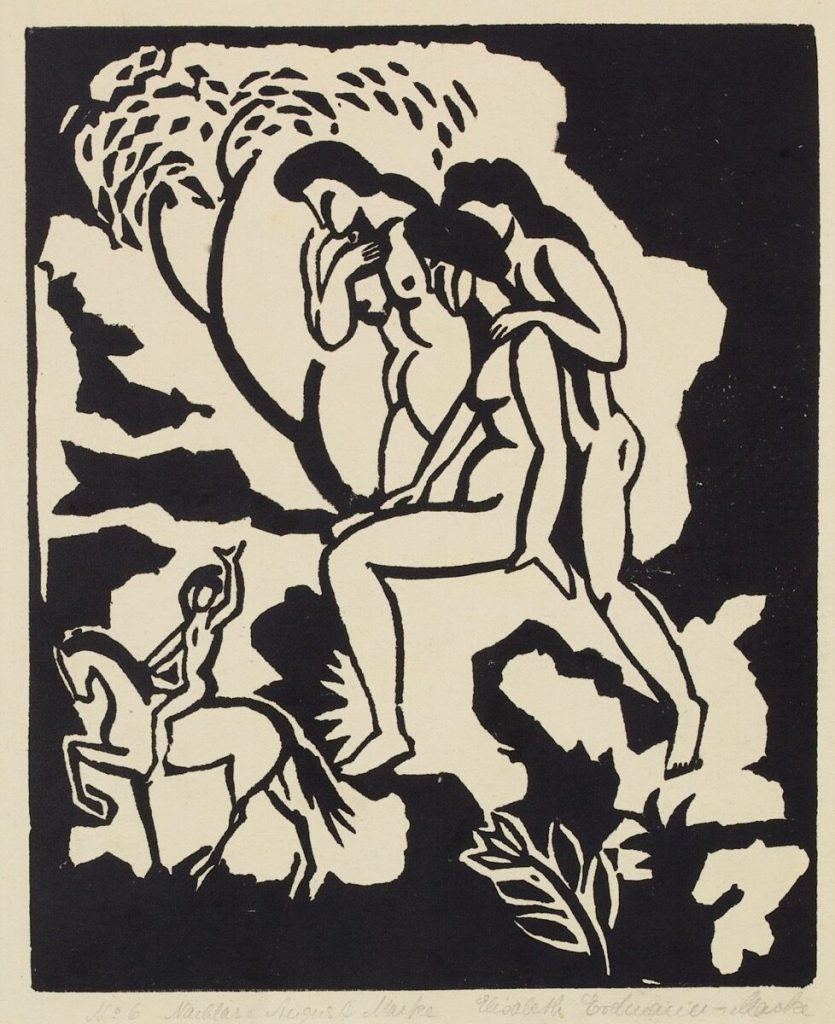
![Composition (3 Nudes) [Komposition (3 Akte)] (plate, preceding p. 79) from the periodical Das Kunstblatt, vol. 2, no. 4 (Apr 1918), August Macke, 1918 (executed 1912)](https://www.moma.org/media/W1siZiIsIjEyMjAwNCJdLFsicCIsImNvbnZlcnQiLCItcmVzaXplIDEwMjR4MTAyNFx1MDAzZSJdXQ.jpg?sha=6b27195223cf9aa3)