 Anthonie Palamedesz.Dutch, 1601–1673
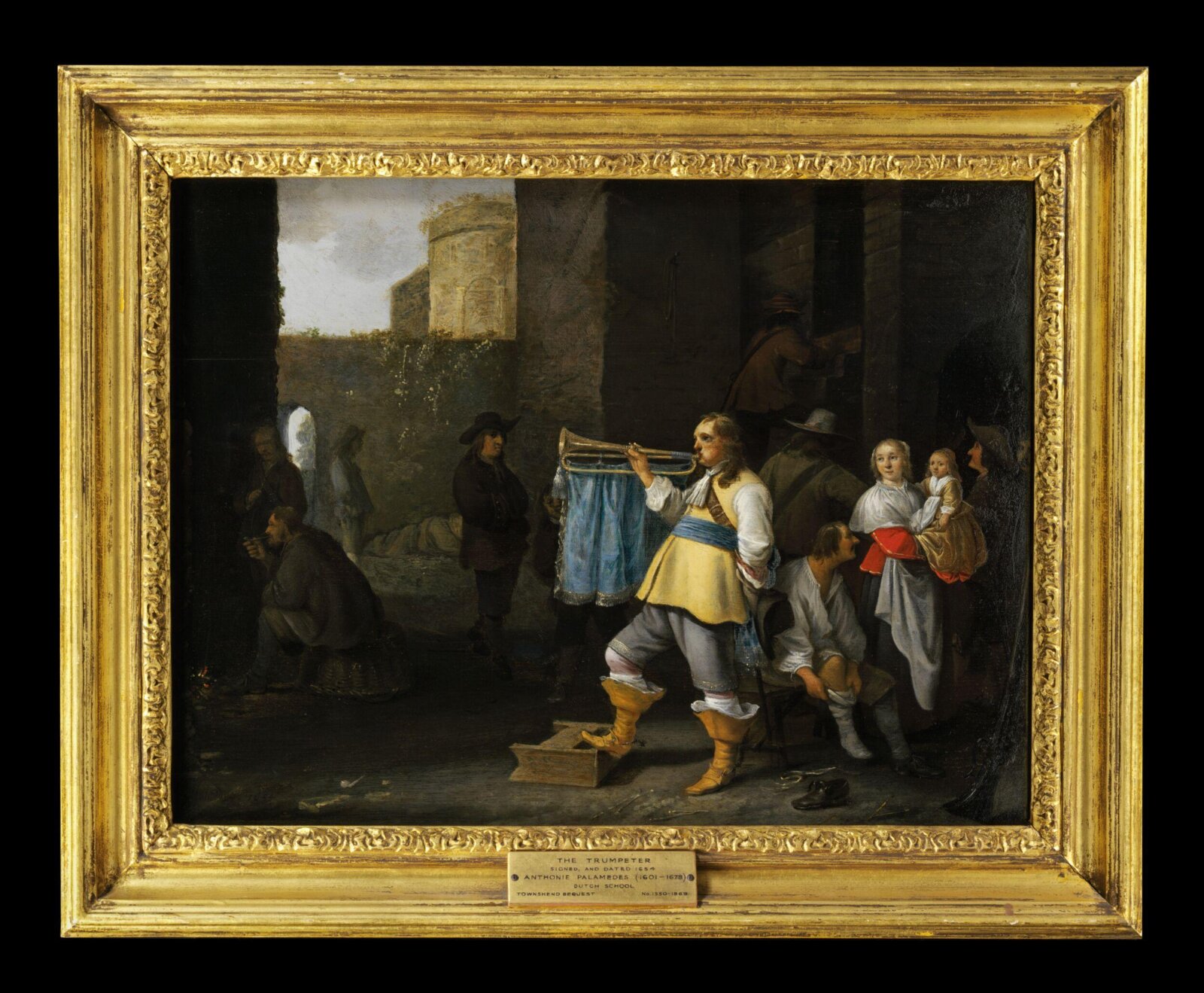
The Trumpeter
Can I see it?
Yes, on view now
Where is “The Trumpeter” now? Victoria and Albert Museum, Europe 1600-1815, Room 7, The Sheikha Amna Bint Mohammed Al Thani Gallery, London. Yes, on view now. Checked October 12, 2026.

London, United Kingdom
RoomEurope 1600-1815, Room 7, The Sheikha Amna Bint Mohammed Al Thani Gallery
Closed· opens at 10:00 AM
On public display.
- Checked
- In this state since
- Source
- The museum
About the painting
A Dutch army trumpeter blows his horn while the men and women around him, seemingly oblivious, continue to go about their business, dressing, smoking and warming themselves by the fire. Anthonie [Stevers] Palamedes, (b Delft, 1601; d Amsterdam, 1673) was a Dutch painter. His teacher is unknown, but he may have studied in Delft with the court painter Michiel van Mierevelt and/or Hendrik Pot, who was in the city in 1620. Palamedes joined the Delft Guild of St Luke in 1621. In 1673 Anthonie was residing in Amsterdam, probably with his eldest son, the painter Palamedes Palamedes II. Anthonie was a genre, portrait and still-life painter but is best known for his paintings depicting musical or merry companies and soldiers. Such works attest to his knowledge of contemporary genre paintings by Haarlem and Amsterdam artists, such as Dirck Hals, Pieter Codde, Willem Duyster and Hendrik Pot.
Read on
In the 1640s and 1650s Palamedesz. often painted guardroom scenes and soldiers with their camp followers in stables, adopting compositions recalling designs by Duyster and Jacob Duck but executed in a looser, less refined technique. Palamedes painted several different composition depicting a trumpeter with a clarion flag hung from his instrument. The trumpeter's task in the Dutch army was to alert all the soldiers in the guardroom (cortegaard) to march out of the military unit following a commander's orders.
Victoria and Albert Museum
Details
- Accession number
- 1350-1869
What it shows
In the catalog
Sources
- Victoria and Albert Museum
- Image: Victoria and Albert Museum — © Victoria and Albert Museum, London