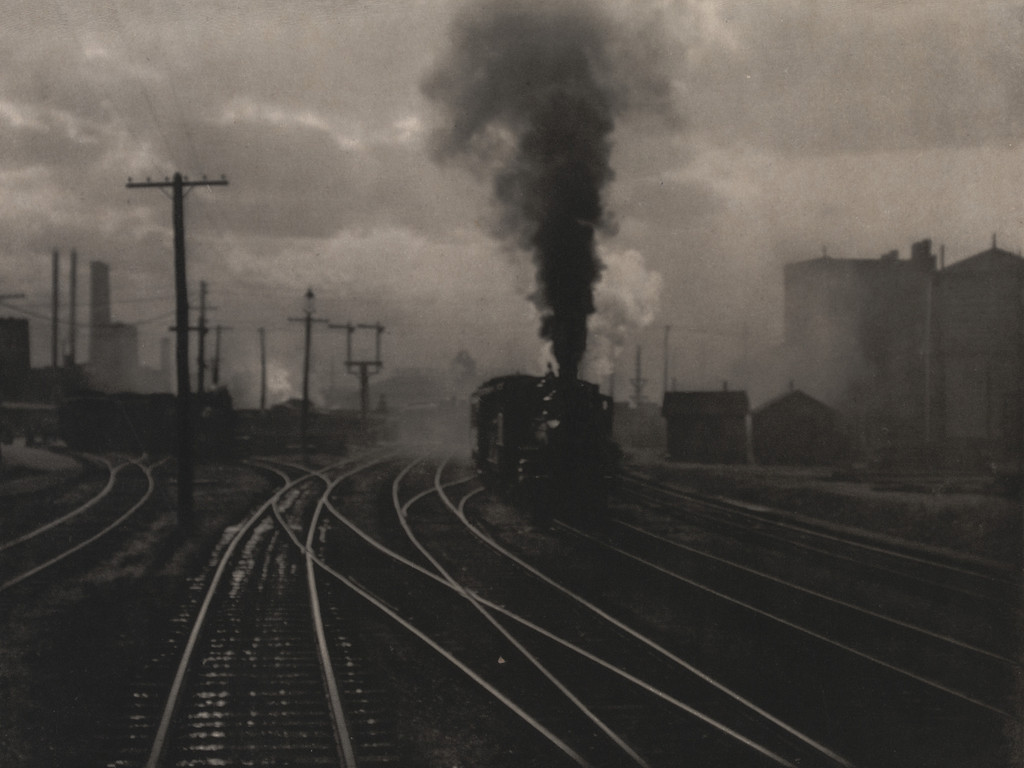
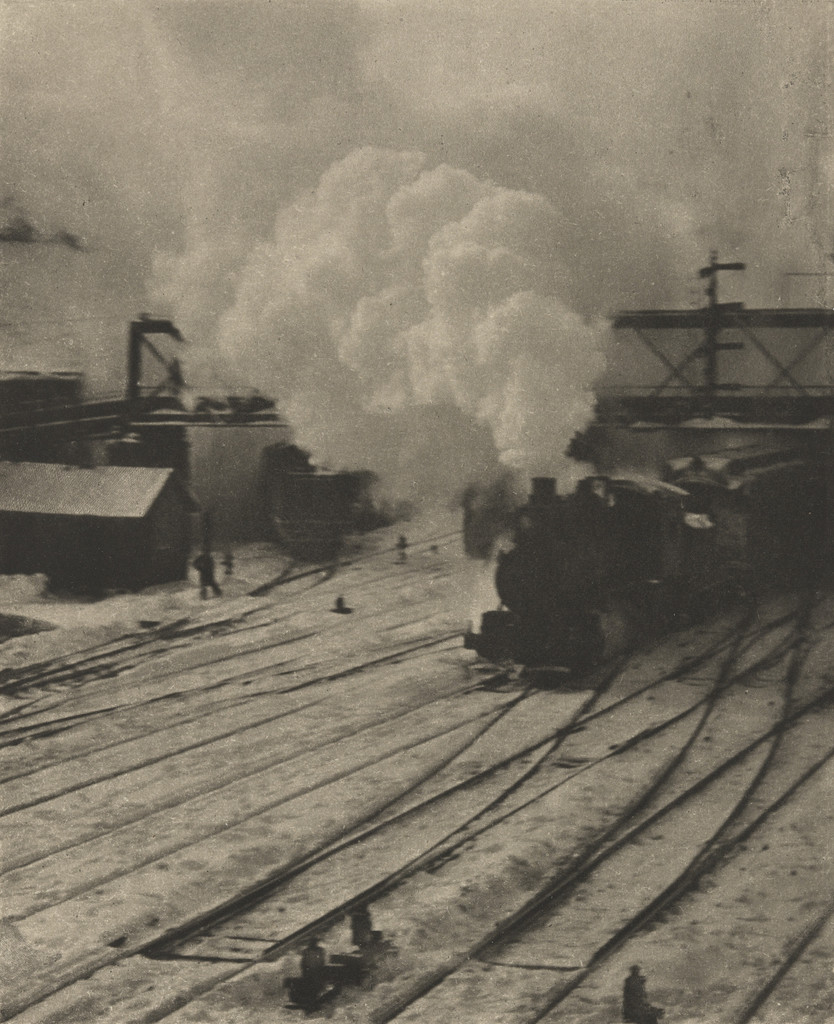
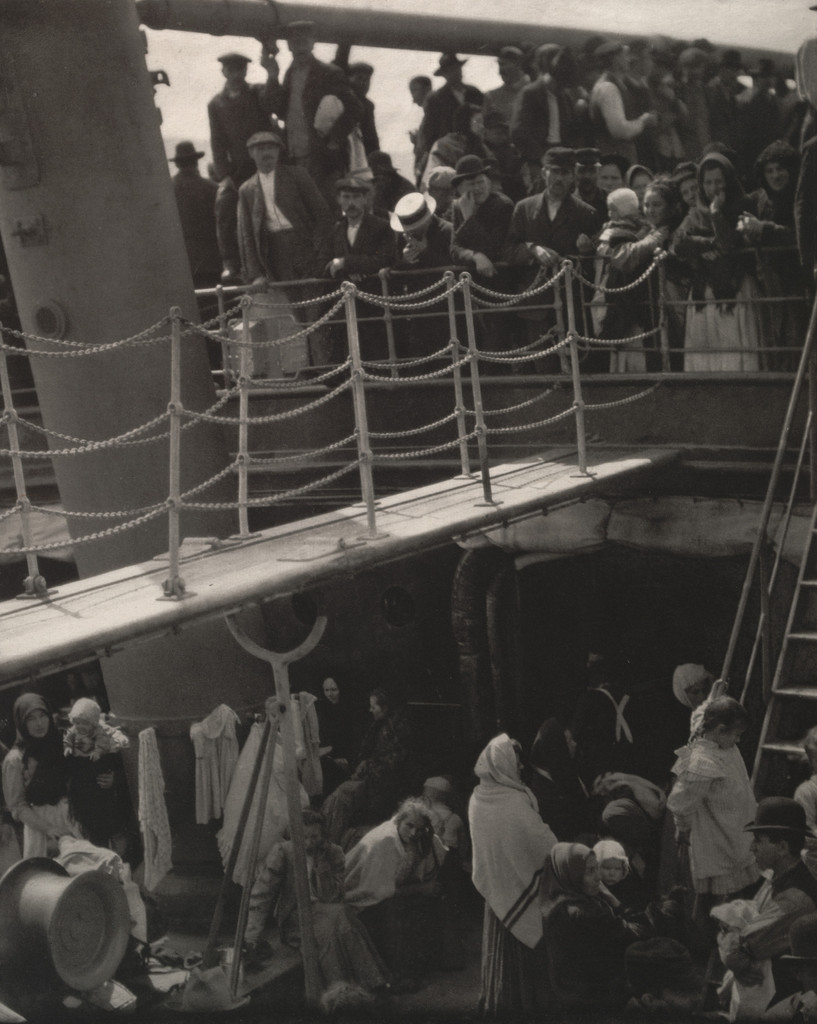
Alfred StieglitzAmerican, 1864–1946
The Steerage
May one see it?
Not receiving at present

Chicago, United States
It belongs to the collection, but is not on display at present.
- Checked
- In this state since
- Source
- The museum
About the work
For more on the Alfred Stieglitz collection at the Art Institute, along with in-depth object information, please visit the website: The Alfred Stieglitz Collection.
Art Institute of ChicagoCC BY 4.0
Particulars
- Accession number
- 1949.847
In the catalog
Sources
- Art Institute of Chicago
- Image: Art Institute of Chicago — CC0
Meanwhile, in the life of Alfred Stieglitz
The whole life25 November 1905
The 291 gallery opens on Fifth Avenue
On November 25, 1905, the Little Galleries of the Photo-Secession opened at 291 Fifth Avenue with one hundred prints by thirty-nine photographers; Edward Steichen had encouraged Stieglitz to lease the three rooms across from his own apartment. The gallery was an instant success, with almost fifteen thousand visitors in its first season and print sales of nearly $2,800, more than half of them Steichen's work.
1907
Paris: Gertrude Stein and a turn to painting
In Paris in 1907 Stieglitz met Gertrude Stein and was captivated by Rodin, Matisse, Toulouse-Lautrec, Cézanne and Rousseau. He decided to turn his photography gallery into a full art gallery to introduce the conservative American public to the newest European art.
January 1907
Pamela Colman Smith's drawings at 291
In December 1906 Stieglitz met the 28-year-old artist Pamela Colman Smith and decided to show her drawings and watercolours, thinking it “highly instructive to compare drawings and photographs”. Her show, which opened in January 1907, drew far more visitors than any previous photography show, and all her works were sold.
January – April 1908
Rodin and Matisse at 291
In January 1908 Stieglitz showed drawings by Rodin at his gallery, and in April an exhibition of Matisse, beginning his campaign to introduce the American public to the newest European art.
1910
The Albright show and a new round of attacks
In 1910 the director of the Albright Art Gallery invited Stieglitz to organise a major show of the best contemporary photography, which provoked a new round of attacks: American Photography magazine called the Photo-Secession “a reactionary force of the most dangerous type”. “The reputation, not only of the Photo-Secession, but of photography is at stake,” Stieglitz wrote to the photographer George Seeley.
January – May 1916
Meets Georgia O'Keeffe
In January 1916 the suffragist Anita Pollitzer showed Stieglitz a set of charcoal drawings by Georgia O'Keeffe, and he decided to exhibit them at 291 without meeting her or asking her permission. In late May O'Keeffe heard of it from a friend and came to the gallery to chastise him, which is how they met; by the summer of 1917 they were writing each other their most private thoughts.