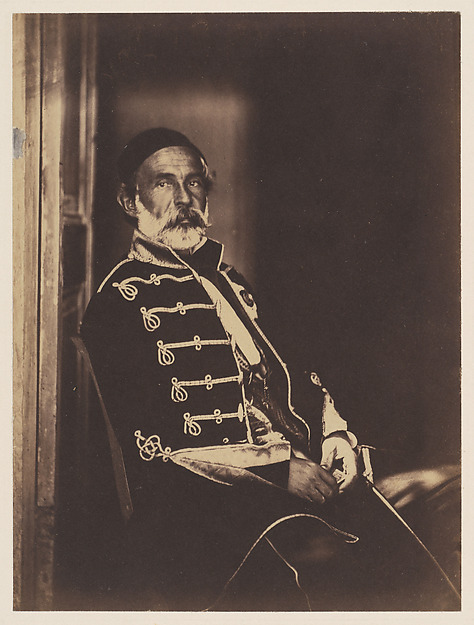
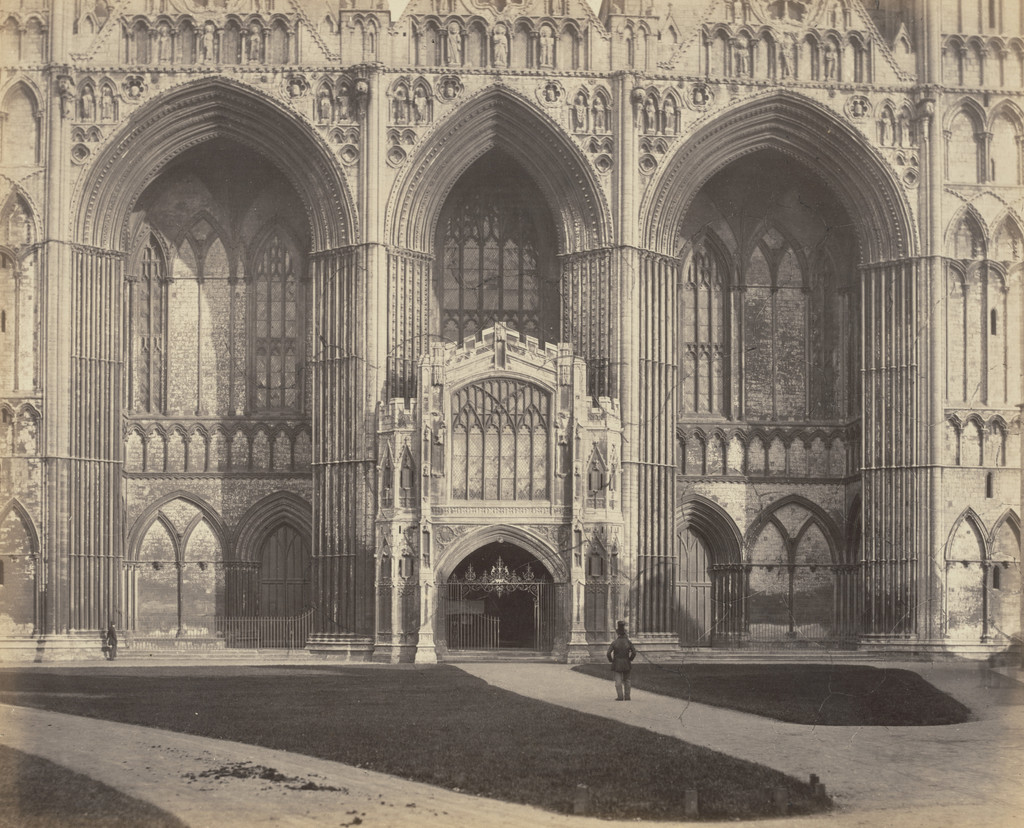
Roger FentonBritish, 1819–1869
The Smolnoi Monastery
Can I see it?
Not on view at present
Where is “The Smolnoi Monastery” now? Collection: Art Institute of Chicago, Chicago. Not on view at present. Checked September 29, 2026.

Chicago, United States
It belongs to the collection, but is not on display at present.
- Checked
- In this state since
- Source
- The museum
Details
- Accession number
- 1982.1407
In the catalog
Sources
- Art Institute of Chicago
- Image: Art Institute of Chicago — CC0
In the life of Roger Fenton
The whole life1851
The Great Exhibition in Hyde Park: discovering photography
Fenton visits the Great Exhibition in Hyde Park and is impressed by the photography on display; the new technique grips him so keenly that within a year he begins exhibiting his own photographs.
c. 1851 – 1852
To Paris to learn the waxed paper calotype
Fenton travels to Paris to learn the waxed paper calotype process, most likely from Gustave Le Gray, who had modified the methods of its inventor, William Henry Fox Talbot.
c. 1852
Photographing Kiev, Moscow and St Petersburg
Fenton travels to photograph Kiev, Moscow and St Petersburg, and also photographs views and architecture around Britain.
1852
A manifesto for a Photographic Society
Together with the commercial photographer Antoine Claudet, Fenton publishes a manifesto, “Proposal for the Formation of a Photographic Society”.
1853
Founding the London Photographic Society
Fenton becomes a founder and first secretary of the London Photographic Society, later the Royal Photographic Society under the patronage of Prince Albert.
1854
Commissioned to document the Crimean War
Probably in autumn 1854, powerful friends and patrons — among them Prince Albert and the Duke of Newcastle, Secretary of State for War — urge Fenton to go to the Crimea; the London print publisher Thomas Agnew & Sons becomes his commercial sponsor. The photographs may have been meant to offset the war's unpopularity and to counter the critical reporting of William Howard Russell of The Times: they were to be converted into woodblocks for the less critical Illustrated London News.