ART WIKI33,040 on view
MapCollectionArtistsMuseumsExhibitionsJournal
Sign in

ART WIKI

Where the masterpiece hangs, and when they let you in.

Collections: Art Institute of Chicago, Getty Villa, Harvard Art Museums, Hirshhorn Museum and Sculpture Garden, J. Paul Getty Museum, Minneapolis Institute of Art, Musée du Louvre, National Gallery of Art, National Museum of Asian Art, National Portrait Gallery (Smithsonian), Pushkin State Museum of Fine Arts, Rijksmuseum, Smithsonian American Art Museum, SMK — National Gallery of Denmark, State Hermitage Museum, State Russian Museum, The Cleveland Museum of Art, The Metropolitan Museum of Art, The Museum of Modern Art, Tretyakov Gallery, Victoria and Albert Museum, Whitney Museum of American Art, State Catalogue of the Museum Fund of Russia (274 museums), Europeana (19 museums), Wikidata (6 museums), Paris Musées (12 museums), and Joconde, the French Ministry of Culture's museum database (495 museums). Images belong to their rights holders.

Sections

  • Map
  • Search
  • Collection
  • Masterpieces
  • On view now
  • Artists

More

  • Museums & galleries
  • Exhibitions
  • Journal
  • Where the data comes from
  • Privacy & cookies
HomeMapBrowse
  1. Collection/
  2. Art Institute of Chicago/
  3. The Sick Child I
The Sick Child I, Edvard Munch, 1896
Edvard Munch, portraitEdvard MunchNorwegian, 1863–1944

The Sick Child I

1896 · Print

May one see it?

Not receiving at present

Art Institute of Chicago

Chicago, United States

It belongs to the collection, but is not on display at present.

Checked
9 days ago
In this state since
Aug 19, 2026
Source
The museum
On the mapMuseum page

About the work

When Edvard Munch was thirteen years old, his sister Sophie died of tuberculosis. Nine years later, he created the first of five painted versions of The Sick Child, all representing Sophie just prior to her death. Munch later described the process of painting these works as a form of technical and personal catharsis.

Read on

Due to the great success of the paintings and his own psychological preoccupations, in 1894–96 Munch made three prints based on the motif, of which The Sick Child I was the last. In 1896 the artist traveled to Paris to experiment with new print-making processes and work with respected printers such as Auguste Clot, hoping to gain the commercial success that had previously eluded him in the French capital. There he made this, his first color lithograph, which features Sophie’s head silhouetted against a pillow. Munch printed the lithograph with several different stones and a variety of color combinations: he made the keystone either black or red and added up to four other color stones in combinations of blue, gray, red, yellow, reddish brown, and purple-blue. Munch was keenly aware of the symbolic associations of various colors, and the icy blue and stark black of this impression suggest the haunting pallor of death.

Art Institute of Chicago · CC BY 4.0

Particulars

1896 · aged 33
18631944
Accession number
2003.1

What it shows

ChildIllnessPortrait

In the catalog

PrintsLithographImpressionism19th centuryNorway

Sources

  • Art Institute of Chicago
  • Image: Art Institute of Chicago — CC0

Meanwhile, in the life of Edvard Munch

The whole life
  1. 1894

    Turn to Copper Engraving

    He began engraving on copper on his own, without formal training, working in etching, drypoint, and aquatint, and created many masterpieces in the medium.

  2. 1896

    Meetings with Gauguin and the Symbolists in Paris

    During an important stay in Paris he met Gauguin, Émile Bernard, Maurice Denis, and Symbolist poets, notably Mallarmé. At this time he turned to etching, woodcut, and lithography.

  3. May 1896

    Exhibition at the Maison de l'Art Nouveau

    Siegfried Bing showed 60 of Munch's works, including "The Kiss," "The Scream," "Madonna," and "The Sick Child." The exhibition introduced the French public to the artist's work.

  4. 1898

    Beginning of the Affair with Tulla Larsen

    An affair began with Tulla (Mathilde) Larsen, a wealthy young Norwegian woman. Initially warm, the relationship in time began to weigh on Munch because of Tulla's ardor and possessiveness.

More by Edvard Munch

All works
Starry Night, Edvard Munch, 1893

Starry Night

1893 · J. Paul Getty Museum

The Girl by the Window, Edvard Munch, 1893

The Girl by the Window

1893 · Art Institute of Chicago

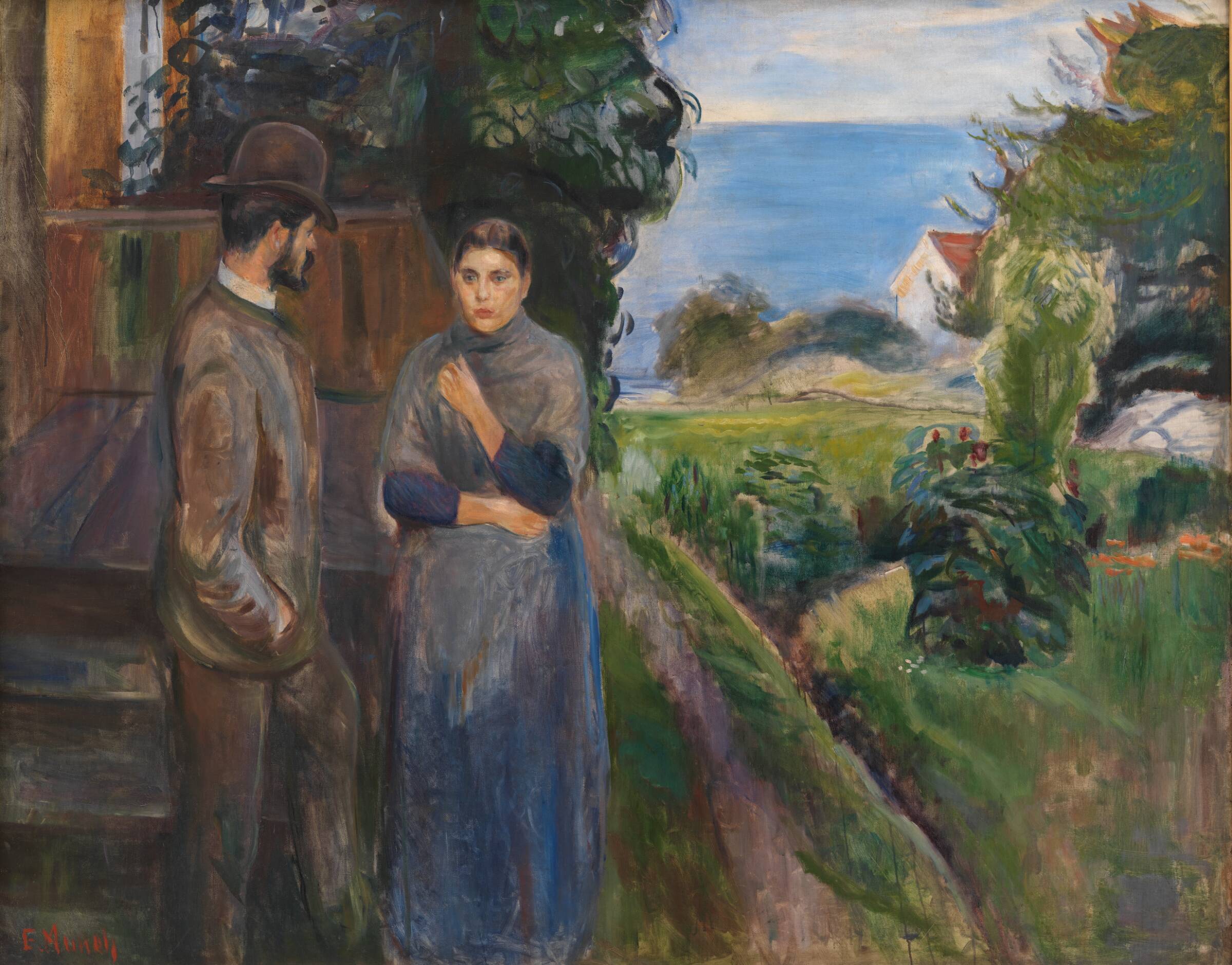
Aftenpassiar, Edvard Munch, 1889

Aftenpassiar

1889 · SMK

Madonna, Edvard Munch, 1895-1902

Madonna

1895-1902 · Harvard Art Museums

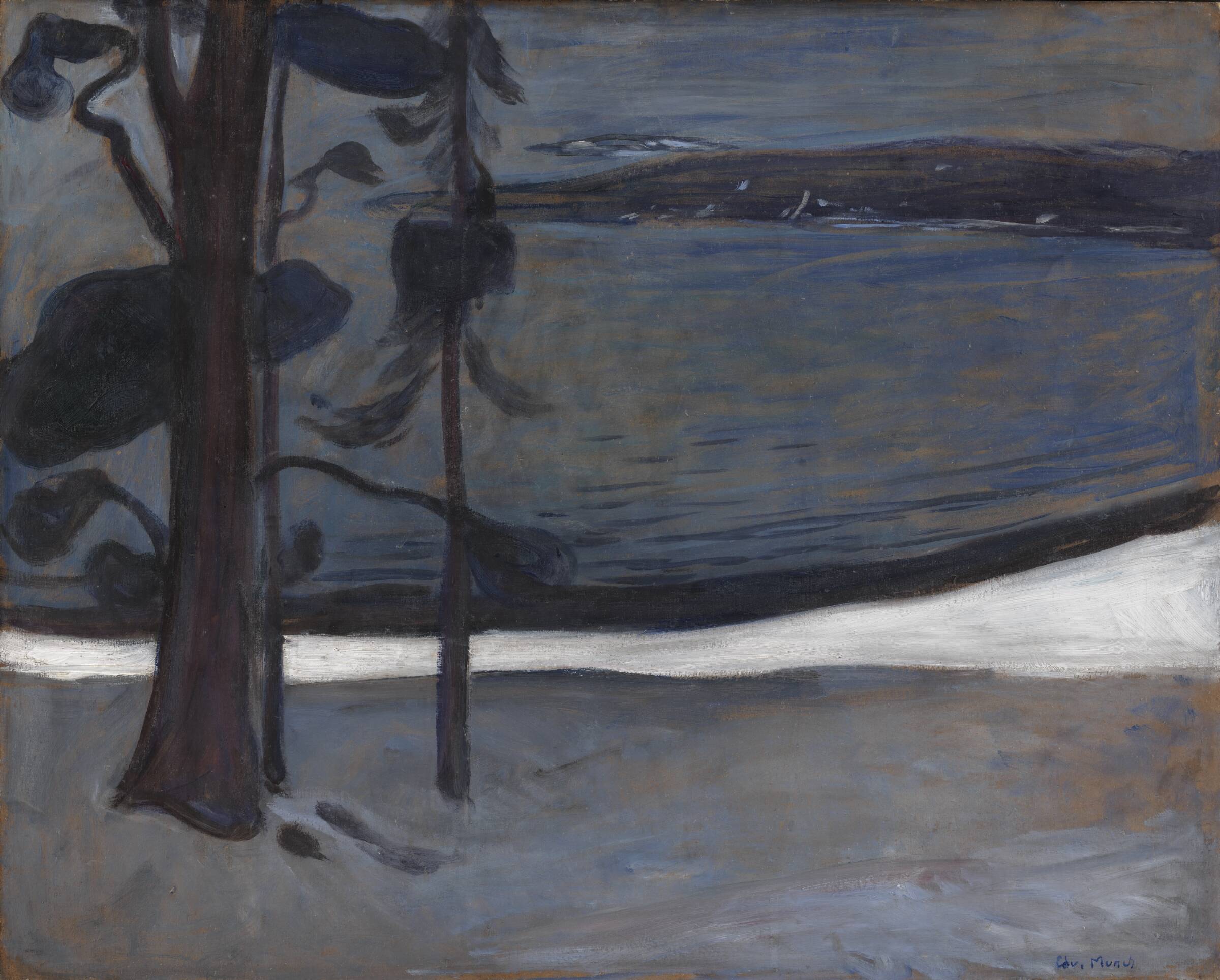
Vinter ved Nordstrand, Edvard Munch, 1900-1901

Vinter ved Nordstrand

1900-1901 · SMK

Two Human Beings (The Lonely Ones), Edvard Munch, 1906-1908

Two Human Beings (The Lonely Ones)

1906-1908 · Harvard Art Museums

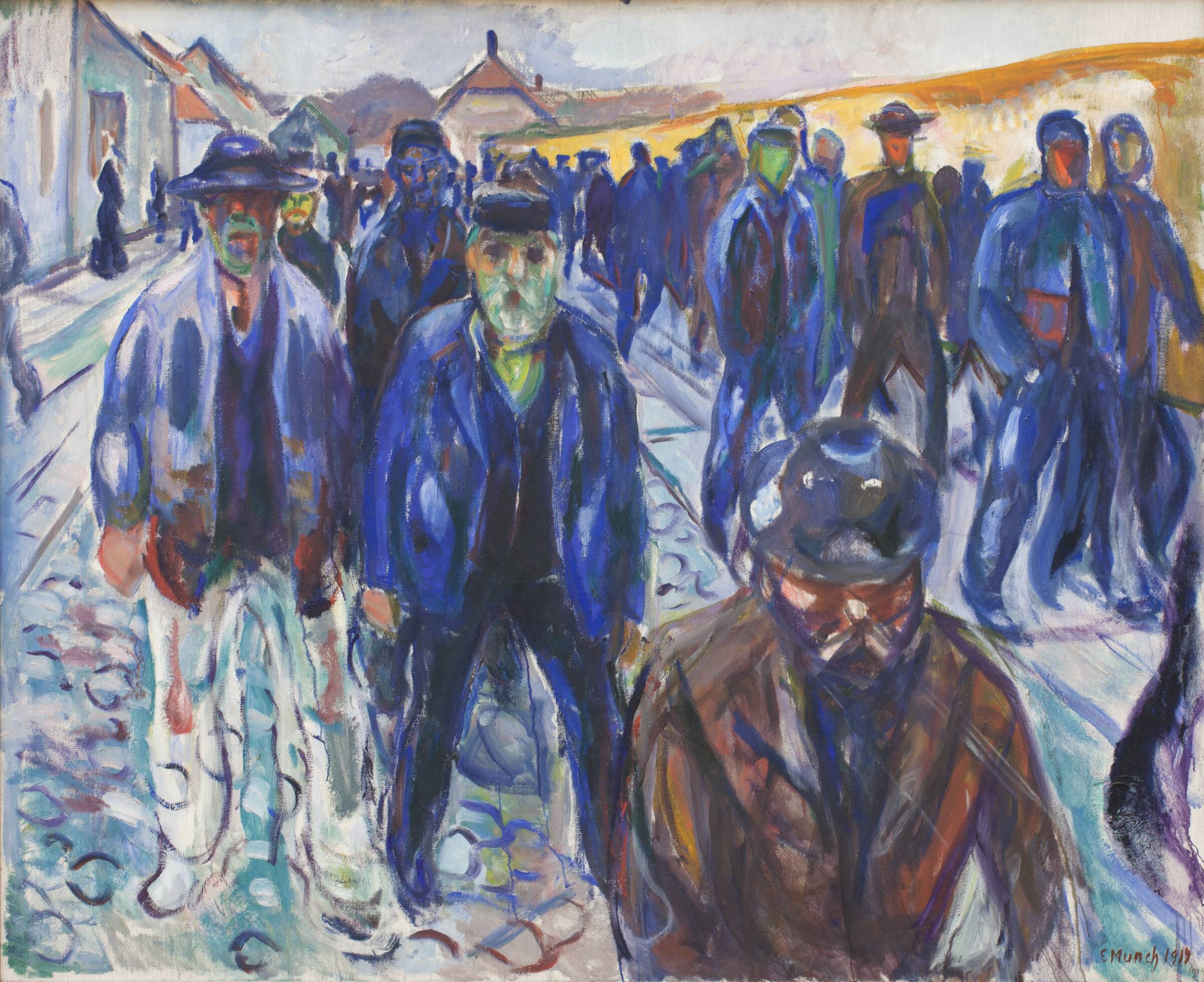
Hjemvendende arbejdere, Edvard Munch, 1914

Hjemvendende arbejdere

1914 · SMK

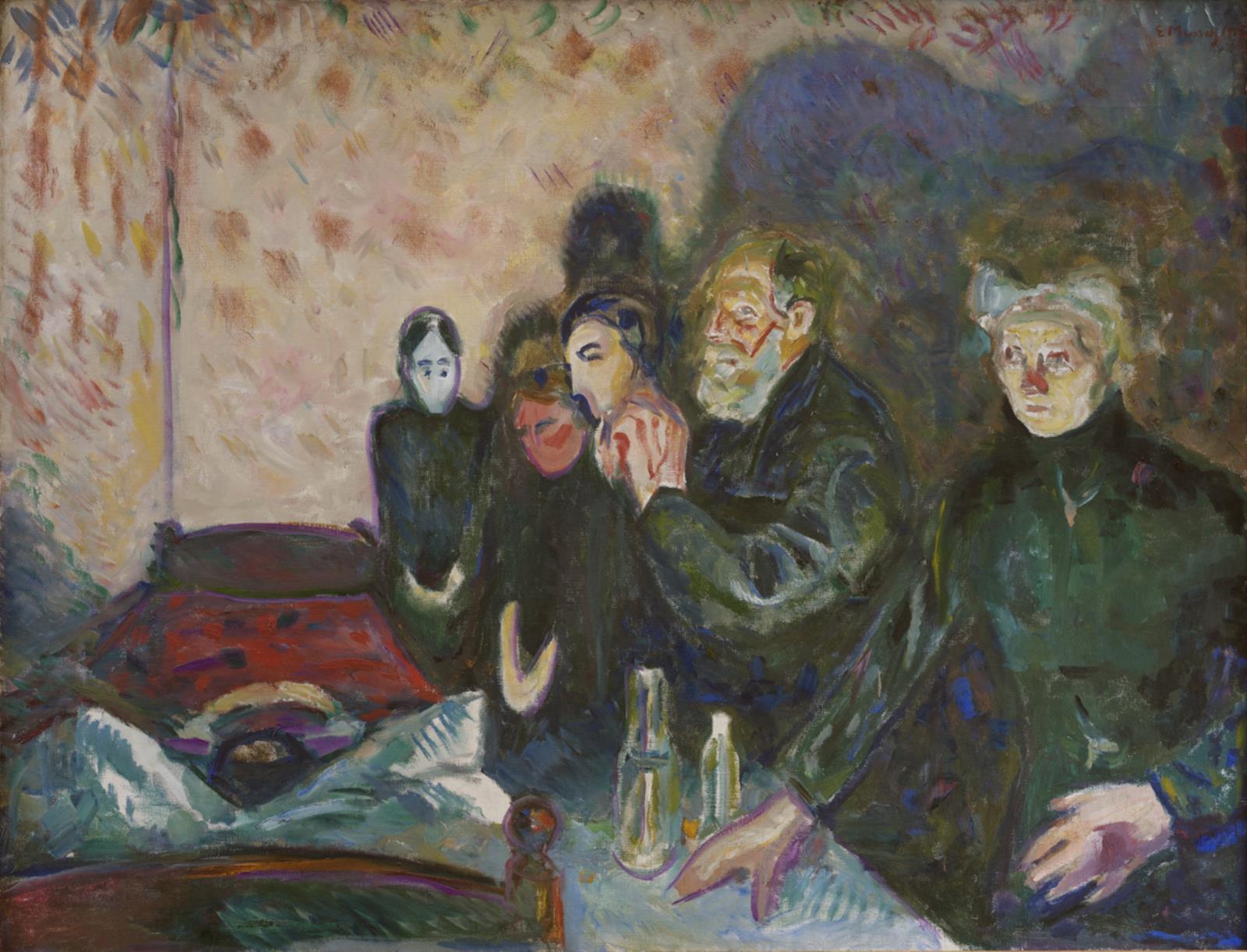
Dødskamp, Edvard Munch, 1915

Dødskamp

1915 · SMK

Neighbors at Art Institute of Chicago

Museum page
The Bedroom, Vincent van Gogh, 1889

Vincent van Gogh

The Bedroom, 1889

A Sunday on La Grande Jatte — 1884, Georges Seurat, 1884–86, border added 1888–89

Georges Seurat

A Sunday Afternoon on the Island of La Grande Jatte, 1884–86, border added 1888–89

Paris Street; Rainy Day, Gustave Caillebotte, 1877

Gustave Caillebotte

Paris Street; Rainy Day, 1877

Two Sisters (On the Terrace), Pierre-Auguste Renoir, 1881

Pierre-Auguste Renoir

Two Sisters (On the Terrace), 1881

The Basket of Apples, Paul Cézanne, c. 1893

Paul Cézanne

The Basket of Apples, c. 1893

Stacks of Wheat (End of Summer), Claude Monet, 1890–91

Claude Monet

Stacks of Wheat (End of Summer), 1890–91

American Gothic, Grant Wood, 1930

Grant Wood

American Gothic, 1930

Nighthawks, Edward Hopper, 1942

Edward Hopper

Nighthawks, 1942

On the same theme · Child

All works on the theme
Trailer Camp Children, Richmond, California, Ansel Adams, 1944, printed 1981

Ansel Adams

Trailer Camp Children, Richmond, California, 1944, printed 1981

Not on view · National Gallery of Art

A Sunday on La Grande Jatte — 1884, Georges Seurat, 1884–86, border added 1888–89

Georges Seurat

A Sunday Afternoon on the Island of La Grande Jatte, 1884–86, border added 1888–89

Art Institute of Chicago

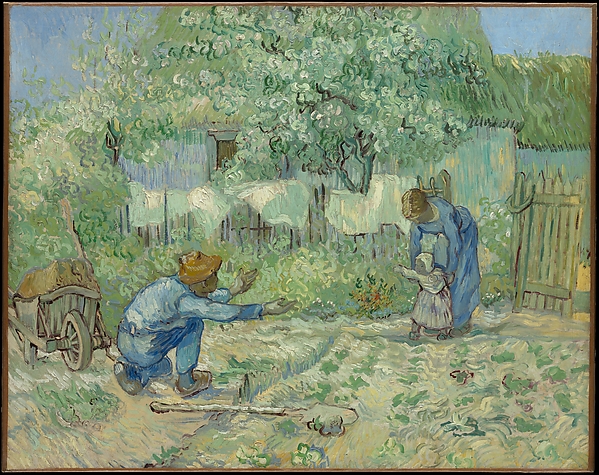
First Steps, after Millet, Vincent van Gogh, 1890

Vincent van Gogh

First Steps, after Millet, 1890

The Metropolitan Museum of Art

Le gourmet, Pablo Picasso, 1901

Pablo Picasso

Le gourmet, 1901

National Gallery of Art

The Poor (Les pauvres), Pablo Picasso, 1905, published 1913

Pablo Picasso

The Poor (Les pauvres), 1905, published 1913

Not on view · National Gallery of Art

Winged Bull Watched by Four Children (Taureau ailé contemplé par quatre enfants), Pablo Picasso, 1934

Pablo Picasso

Winged Bull Watched by Four Children (Taureau ailé contemplé par quatre enfants), 1934

Not on view · National Gallery of Art

Study for "A Sunday on La Grande Jatte", Georges Seurat, 1884

Georges Seurat

Study for "A Sunday on La Grande Jatte", 1884

The Metropolitan Museum of Art

Medici Madonna, Michelangelo, 1524–1534

Michelangelo

Medici Madonna, 1524–1534

Skulpturensammlung Dresden