
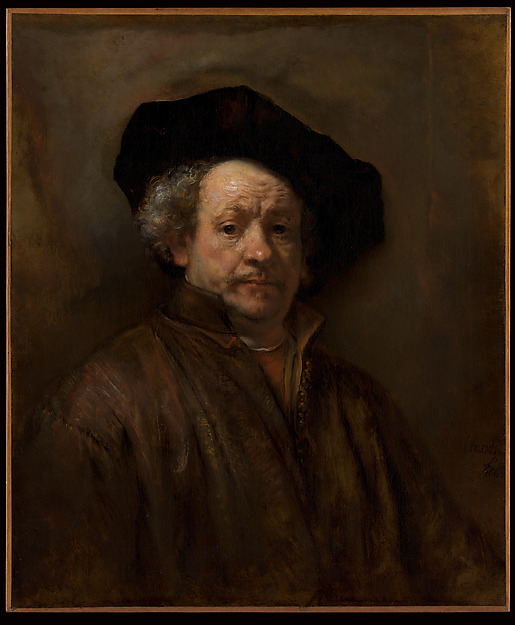
 Rembrandt van RijnDutch, 1606–1669
The Shell
May one see it?
Not receiving at present

Art Institute of Chicago
Chicago, United States
It belongs to the collection, but is not on display at present.
- Checked
- In this state since
- Source
- The museum
About the work
In the 17th century, seashells became popular collectible objects because they were considered rare and exotic. They also became common subjects for still-life paintings known as Vanitas, which symbolically represent the transience of life. The etchings of both Wenceslaus Hollar and Rembrandt van Rijn could represent the simultaneous beauty and fragility of existence. While still lifes in general are exceedingly rare in Rembrandt’s work, Hollar’s etching (1996.609) comes from a series of seashells, consisting of 38 plates. Rembrandt’s shell could have been inspired by Hollar’s work, though Rembrandt’s decision to render the shell in a three-dimensional space represents a marked difference between the two etchings.
Art Institute of ChicagoCC BY 4.0
Particulars
- Accession number
- 1938.1805
In the catalog
Sources
- Art Institute of Chicago
- Image: Art Institute of Chicago — CC0
Meanwhile, in the life of Rembrandt van Rijn
The whole life1631–1669 · Workplace
Amsterdam
1639–1658 · Residence
Rembrandt House Museum
1642–1648
Pupil: Christopher Paudiß
1648–1652
Pupil: Nicolaes Maes
early 1649
Beginning of His Relationship with Hendrickje Stoffels
In early 1649 Rembrandt grew close to the 23-year-old Hendrickje Stoffels, who had previously served as his maid. Her image appears in many works of his late period.
1649–1653
Pupil: Constantijn à Renesse









