Ghisi, GiorgioItalian, 1520–1582
The Prison
May one see it?
Not receiving at present

Cambridge, United States
It belongs to the collection, but is not on display at present.
- Checked
- In this state since
- Source
- The museum
About the work
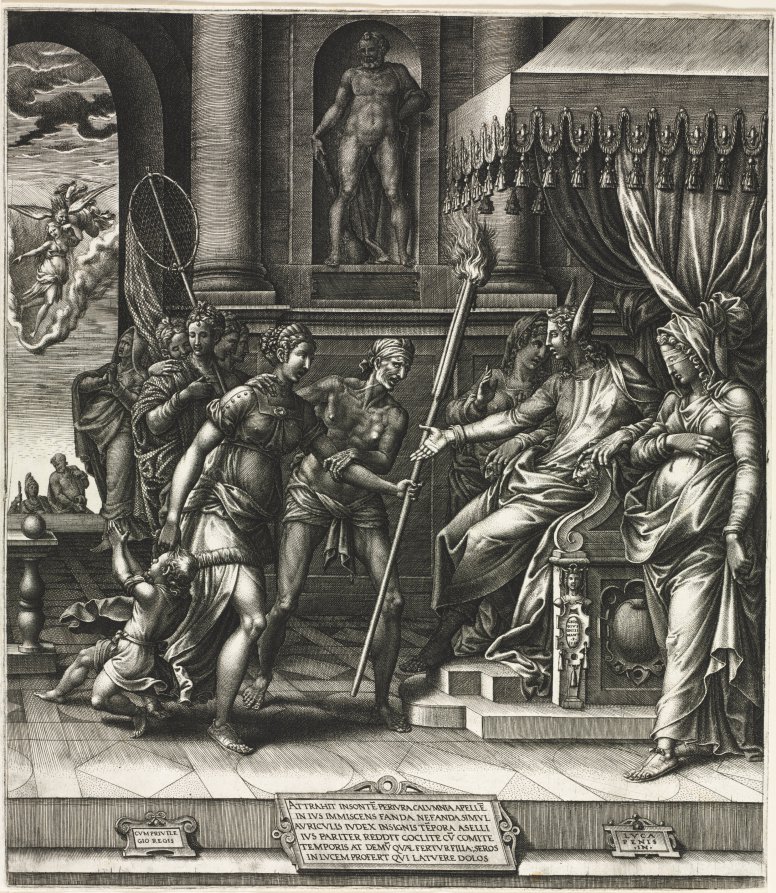
Giorgio Ghisi was a mid-sixteenth century artist from Mantua who worked engraved metal both as a printer and a damascener (decorating armor). Mainly a reproductive printmaker, he often copied designs after Giulio Romano, who was the court artist at the Mantuan court. The Prison is usually ascribed to Ghisi due to its relief-like style and crisp handling of musculature, all of which were similar to that of his teacher, Giovanni Battista Scultori. Ghisi also produced other prints after paintings by Romano on the subject of prisons. The artist went to Rome in the company of the artist, architect and scholar Giovanni Battista Bertani, and later in 1556, Ghisi produced the striking Vision of Ezekiel after Bertani's design. This bleak image is a literal dance of death with cadavers, skeletons and even cherubim.
Read on
It illustrates the biblical verse, Ezekiel (37:7): "So I prophesied as I was commanded: and as I prophesied, there was a noise, and behold a shaking, and the bones came together, bone to his bone." The text on the banner held aloft by the cherubs comes from later in the Ezekiel chapter, and refers to the heavenward trajectory of the muscle and flesh that has been severed from those shaking bones. This print is more sophisticated in its spatial depth and the details of the graveyard background than The Prison, and its blank walls with one barred window.
Harvard Art Museums
Particulars
- Accession number
- 2007.41
In the catalog
Sources
- Harvard Art Museums
- Image: Harvard Art Museums — © President and Fellows of Harvard College