ART WIKI32,963 on view
MapCollectionArtistsMuseumsExhibitionsJournal
Sign in

ART WIKI

Where the masterpiece hangs, and when they let you in.

Collections: Art Institute of Chicago, Getty Villa, Harvard Art Museums, Hirshhorn Museum and Sculpture Garden, J. Paul Getty Museum, Minneapolis Institute of Art, Musée du Louvre, National Gallery of Art, National Museum of Asian Art, National Portrait Gallery (Smithsonian), Pushkin State Museum of Fine Arts, Rijksmuseum, Smithsonian American Art Museum, SMK — National Gallery of Denmark, State Hermitage Museum, State Russian Museum, The Cleveland Museum of Art, The Metropolitan Museum of Art, The Museum of Modern Art, Tretyakov Gallery, Victoria and Albert Museum, Whitney Museum of American Art, State Catalogue of the Museum Fund of Russia (274 museums), Europeana (19 museums), Wikidata (6 museums), Paris Musées (12 museums), and Joconde, the French Ministry of Culture's museum database (495 museums). Images belong to their rights holders.

Sections

  • Map
  • Search
  • Collection
  • Masterpieces
  • On view now
  • Artists

More

  • Museums & galleries
  • Exhibitions
  • Journal
  • Where the data comes from
  • Privacy & cookies
HomeMapBrowse
  1. Collection/
  2. The Museum of Modern Art/
  3. The Park
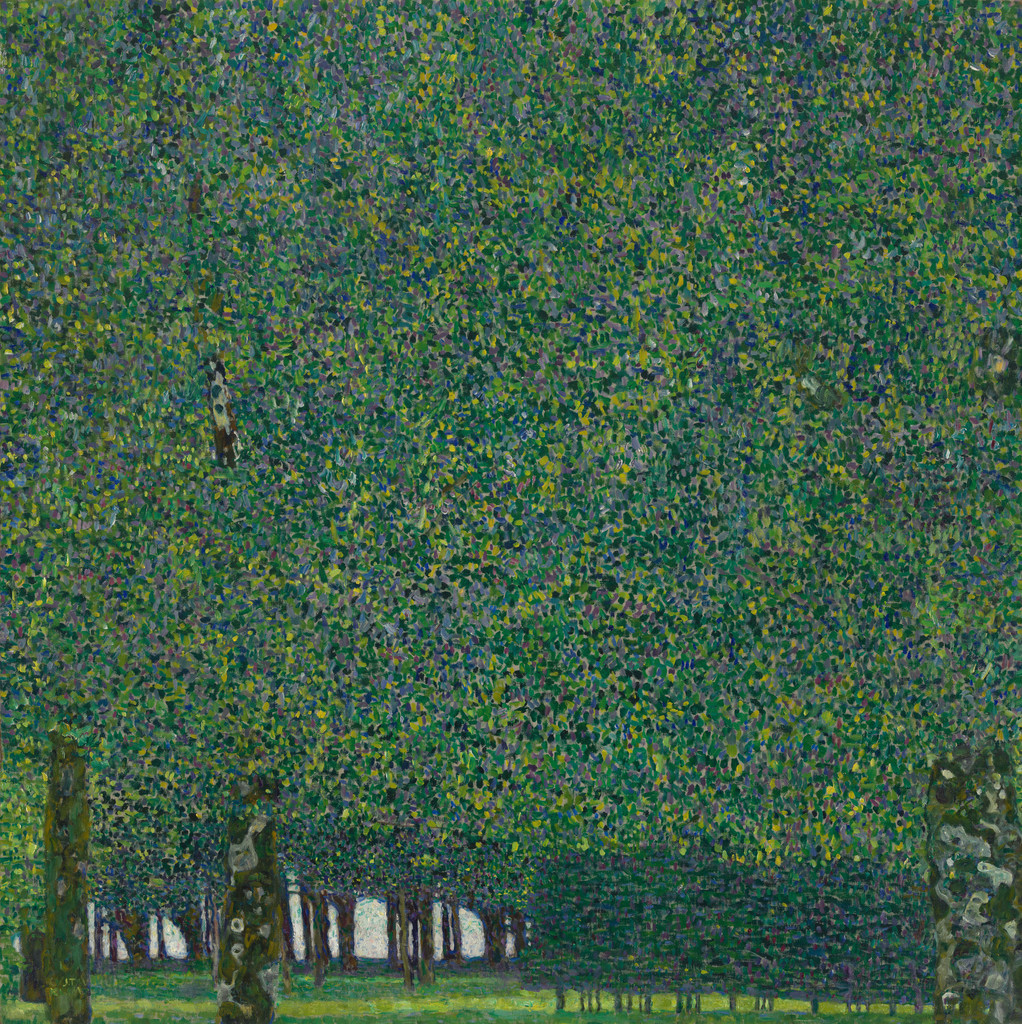
The Park, Gustav Klimt, 1910 or earlier
Gustav Klimt, portraitGustav KlimtAustrian, 1862–1918

The Park

1910 or earlier · Painting

May one see it?

Yes, receiving visitors

The Museum of Modern Art

New York, United States

RoomMoMA, Floor 5

On public display.

Checked
9 days ago
Source
The museum
On the mapMuseum page

About the painting

The Park (German: Der Park) is an oil painting on canvas by Austrian artist Gustav Klimt, painted c. 1909 – c. 1910. It is held by the Museum of Modern Art in New York City.

Wikipedia · CC BY-SA

Particulars

1910 or earlier · aged 48
18621918
Accession number
10.1957

Meanwhile, in the life of Gustav Klimt

The whole life
  1. 1908

    Klimt defends Kokoschka

    The public and critics fell on the debutant Oskar Kokoschka so fiercely that the scandal of the “Faculty Paintings” came to mind; Klimt did not turn away from his pupil and defended his place in the show even if it were to be closed. Hevesi granted him talent but denied him taste; Klimt replied that art has nothing to do with taste.

  2. 1 June – 16 November 1908

    The first Vienna Art Show

    For the sixtieth anniversary of Franz Joseph's reign pavilions with 54 rooms were built on a temporary site and over 900 works shown. Room 22, which Peter Altenberg called “the church of modern art named after Gustav Klimt”, held “The Kiss”, “Adele Bloch-Bauer I”, “Danaë” and “The Three Ages of Woman”.

  3. 1909

    The second Vienna Art Show

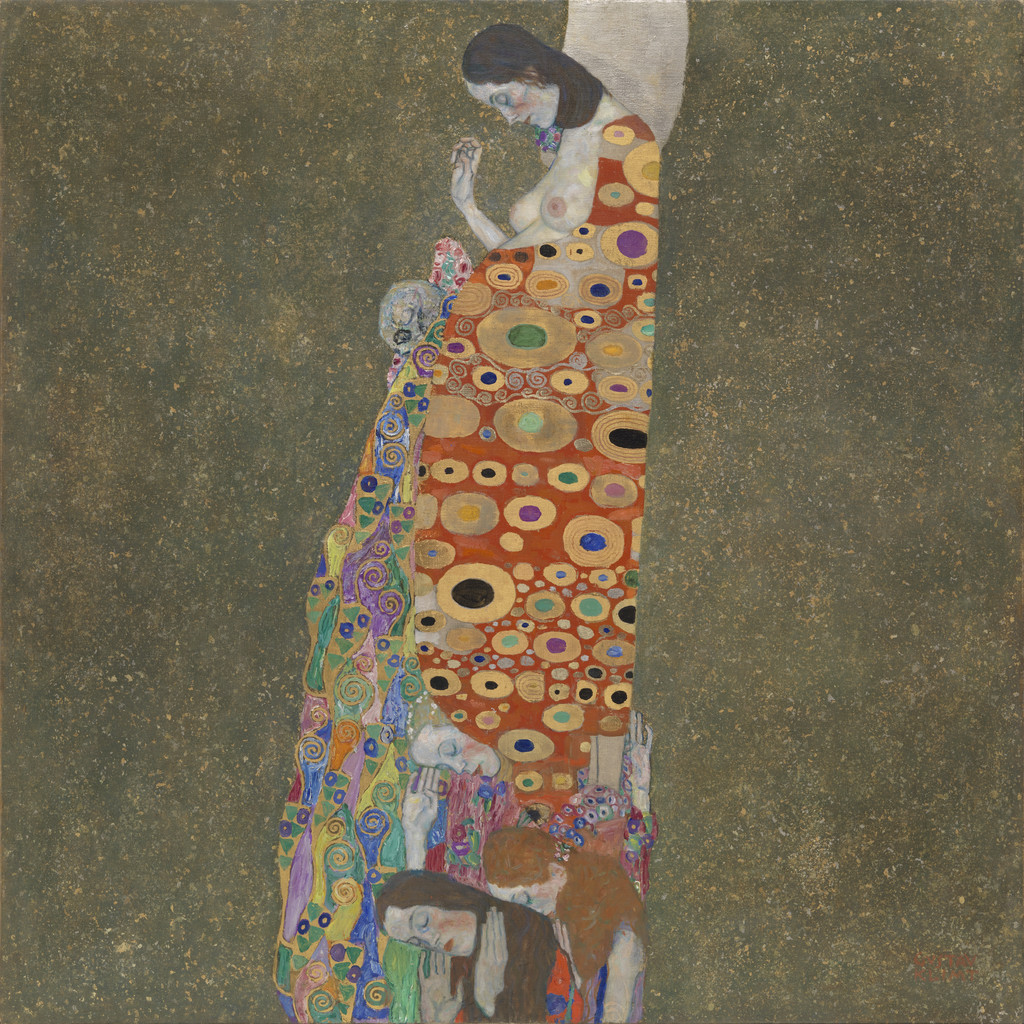
    The second generation of modernists was represented by Kokoschka and Egon Schiele, and Klimt showed “Judith II” and “Hope II”. The works of Van Gogh, Munch, Gauguin, Vallotton, Bonnard and Matisse gave him the impulse for a new phase, but he never organized exhibitions again.

  4. 1910

    Klimt at the Venice Biennale

    Klimt's exhibition at the 1910 Venice Biennale influenced the artistic scene of Venice; the Italian Liberty artists Galileo Chini and Vittorio Zecchin were among those he influenced.

  5. 1911

    “Death and Life”: first prize in Rome

    At the world exhibition in Rome “Death and Life” won first prize. In 1915 Klimt reworked the painting, changing the gold background to blue.

More by Gustav Klimt

All works

In the same room · MoMA, Floor 5, The Museum of Modern Art

Museum page
  • 1911

    A studio in Hietzing

    Klimt moved his studio closer to nature, to a one-storey house near Schönbrunn Park; he recorded its garden in “The Rose Garden” (1912). Here, among woodcuts, Japanese costumes and samurai armour, he began a new period and worked for the last six years of his life.

  • In the catalog

    PaintingsOilAustrian paintingModernism20th century

    Sources

    • The Museum of Modern Art
    • Image: The Museum of Modern Art — © the artist or rights holder
    Mäda Primavesi (1903–2000), Gustav Klimt, 1912–13

    Mäda Primavesi (1903–2000)

    1912–13 · The Metropolitan Museum of Art

    Serena Pulitzer Lederer (1867–1943), Gustav Klimt, 1899

    Serena Pulitzer Lederer (1867–1943)

    1899 · The Metropolitan Museum of Art

    Hope, II, Gustav Klimt, 1907-08

    Hope, II

    1907-08 · The Museum of Modern Art

    Baby (Cradle), Gustav Klimt, 1917/1918

    Baby (Cradle)

    1917/1918 · National Gallery of Art

    Pear Tree, Gustav Klimt, 1903 (reworked by the artist 1903/1918)

    Pear Tree

    1903 (reworked by the artist 1903/1918) · Harvard Art Museums

    Studie van een in een plaid gewikkelde, rustende vrouw, Gustav Klimt, 1872 - 1918

    Studie van een in een plaid gewikkelde, rustende vrouw

    1872 - 1918 · Rijksmuseum

    Studie für „Bildnis Johanna Staude“, Gustav Klimt

    Studie für „Bildnis Johanna Staude“

    Albertina

    Brustbild einer Frau, Gustav Klimt

    Brustbild einer Frau

    Albertina

    Hope, II, Gustav Klimt, 1907-08

    Gustav Klimt

    Hope, II, 1907-08

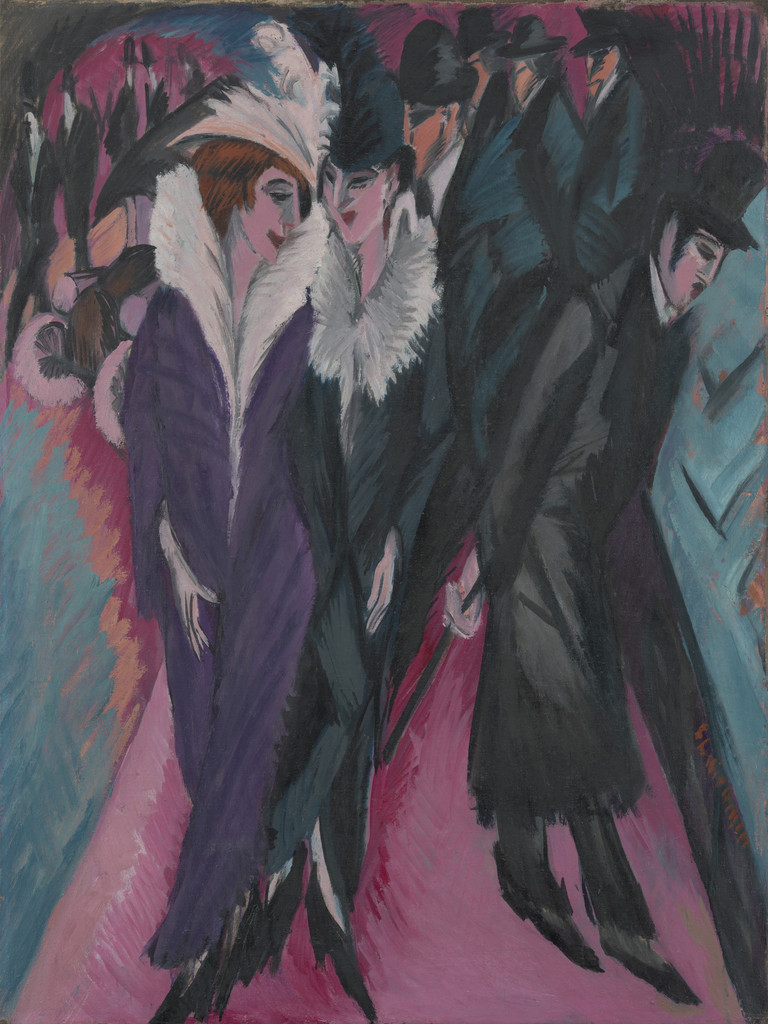
    Street, Berlin, Ernst Ludwig Kirchner, 1913

    Ernst Ludwig Kirchner

    Street, Berlin, 1913

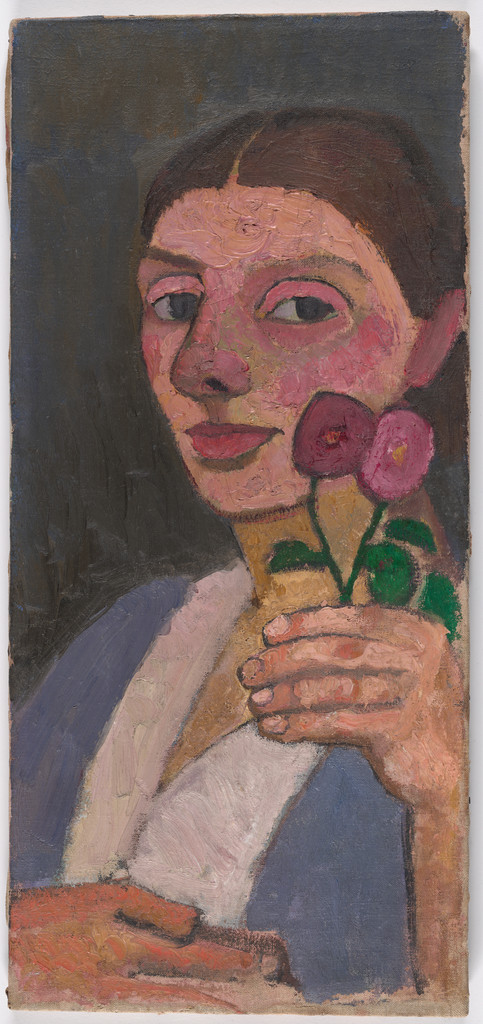
    Self-Portrait with Two Flowers in Her Raised Left Hand, Paula Modersohn-Becker, 1907

    Paula Modersohn-Becker

    Self-Portrait with Two Flowers in Her Raised Left Hand, 1907