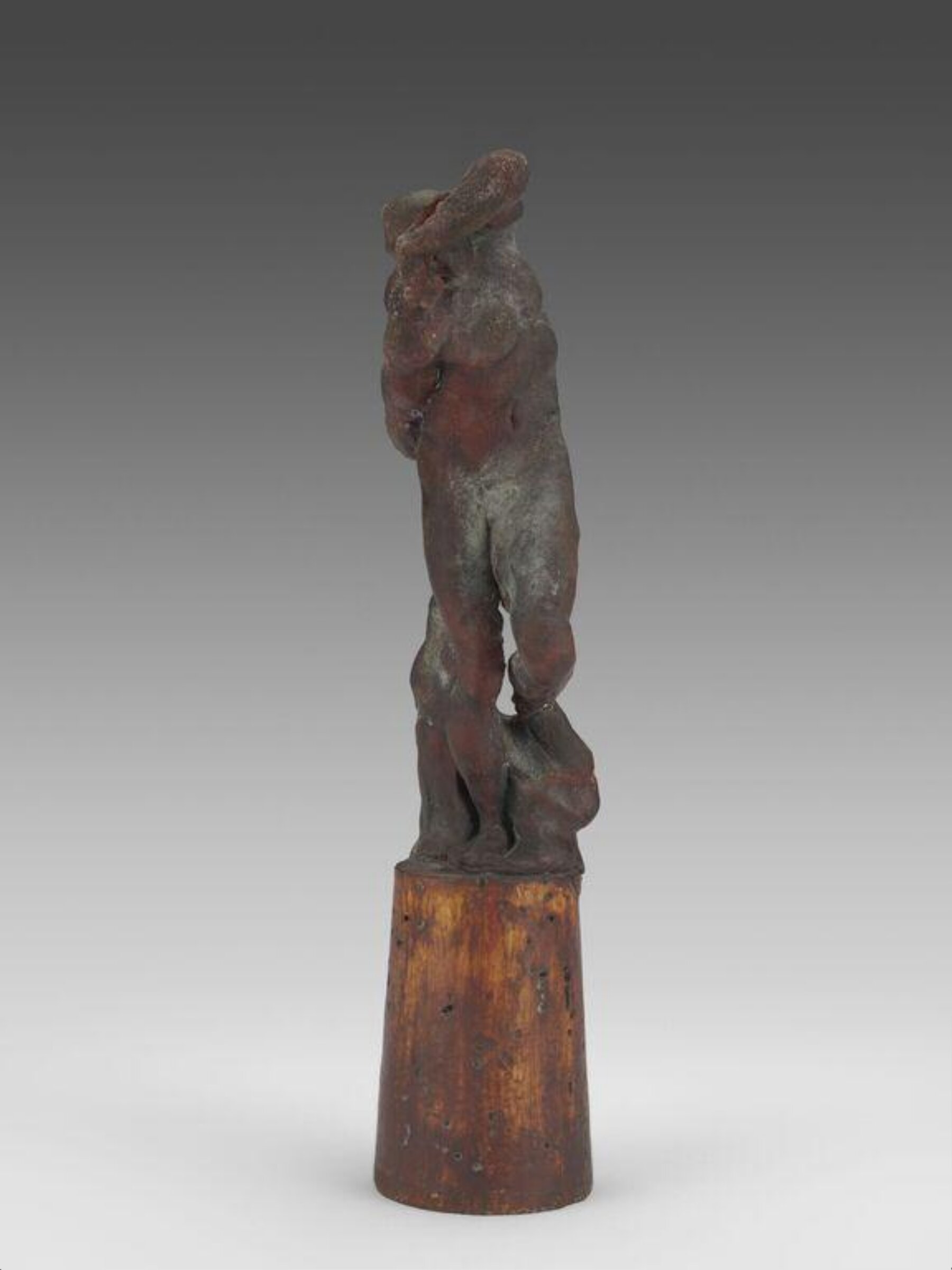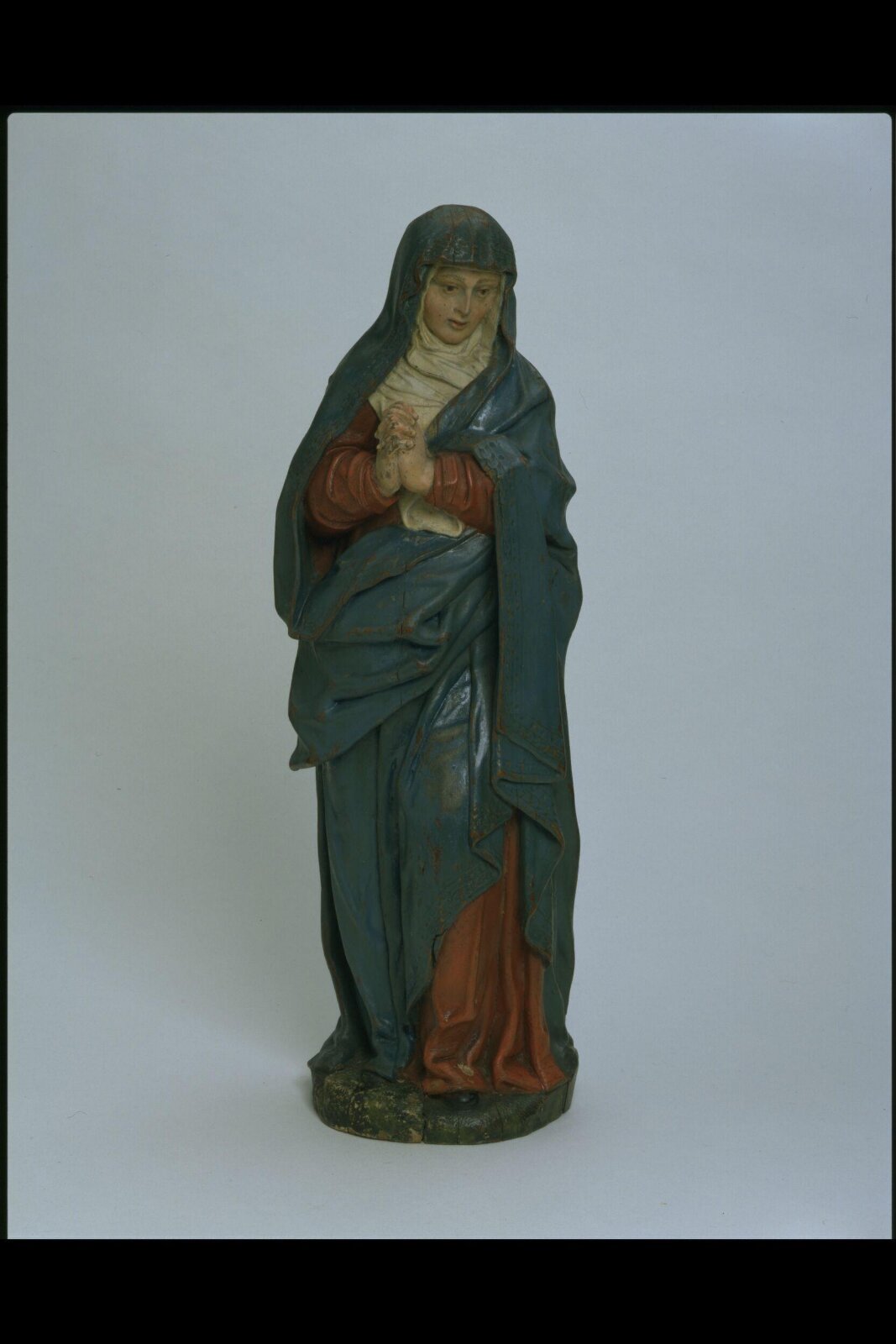
The Mourning Virgin
May one see it?
Not receiving at present

Victoria and Albert Museum
London, United Kingdom
It belongs to the collection, but is not on display at present.
- Checked
- 9 days ago
- In this state since
- Sep 25, 2026
- Source
- The museum's own collection data
About the sculpture
This figure almost certainly formed part of a small devotional Crucifixion group. The lack of movement in the stiff drapery implies that the figure cannot have been made in Spain any later than about 1630.
Painted wood figures and reliefs of sacred subjects was the most common type of sculpture in Spain from the fourteenth to the seventeenth century. Many were made for large-scale altarpieces, although some smaller figures, like the present piece, were also in demand for devotional purposes.
Victoria and Albert Museum
Particulars
- Accession number
- A.40-1951
What it shows
In the catalog
Sources
- Victoria and Albert Museum: the museum's own open data · fetched 9 days ago
- Image: Victoria and Albert Museum — © Victoria and Albert Museum, London