ART WIKI32,963 on view
MapCollectionArtistsMuseumsExhibitionsJournal
Sign in

ART WIKI

Where the masterpiece hangs, and when they let you in.

Collections: Art Institute of Chicago, Getty Villa, Harvard Art Museums, Hirshhorn Museum and Sculpture Garden, J. Paul Getty Museum, Minneapolis Institute of Art, Musée du Louvre, National Gallery of Art, National Museum of Asian Art, National Portrait Gallery (Smithsonian), Pushkin State Museum of Fine Arts, Rijksmuseum, Smithsonian American Art Museum, SMK — National Gallery of Denmark, State Hermitage Museum, State Russian Museum, The Cleveland Museum of Art, The Metropolitan Museum of Art, The Museum of Modern Art, Tretyakov Gallery, Victoria and Albert Museum, Whitney Museum of American Art, State Catalogue of the Museum Fund of Russia (274 museums), Europeana (19 museums), Wikidata (6 museums), Paris Musées (12 museums), and Joconde, the French Ministry of Culture's museum database (495 museums). Images belong to their rights holders.

Sections

  • Map
  • Search
  • Collection
  • Masterpieces
  • On view now
  • Artists

More

  • Museums & galleries
  • Exhibitions
  • Journal
  • Where the data comes from
  • Privacy & cookies
HomeMapBrowse
  1. Collection/
  2. Harvard Art Museums/
  3. The Infant Moses
The Infant Moses, Gustave Moreau, c. 1876-c. 1878
Gustave Moreau, portraitGustave MoreauFrench, 1826–1898

The Infant Moses

c. 1876-c. 1878 · Painting

May one see it?

Yes, receiving visitors

Harvard Art Museums

Cambridge, United States

Room2130, floor 2, European and American Art, 17th–19th century

On public display.

Checked
2 days ago
In this state since
Sep 27, 2026
Source
The museum's own collection data
On the mapMuseum page

About the painting

Paris hosted the 1878 Exposition universelle, or world’s fair, to celebrate France’s recovery after the Franco-Prussian War of 1870. For the event, Gustave Moreau submitted a cycle of biblically themed paintings to reflect on the nation’s renewal. The series, which included this work as well as Jacob and the Angel (1874–78; also in Harvard’s collection) and David (1878), marked three stages of human life. Here Moreau celebrates the anticipation and promise associated with childhood: Moses, recognized by the rays emanating from his forehead, floats in his basket on the Nile, surrounded by the ruins of ancient Egypt. In a written commentary Moreau suggested the prophet’s enlightenment, noting the contrast between “this people of mummies, sphinxes, and gods with staring eyes and unmoving gaze” and “this fine human fruit full of sap and life.”

Harvard Art Museums

Particulars

c. 1876-c. 1878
18261898
Accession number
1943.262

In the catalog

PaintingsOilFrench paintingRealismImpressionism19th centuryFrench

Sources

  • Harvard Art Museums: the museum's own open data · fetched 8 days ago
  • Image: Harvard Art Museums — © President and Fellows of Harvard College

Meanwhile, in the life of Gustave Moreau

The whole life
  1. 1859–1888 · Workplace

    Paris

  2. 1870–1875

    Years without exhibiting: renewing his art

    Disturbed by criticism that his work had become formulaic, Moreau stopped exhibiting for a few years and concentrated on renewing his art.

  3. 18 September 1875 · Award

    Knight of the Legion of Honour

  4. 1876

    Return to the Salon: “Salome”

    After the break Moreau returned to the Salon. That year he completed “Salome Dancing before Herod”, which announced the more painterly style that would characterize his later works.

  5. 1878

    “Phaeton” at the World’s Fair stuns Redon

    At the 1878 World’s Fair Moreau’s watercolour “Phaeton” so struck Odilon Redon that he wrote of its power to renew old art. Redon, like many critics of the time, saw Moreau’s chief merit in giving traditional painting a new direction, building a bridge between past and future.

  6. 1880

    His last exhibition: “Helen” and “Galatea”

    In 1880 Moreau took part in an exhibition for the last time, showing “Helen at the Walls of Troy”, in which the woman appears as a depraved creature guilty of war and the death of men, and “Galatea”, whose heroine is an object of desire on which the huge eye of the cyclops in love is vainly fixed.
More by Gustave Moreau

All works
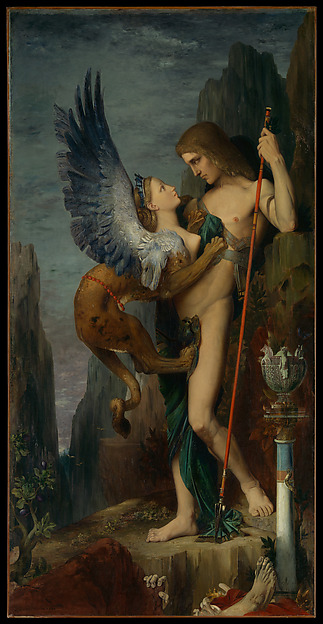
Oedipus and the Sphinx, Gustave Moreau, 1864

Oedipus and the Sphinx

1864 · The Metropolitan Museum of Art

Dejanira (Autumn), Gustave Moreau, about 1872–1873

Dejanira (Autumn)

about 1872–1873 · J. Paul Getty Museum

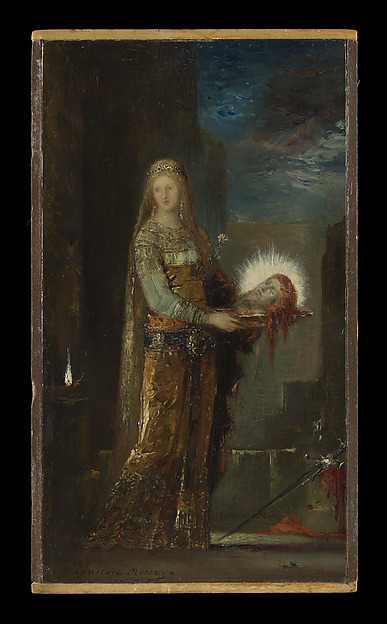
Salome with the Head of John the Baptist, Gustave Moreau, ca. 1876

Salome with the Head of John the Baptist

ca. 1876 · The Metropolitan Museum of Art

Hercules and the Lernaean Hydra, Gustave Moreau, 1875–76

Hercules and the Lernaean Hydra

1875–76 · Art Institute of Chicago

Jacob and the Angel, Gustave Moreau, 1874-1878

Jacob and the Angel

1874-1878 · Harvard Art Museums

The Apparition, Gustave Moreau, 1876-1877

The Apparition

1876-1877 · Harvard Art Museums

The Sirens, Gustave Moreau, 1882

The Sirens

1882 · Harvard Art Museums

Chute de Phaéton, projet de plafond, MOREAU Gustave

Chute de Phaéton, projet de plafond

Musée du Louvre

Neighbors at Harvard Art Museums

Museum page
Glück auf in Deutschland (N:4), Pınar Öğrenci, 2024

Pınar Öğrenci

Glück auf in Deutschland (N:4), 2024

Glück auf in Deutschland (N:10), Pınar Öğrenci, 2024

Pınar Öğrenci

Glück auf in Deutschland (N:10), 2024

Glück auf in Deutschland (N:7b), Pınar Öğrenci, 2024

Pınar Öğrenci

Glück auf in Deutschland (N:7b), 2024

Glück auf in Deutschland (N:6), Pınar Öğrenci, 2024

Pınar Öğrenci

Glück auf in Deutschland (N:6), 2024

Glück auf in Deutschland (N:11), Pınar Öğrenci, 2024

Pınar Öğrenci

Glück auf in Deutschland (N:11), 2024

Dwarpalika (Temple Guardian), Sneha Shrestha, 2023

Sneha Shrestha

Dwarpalika (Temple Guardian), 2023

The Eternal Pond of the Universe, Bingyi 冰逸, 2022-2024

Bingyi 冰逸

The Eternal Pond of the Universe, 2022-2024

Head from a Statue of Ur-Ningirsu, Ruler of Lagash, c. 2113 BCE-2017 BCE

Head from a Statue of Ur-Ningirsu, Ruler of Lagash, c. 2113 BCE-2017 BCE