ART WIKI32,963 on view
MapCollectionArtistsMuseumsExhibitionsJournal
Sign in

ART WIKI

Where the masterpiece hangs, and when they let you in.

Collections: Art Institute of Chicago, Getty Villa, Harvard Art Museums, Hirshhorn Museum and Sculpture Garden, J. Paul Getty Museum, Minneapolis Institute of Art, Musée du Louvre, National Gallery of Art, National Museum of Asian Art, National Portrait Gallery (Smithsonian), Pushkin State Museum of Fine Arts, Rijksmuseum, Smithsonian American Art Museum, SMK — National Gallery of Denmark, State Hermitage Museum, State Russian Museum, The Cleveland Museum of Art, The Metropolitan Museum of Art, The Museum of Modern Art, Tretyakov Gallery, Victoria and Albert Museum, Whitney Museum of American Art, State Catalogue of the Museum Fund of Russia (274 museums), Europeana (19 museums), Wikidata (6 museums), Paris Musées (12 museums), and Joconde, the French Ministry of Culture's museum database (495 museums). Images belong to their rights holders.

Sections

  • Map
  • Search
  • Collection
  • Masterpieces
  • On view now
  • Artists

More

  • Museums & galleries
  • Exhibitions
  • Journal
  • Where the data comes from
  • Privacy & cookies
HomeMapBrowse
  1. Collection/
  2. Victoria and Albert Museum/
  3. The Hay Field
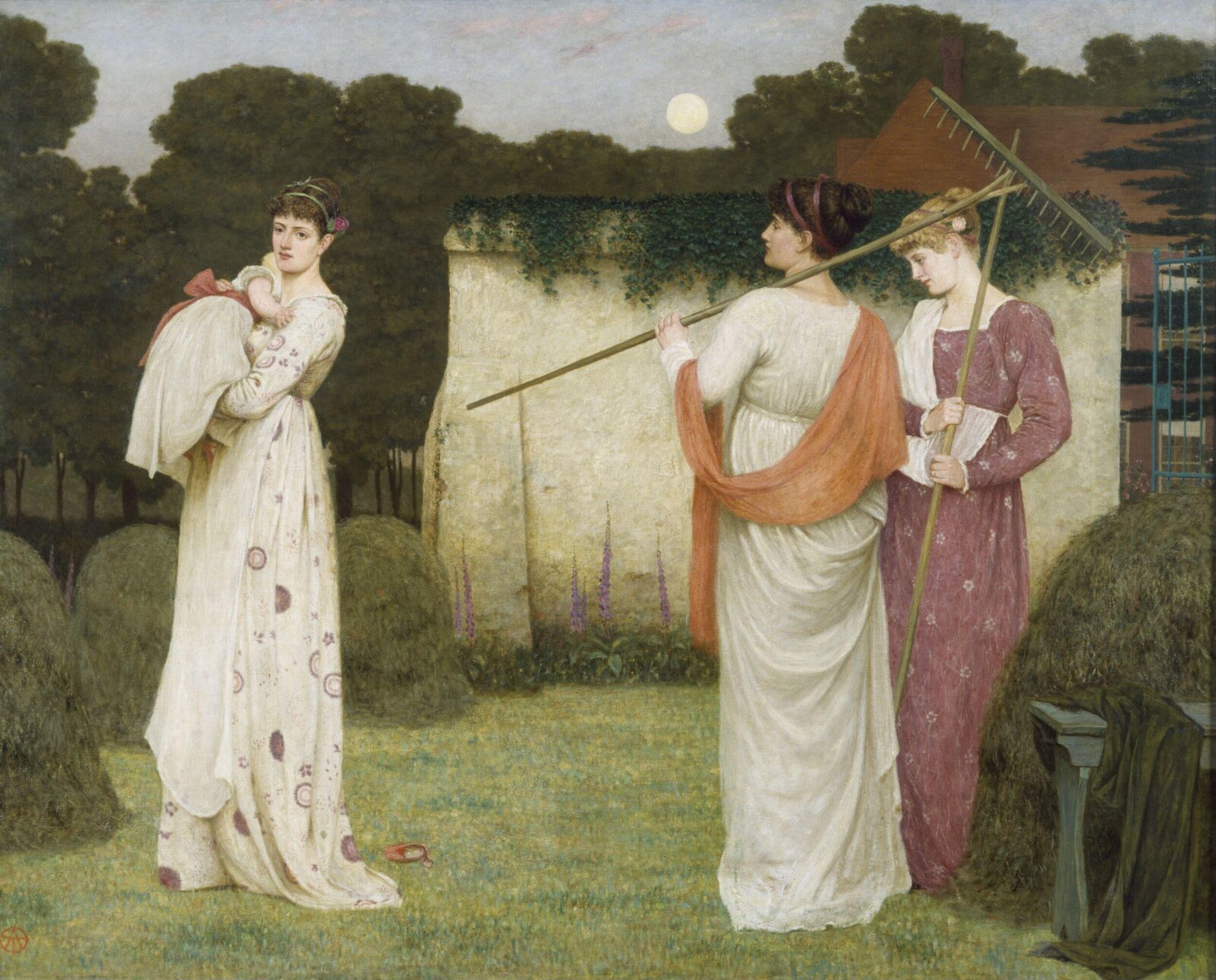
The Hay Field, Thomas Armstrong, 1869
TThomas Armstrong

The Hay Field

1869 · Oil painting · 156 × 189 cm

About the painting

The Hay Field is an 1869 genre painting by the British artist Thomas Armstrong. Armstrong had studied in Paris under Ary Scheffer. Initially associated with the realist movement, this work reflects the influence of the Aesthetic Movement on his style. The three poised haymakers reflect a romanticised view of the rural ideal and may make referee to the Three Graces.

The painting was displayed at the Royal Academy Exhibition of 1869 at Burlington House in Piccadilly. Today it is in the collection of the Victoria and Albert Museum in South Kensington, having come into its possession in a 1917 bequest.

Wikipedia · CC BY-SA

In the museum's words

Thomas Armstrong (1832-1911) undertook his early training as a painter in Paris. While studying at the studio of Ary Scheffer, he spent the evenings at the famous Académie Suisse. In 1854 he also spent time in the artists' colony at Barbizon, where he made the acquaintance of Millet. After a brief period of study in Antwerp, Armstrong returned to Paris where he began life-long friendships with George Du Maurier, Edward John Poynter and James Whistler. In 1860 he returned to London where he continued to work as a painter until 1881 when he was appointed Director of the Art Division of the Department of Science and Art, based at the South Kensington Museum. This role gave him responsibility for the organisation and supervision of art education throughout Britain.

Read on

This painting was exhibited at the Royal Academy in 1869 and is typical of the work produced by Armstrong in the 1860's. His early work focused on themes of social deprivation but in 1860 he joined the circle of painters associated with the emergent Aesthetic Movement. Like artists such as Myles Birkett Foster, Armstrong here romanticises rural life and the female agricultural labourer to create a harmonious figurative picture. His languid beauties invoke a Classical and 'Aesthetic' ideal - the three Graces perhaps - disposed in a frieze-like composition, and dressed in Greek-style costumes with ribbon-bound hair. The colours and the mood of the picture are close to Pre-Raphaelite painting, and the women themselves recall the figures in the pseudo-classical fantasies of Albert Moore or Alma-Tadema.

Victoria and Albert Museum

Particulars

Accession number
P.9-1917

In the same room · Stair L, Victoria and Albert Museum

Museum page

On the same theme · Costume

All works on the theme

May one see it?

Yes, receiving visitors

Victoria and Albert Museum

London, United Kingdom

RoomStair L

On public display.

Checked
12 days ago
In this state since
Sep 25, 2026
Source
The museum
On the mapMuseum page

What it shows

CostumeRakeHaystackMoonBabyFoxgloveSettleGate

In the catalog

PaintingsOilRealismImpressionism19th centuryBritish SchoolEngland

Sources

  • Victoria and Albert Museum
  • Image: Victoria and Albert Museum — © Victoria and Albert Museum, London
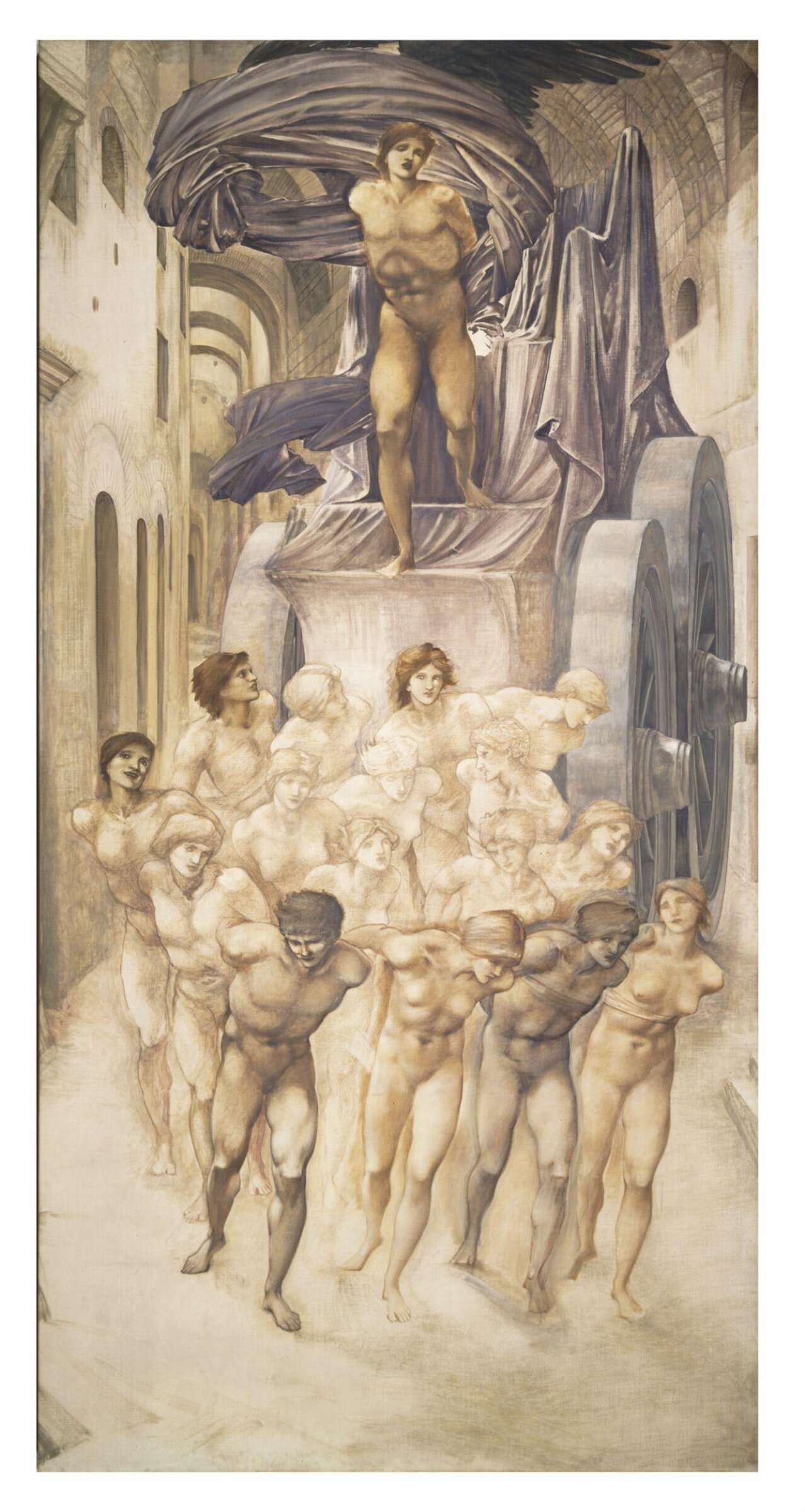
The Car of Love, Edward Coley Burne-Jones, ca. 1891-1898

Edward Burne-Jones

The Car of Love, ca. 1891-1898

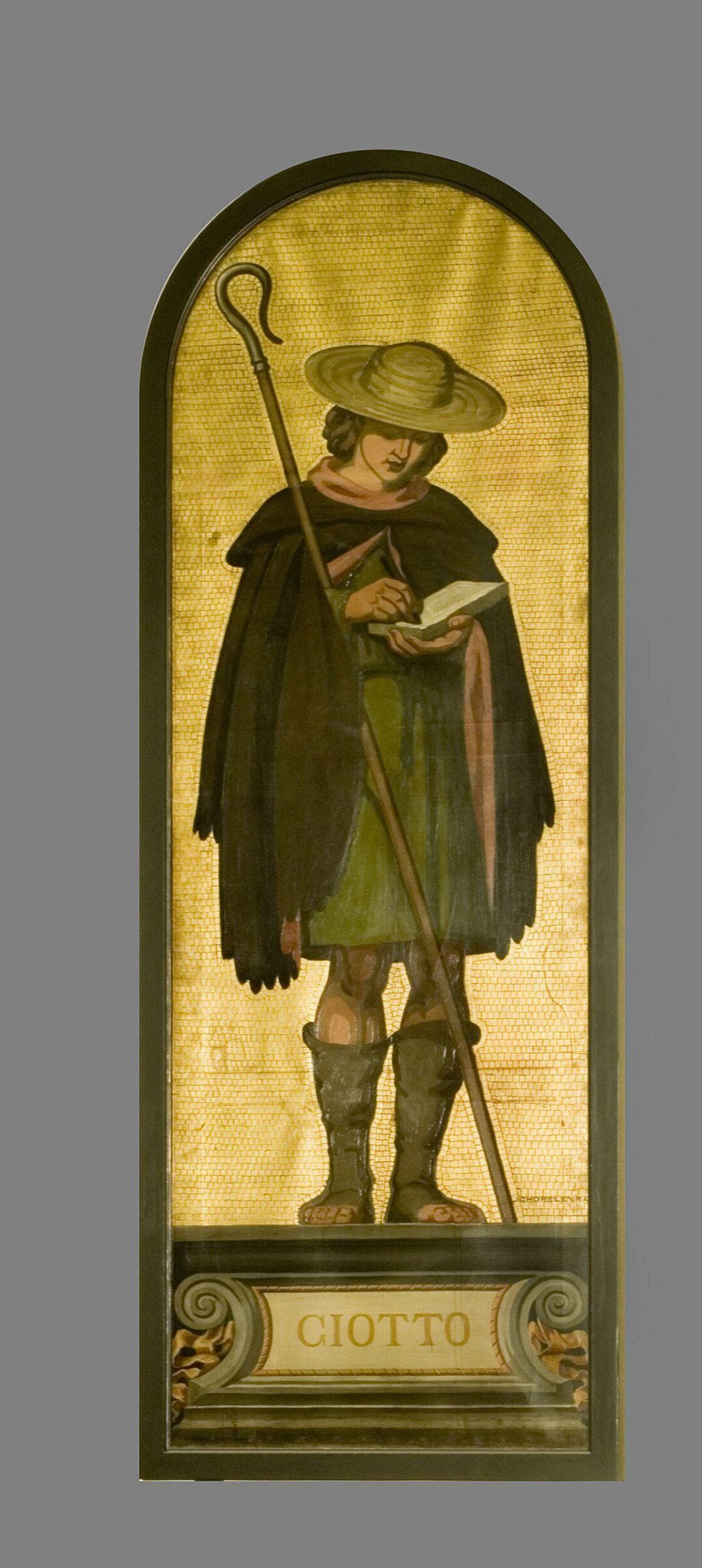
Giotto: design for a mosaic in the Museum (the 'Kensington Valhalla'), John Callcott Horsley, 1872

John Callcott Horsley

Giotto: design for a mosaic in the Museum (the 'Kensington Valhalla'), 1872

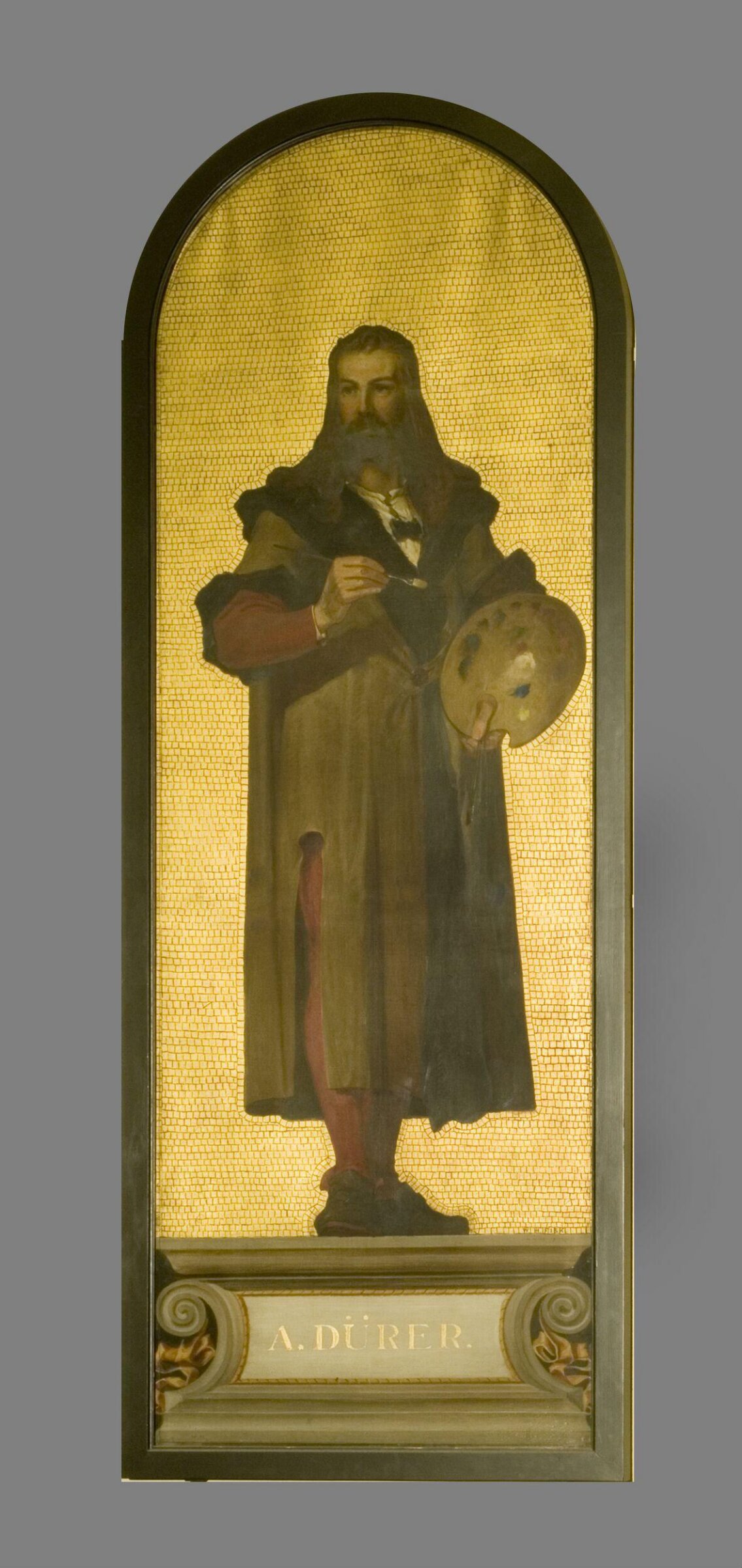
Albrecht Dürer: design for a mosaic in the Museum (the 'Kensington Valhalla'), William Henry Fisk, ca. 1869

William Henry Fisk

Albrecht Dürer: design for a mosaic in the Museum (the 'Kensington Valhalla'), ca. 1869

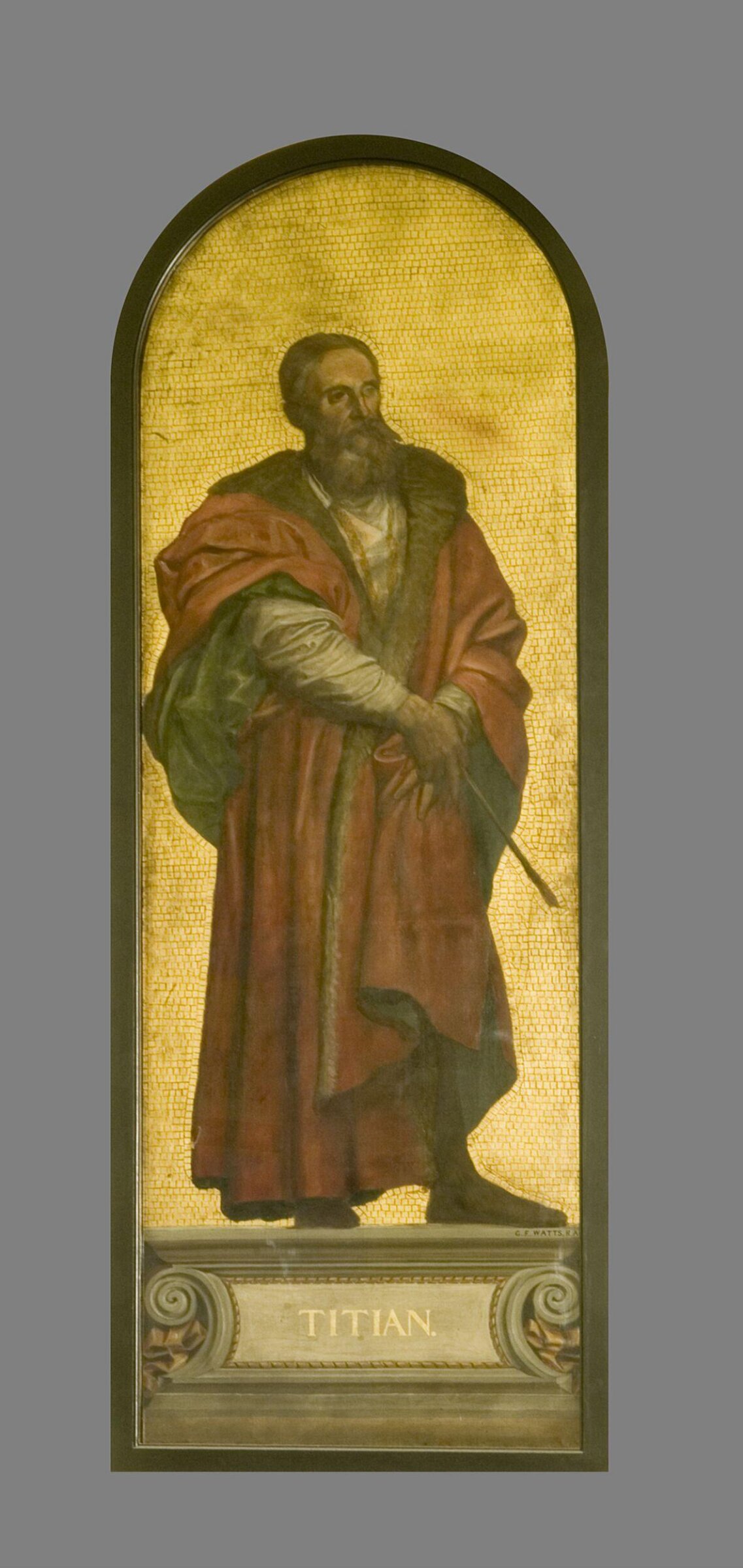
Titian: design for a mosaic in the Museum (the 'Kensington Valhalla'), George Frederick Watts, ca. 1868-70

George Frederick Watts

Titian: design for a mosaic in the Museum (the 'Kensington Valhalla'), ca. 1868-70

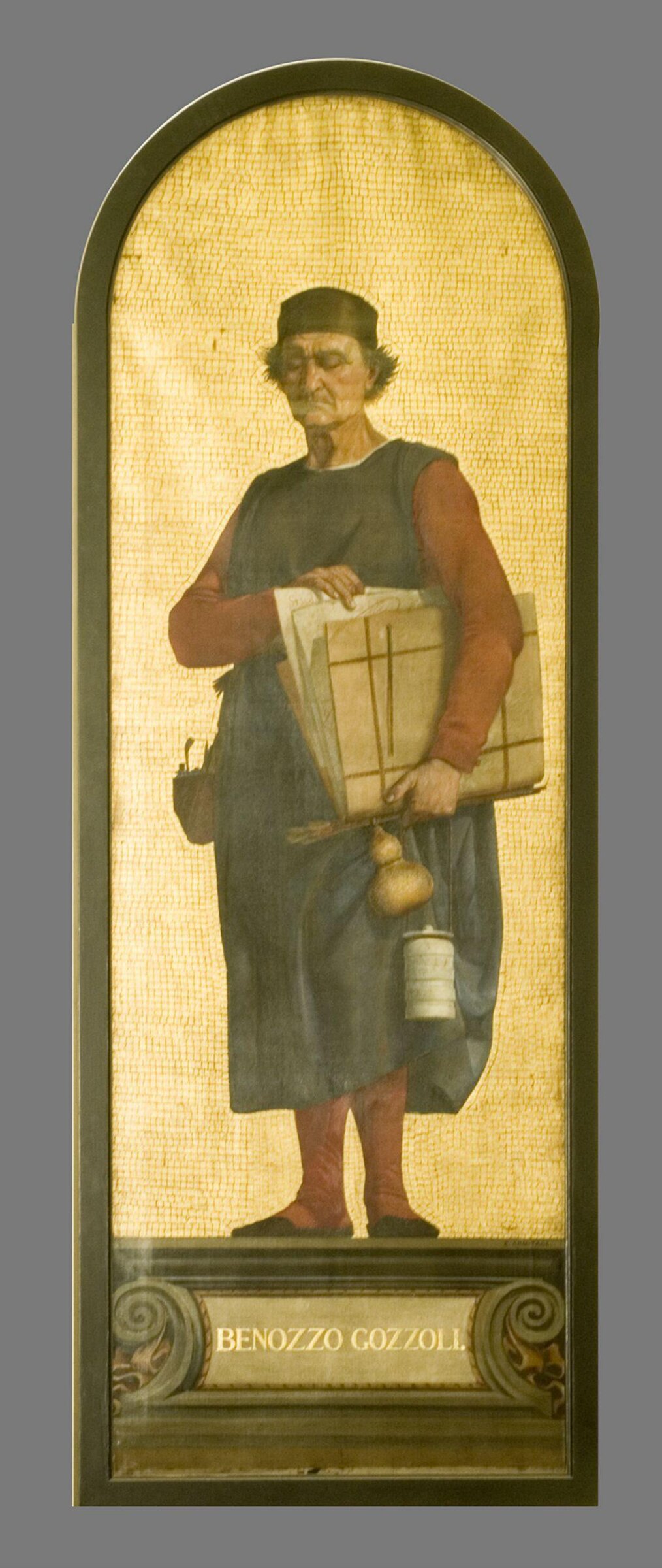
Benozzo Gozzoli: design for a mosaic in the Museum (the 'Kensington Valhalla'), Edward Armitage, 1864

Edward Armitage

Benozzo Gozzoli: design for a mosaic in the Museum (the 'Kensington Valhalla'), 1864

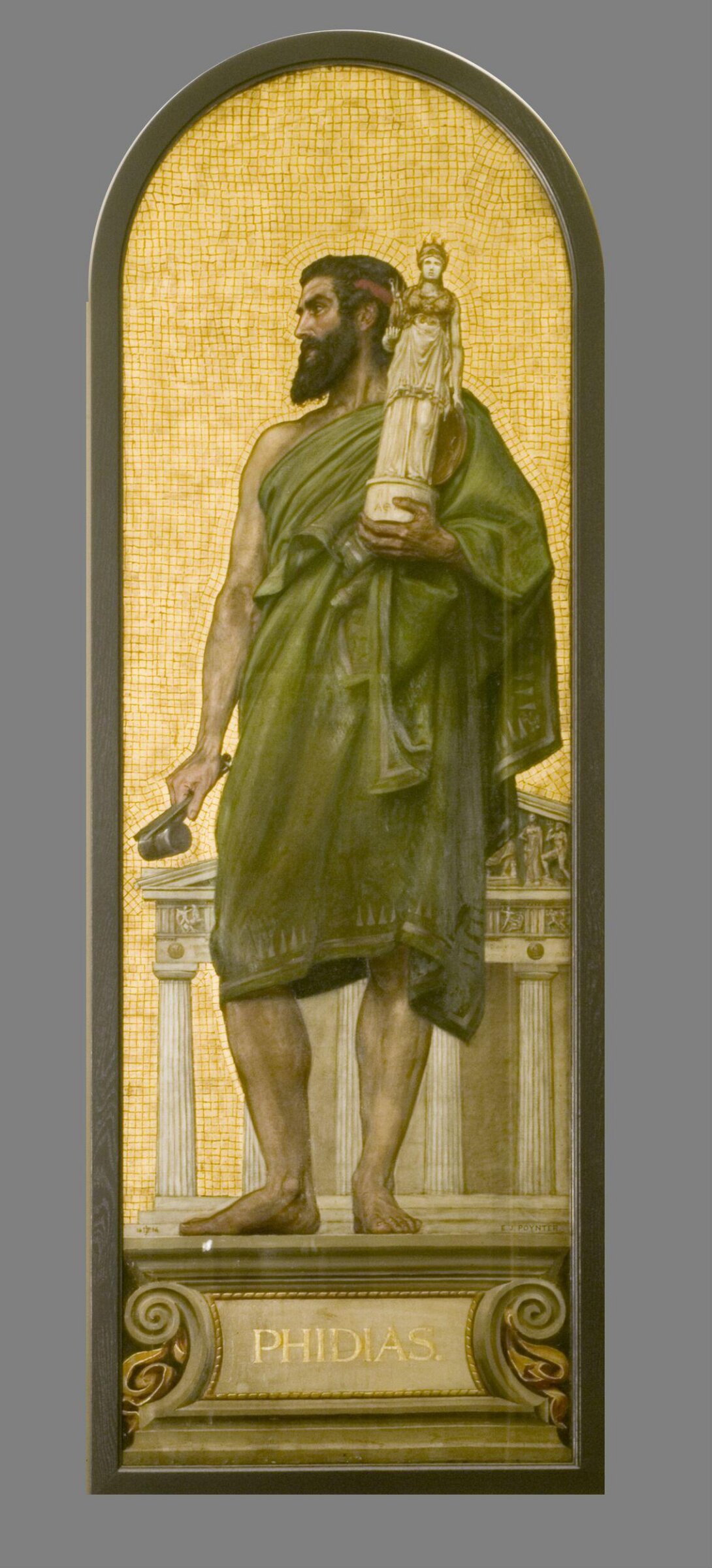
Pheidias, Greek Sculptor: design for a mosaic in the Museum (the 'Kensington Valhalla'), Edward John Poynter, 1864

Sir Edward John Poynter

Pheidias, Greek Sculptor: design for a mosaic in the Museum (the 'Kensington Valhalla'), 1864

a) The Last Supper; b) Putti, Vincenzo Tamagni, after Leonardo da Vinci, c. 1515

Leonardo da Vinci

a) The Last Supper; b) Putti, c. 1515

Not on view · National Gallery of Art

Orphan Man, Standing, Vincent van Gogh, 1882

Vincent van Gogh

Orphan Man, Standing, 1882

Not on view · National Gallery of Art

Blinded Minotaur Led by a Girl III (Minotaur aveugle guide par une fillette III), Pablo Picasso, 1934

Pablo Picasso

Blinded Minotaur Led by a Girl III (Minotaur aveugle guide par une fillette III), 1934

Not on view · National Gallery of Art

Rembrandt in a "turban," in "furs," and in the "elephant's eye" (Rembrandt au "turban," aux "fourrures," et à l'oeil d'éléphant"), Pablo Picasso, 1934

Pablo Picasso

Rembrandt in a "turban," in "furs," and in the "elephant's eye" (Rembrandt au "turban," aux "fourrures," et à l'oeil d'éléphant"), 1934

Not on view · National Gallery of Art

Spartan Envoys (Serment des femmes), Pablo Picasso, 1934

Pablo Picasso

Spartan Envoys (Serment des femmes), 1934

Not on view · National Gallery of Art

Negotiation between the Athenians and the Spartan Envoys (Accord entre les guerriers de Sparte d'Athenes), Pablo Picasso, 1934

Pablo Picasso

Negotiation between the Athenians and the Spartan Envoys (Accord entre les guerriers de Sparte d'Athenes), 1934

Not on view · National Gallery of Art

The Reading (La lecture), Pablo Picasso, 1926

Pablo Picasso

The Reading (La lecture), 1926

Not on view · National Gallery of Art

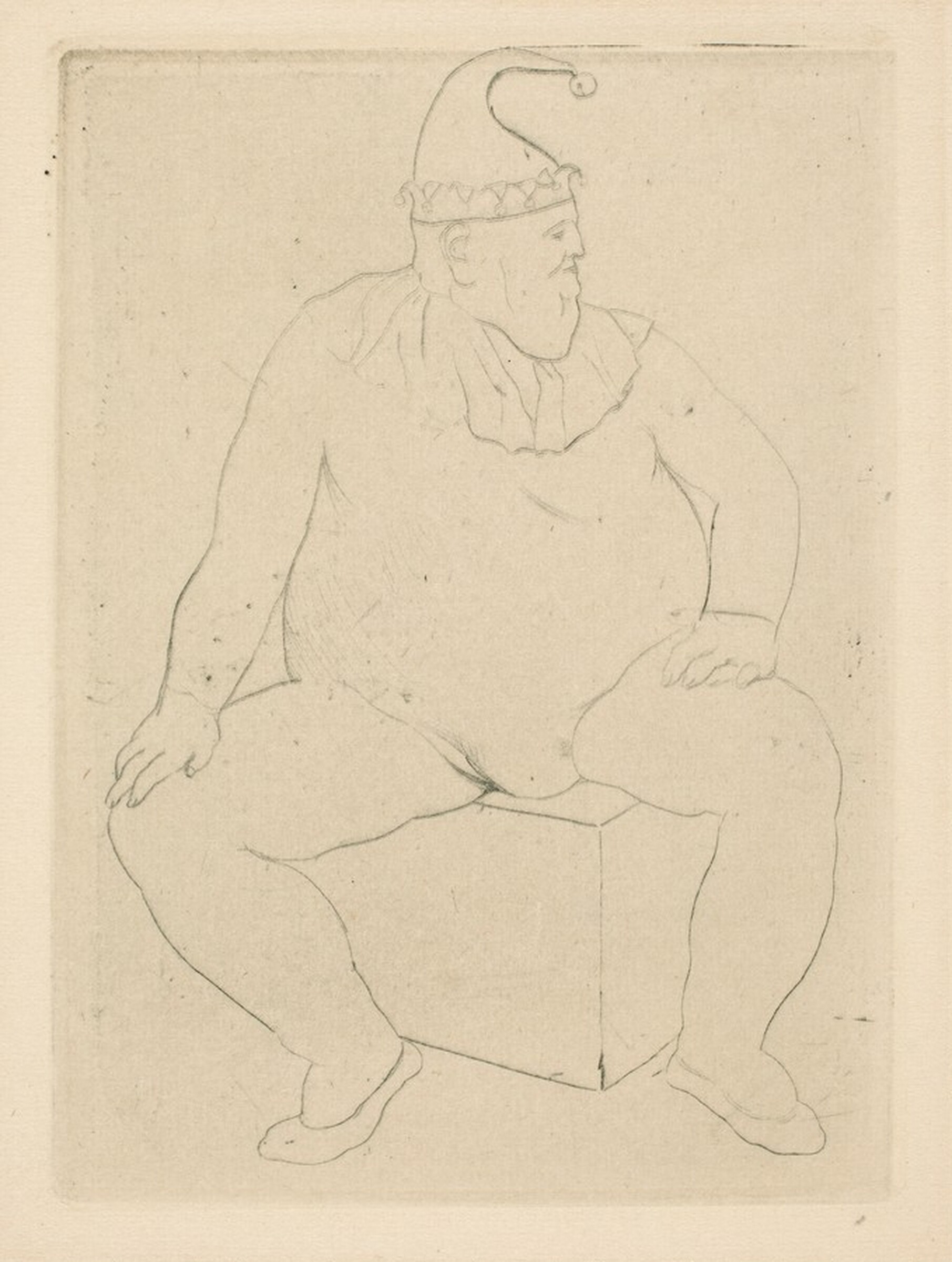
Acrobat in Repose (Le saltimbanque au repos), Pablo Picasso, 1905, published 1913

Pablo Picasso

Acrobat in Repose (Le saltimbanque au repos), 1905, published 1913

Not on view · National Gallery of Art