ART WIKI32,963 on view
MapCollectionArtistsMuseumsExhibitionsJournal
Sign in

ART WIKI

Where the masterpiece hangs, and when they let you in.

Collections: Art Institute of Chicago, Getty Villa, Harvard Art Museums, Hirshhorn Museum and Sculpture Garden, J. Paul Getty Museum, Minneapolis Institute of Art, Musée du Louvre, National Gallery of Art, National Museum of Asian Art, National Portrait Gallery (Smithsonian), Pushkin State Museum of Fine Arts, Rijksmuseum, Smithsonian American Art Museum, SMK — National Gallery of Denmark, State Hermitage Museum, State Russian Museum, The Cleveland Museum of Art, The Metropolitan Museum of Art, The Museum of Modern Art, Tretyakov Gallery, Victoria and Albert Museum, Whitney Museum of American Art, State Catalogue of the Museum Fund of Russia (274 museums), Europeana (19 museums), Wikidata (6 museums), Paris Musées (12 museums), and Joconde, the French Ministry of Culture's museum database (495 museums). Images belong to their rights holders.

Sections

  • Map
  • Search
  • Collection
  • Masterpieces
  • On view now
  • Artists

More

  • Museums & galleries
  • Exhibitions
  • Journal
  • Where the data comes from
  • Privacy & cookies
HomeMapBrowse
  1. Collection/
  2. Art Institute of Chicago/
  3. The Drinkers
The Drinkers, Vincent van Gogh, 1890
Vincent van Gogh, portraitVincent van GoghDutch, 1853–1890

The Drinkers

1890 · Oil on canvas

May one see it?

Yes, receiving visitors

Art Institute of Chicago

Chicago, United States

Room241

On public display.

Checked
2 days ago
In this state since
Aug 19, 2026
Source
The museum's own collection data
On the mapMuseum page

About the painting

During his time in the Asylum of Saint-Paul in Saint-Rémy, a small town near Arles, Vincent van Gogh made a number of copies of the work of artists he admired, which freed him from having to produce original compositions and allowed him to concentrate instead on interpretation. For this image, Van Gogh copied a wood engraving from Honoré Daumier’s Drinkers, a parody on the four ages of man. The exaggerated figure types capture Daumier’s characteristic humor and convey his sad message about the horrors of alcoholism. The greenish palette may well be an allusion to the notorious alcoholic drink absinthe.

This is one of thirty-five works that comprise the Winterbotham Collection. Click here to learn more about the collection.

Art Institute of Chicago · CC BY 4.0

Particulars

1890 · aged 37
18531890

What it shows

DrinkingPitcherTableCloudsWorkHatsFactoryAlcoholManLeisure

In the catalog

PaintingsDutch paintingImpressionism19th centuryPost-ImpressionismNetherlands

Comings and goings

  1. On view · Gallery 241

    Art Institute of Chicago · Aug 19, 2026 — now · Verified

  2. Was not on view

    Art Institute of Chicago · Aug 16, 2026 — Aug 19, 2026 · Verified

Sources

  • Art Institute of Chicago: the museum's own open data · fetched 8 days ago
  • Image: Wikimedia Commons — Public domain (PD-Art)

Meanwhile, in the life of Vincent van Gogh

The whole life
  1. February 1888

    To Arles, dreaming of a “Studio of the South”

    The public still neither accepted nor bought his paintings, and in February 1888 Van Gogh left for Arles in the south of France to found a “Studio of the South”, a brotherhood of like-minded artists in which he gave Gauguin the leading role. Theo backed the plan with money.

  2. 23 October 1888

    Gauguin arrives in Arles

    After much pleading Gauguin arrived in Arles, and in November the two painted together: Gauguin portrayed Van Gogh in “The Painter of Sunflowers”, and their first joint outing was to the Alyscamps. At Gauguin's suggestion Vincent painted from memory, producing “Memory of the Garden at Etten”.

  3. 23 December 1888

    The severed ear

    After an altercation on the evening of 23 December, Van Gogh, seemingly hearing voices, severed his left ear, wholly or in part, with a razor and delivered it, wrapped in paper, to a woman at a brothel. Next morning a policeman found him unconscious; in hospital he was diagnosed with “acute mania with generalised delirium”.

  4. May 1889

    Voluntarily into the Saint-Paul asylum

    Van Gogh left Arles and voluntarily entered the Saint-Paul-de-Mausole asylum, a former monastery in Saint-Rémy-de-Provence, accompanied by the Protestant clergyman Frédéric Salles. Of his two cells with barred windows one became a studio, and the clinic and its garden became the main subjects of his paintings.

  5. 27 July 1890

    A fatal wound: a revolver shot

    Out painting, Van Gogh shot himself in the chest with a revolver he had bought to scare off birds while working outdoors; the bullet passed below his heart, and he made his own way back to his room at the inn. Theo arrived the next day and stayed with him to the end; according to Theo, Vincent's last words were: “The sadness will last forever.”

  6. 29 July 1890

    Died

More by Vincent van Gogh

All works
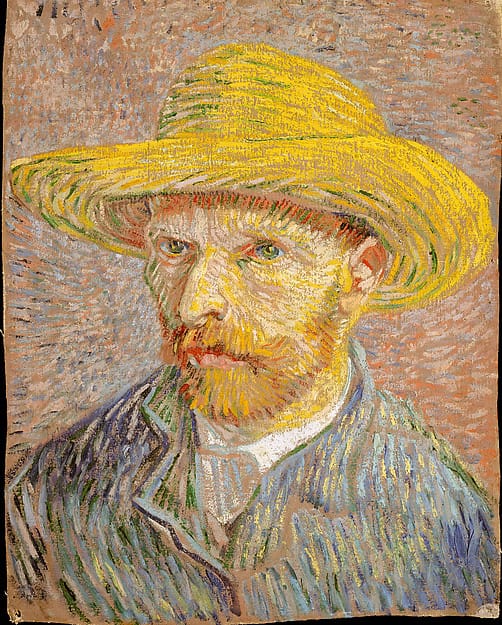
Self-Portrait with a Straw Hat (obverse: The Potato Peeler), Vincent van Gogh, 1887

Self-Portrait with a Straw Hat (obverse: The Potato Peeler)

1887 · The Metropolitan Museum of Art

Self-portrait, Vincent van Gogh, 1887

Self-portrait

1887 · Rijksmuseum

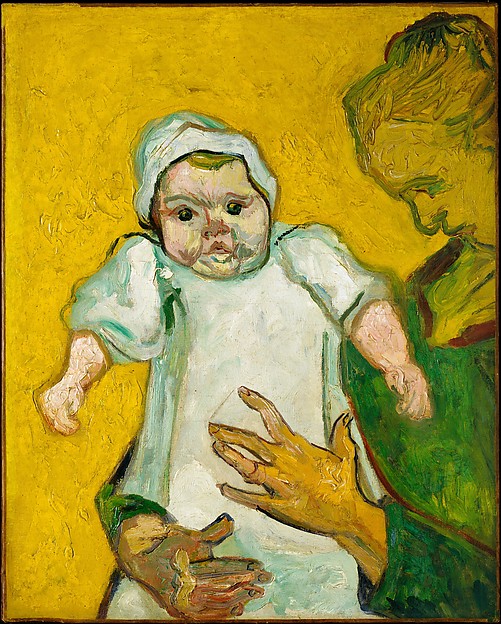
Madame Roulin and Her Baby, Vincent van Gogh, 1888

Madame Roulin and Her Baby

1888 · The Metropolitan Museum of Art

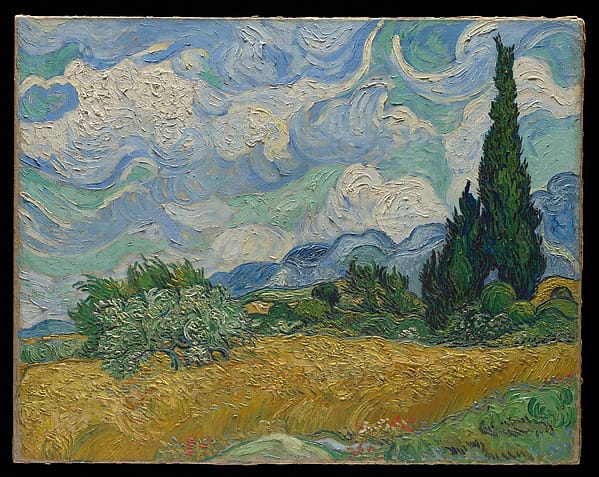
Wheat Field with Cypresses, Vincent van Gogh, 1889

Wheat Field with Cypresses

1889 · The Metropolitan Museum of Art

Olive Trees, Vincent van Gogh, 1889

Olive Trees

1889 · Minneapolis Institute of Art

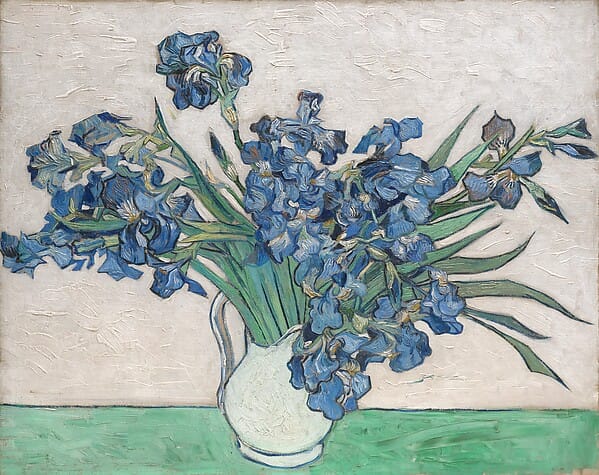
Irises, Vincent van Gogh, 1890

Irises

1890 · The Metropolitan Museum of Art

Het Singel bij de Lutherse Kerk te Amsterdam, Vincent van Gogh, 1885

Het Singel bij de Lutherse Kerk te Amsterdam

1885 · Rijksmuseum

The Potato Peeler (reverse: Self-Portrait with a Straw Hat), Vincent van Gogh, 1885

The Potato Peeler (reverse: Self-Portrait with a Straw Hat)

1885 · The Metropolitan Museum of Art

Neighbors at Art Institute of Chicago

Museum page
The Bedroom, Vincent van Gogh, 1889

Vincent van Gogh

The Bedroom, 1889

A Sunday on La Grande Jatte — 1884, Georges Seurat, 1884–86, border added 1888–89

Georges Seurat

A Sunday Afternoon on the Island of La Grande Jatte, 1884–86, border added 1888–89

Paris Street; Rainy Day, Gustave Caillebotte, 1877

Gustave Caillebotte

Paris Street; Rainy Day, 1877

Two Sisters (On the Terrace), Pierre-Auguste Renoir, 1881

Pierre-Auguste Renoir

Two Sisters (On the Terrace), 1881

The Basket of Apples, Paul Cézanne, c. 1893

Paul Cézanne

The Basket of Apples, c. 1893

Stacks of Wheat (End of Summer), Claude Monet, 1890–91

Claude Monet

Stacks of Wheat (End of Summer), 1890–91

American Gothic, Grant Wood, 1930

Grant Wood

American Gothic, 1930

Nighthawks, Edward Hopper, 1942

Edward Hopper

Nighthawks, 1942