 John ConstableBritish, 1776–1837
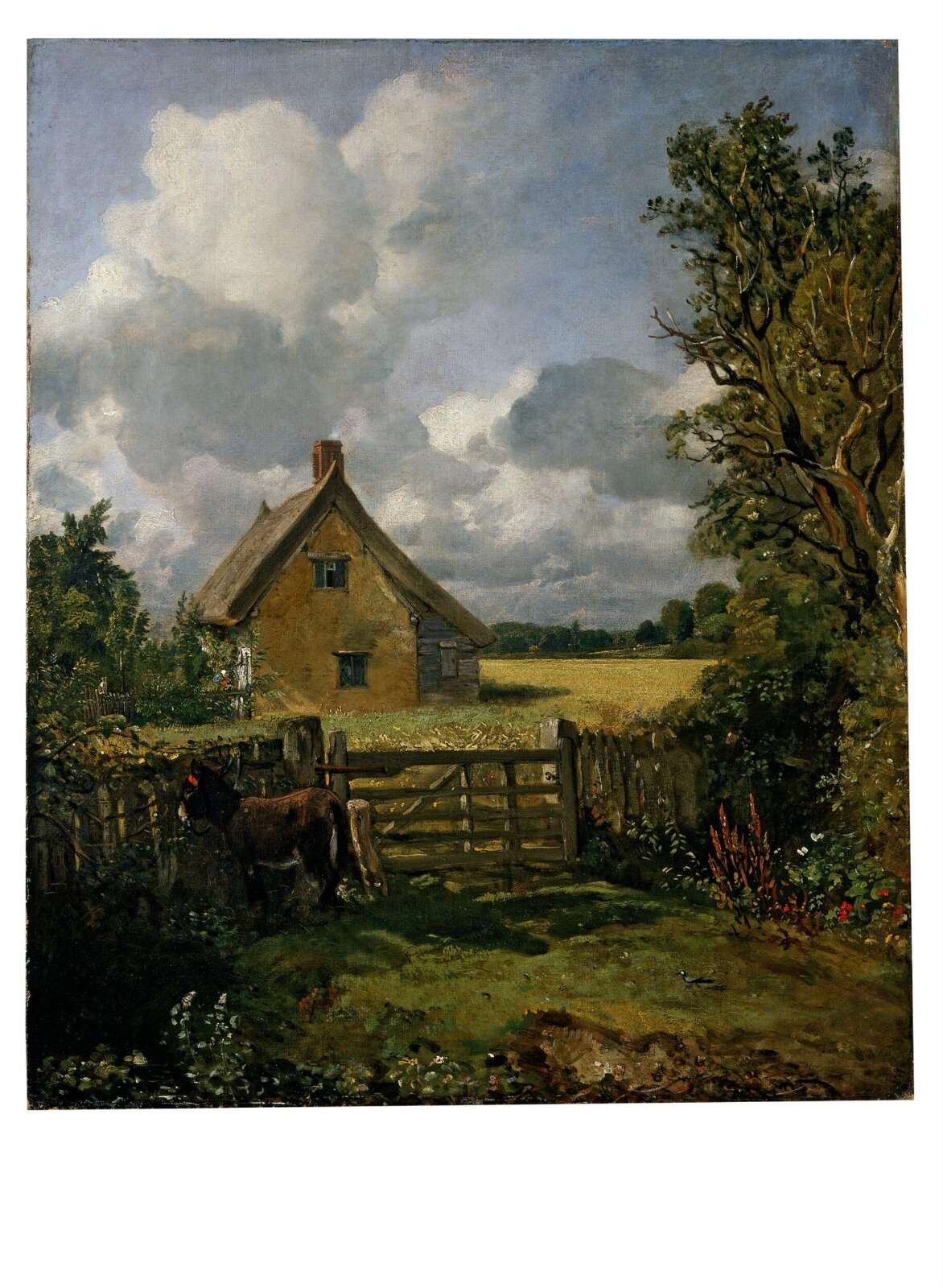
The Cottage in a Cornfield
May one see it?
Yes, receiving visitors

Victoria and Albert Museum
RoomPaintings, Room 87, The Edwin and Susan Davies GalleriesLondon, United Kingdom
On public display.
- Checked
- 7 days ago
- In this state since
- Sep 25, 2026
- Source
- The museum's own collection data
About the painting
Though left unfinished until March 1833, Constable based the donkey in this painting on a life study done in December 1815. The corn in the field remains green on the side shaded from the sun, but is ripe elsewhere, suggesting it is set in the month of July.
Victoria and Albert Museum
Particulars
- Accession number
- 1631-1888
What it shows
In the catalog
Sources
- Victoria and Albert Museum: the museum's own open data · fetched 7 days ago
- Image: Victoria and Albert Museum — © Victoria and Albert Museum, London
Meanwhile, in the life of John Constable
The whole life1816
A marriage against the bride’s grandfather
Maria’s grandfather, Dr Rhudde, rector of East Bergholt, opposed the match: he thought the Constables his social inferiors and threatened to disinherit her. Constable’s parents approved but offered no support until he was financially secure; they died soon afterwards, and he inherited a fifth share of the family business.
2 October 1816
Married: Maria Bicknell
1821
“The Hay Wain” at the Royal Academy
The picture, shown as “Landscape: Noon”, found no buyer, but it was seen by the painter Théodore Géricault and the writer Charles Nodier. According to Delacroix, Géricault went back to France quite stunned and invited Constable to Paris, while Nodier urged French artists to look to nature rather than to trips to Rome.
1824
The Paris Salon: a gold medal
The Anglo-French dealer John Arrowsmith bought The Hay Wain and other works, and in 1824 they were shown at the Paris Salon, where they caused a sensation. The Hay Wain was awarded a gold medal by Charles X.
23 November 1828
The death of his wife Maria
After the birth of their seventh child the family returned to Hampstead, where Maria died of tuberculosis at the age of 41. “Hourly do I feel the loss of my departed Angel,” Constable wrote to his brother.
February 1829
Elected to the Royal Academy at fifty-two
In February 1829, three months after his wife’s death, Constable was elected a member of the Royal Academy, at the age of 52.


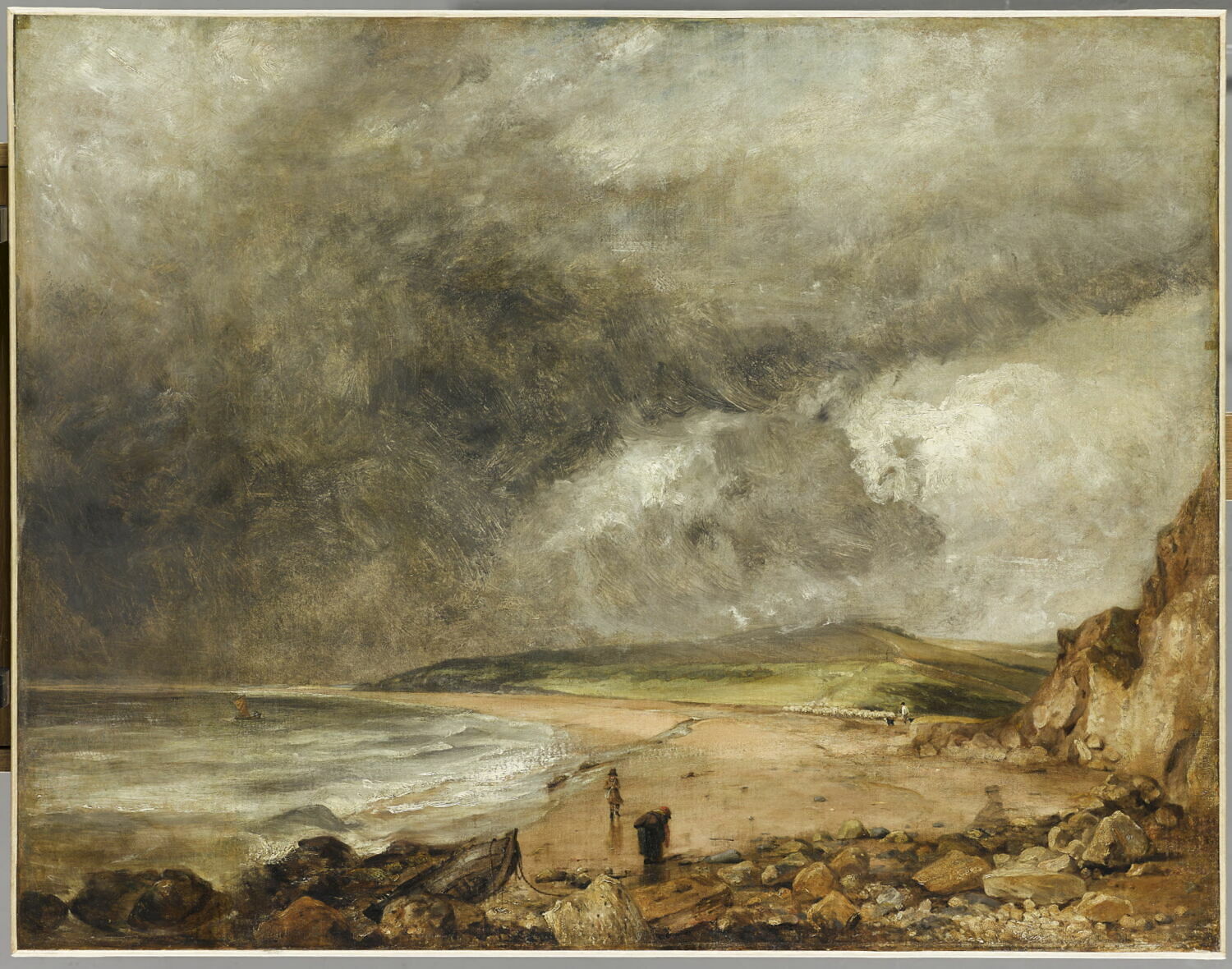

![Vallon à Helmingham [Helmingham Dell], Constable, John, 1e quart du XIXe siècle (peint à l'été 1823 (selon Beckett)) (1823)](https://collections.louvre.fr/media/cache/large/0000000021/0000065616/0000312650_OG.JPG)