Paul GauguinFrench, 1848–1903
Landscape with Two Goats (Tarari Maruru)
Can I see it?
Yes, on view now
Where is “Landscape with Two Goats (Tarari Maruru)” now? State Hermitage Museum, Room 412, Saint Petersburg. Yes, on view now. Checked August 29, 2026.

Saint Petersburg, Russia
Closed· opens tomorrow at 12:00 PM
On public display.
- Checked
- In this state since
- Source
- The museum
About the painting
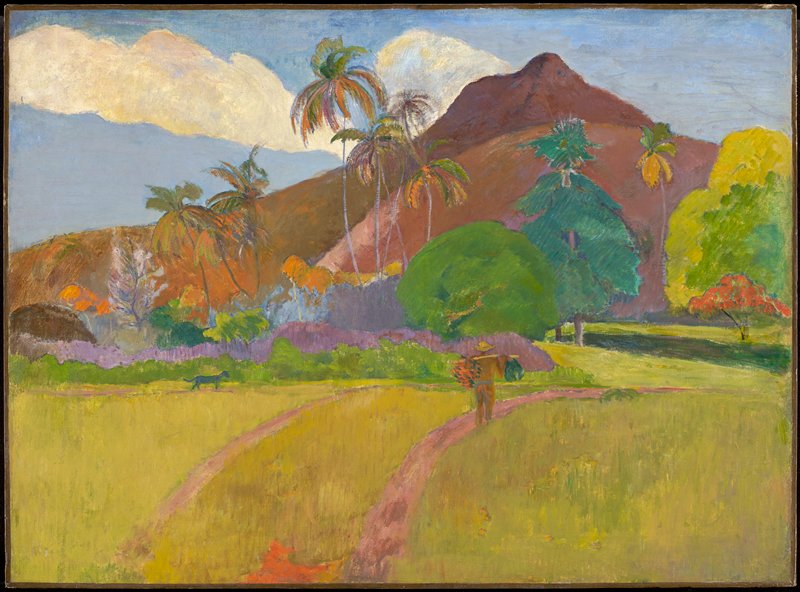
Dark colours dominate Paul Gauguin's Landscape with Two Goats (Tarari Maruru) of 1897. The Polynesian landscape belongs to the Hermitage, Saint Petersburg. The subject probably connects with Tahitian religious beliefs. Gauguin associated the islanders' customs and daily life with an enduring bond to nature, in which all living things followed a common rhythm. His own manner of painting departed from traditional means of representation. Here the subdued palette makes that vision mysterious. Polynesia, where he spent his final years, fed his idea of a promised land and a world in its original state. It hangs in room 412.
Museum text in Russian
Картина была написана в Полинезии, где прошли последние годы жизни Гогена. Тема полотна связана, вероятно, с религиозными верованиями таитян. Обычаи, быт, верования туземцев сохранили естественную связь с природой. Все живое подчинено единому вечному ритму. Отказавшись от традиционных выразительных средств, Гоген выработал индивидуальную манеру, в которой передавал образы экзотического мира. Темный колорит придает произведению загадочность. Океания с ее девственной природой питала воображение художника, став для него олицетворением "земли обетованной". В картине воплощено одно из видений этого первозданного мира.
State Hermitage Museum
Details
- Accession number
- ГЭ-7707
In the catalog
Sources
- State Hermitage Museum
- Image: State Hermitage Museum — Museum open access
In the life of Paul Gauguin
The whole life1891–1901 · Workplace
Tahiti
February – April 1895
Failed Auction and the Oviri Scandal
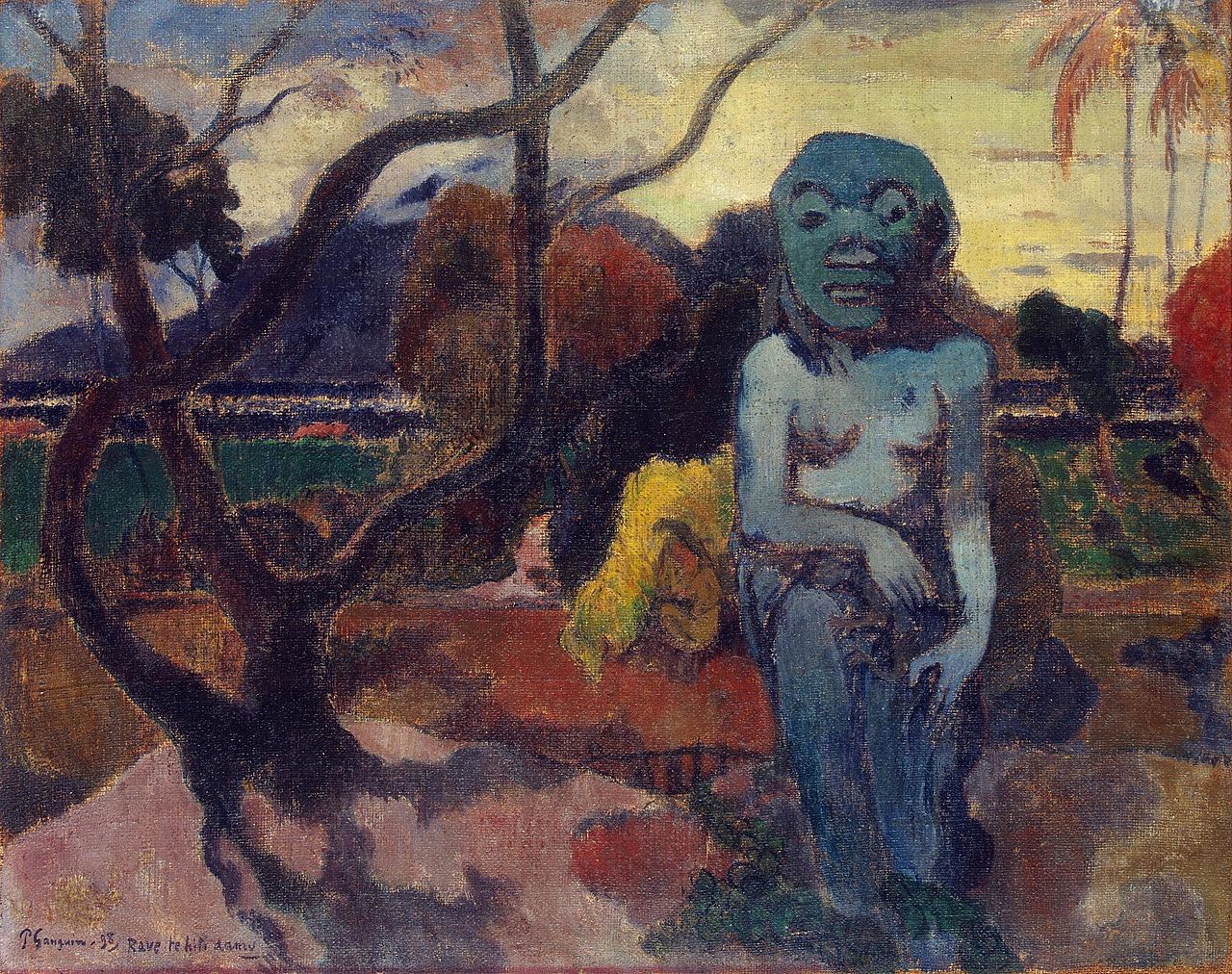
In February 1895 Gauguin tried to repeat the Hôtel Drouot auction, but without success; in April he submitted the large ceramic sculpture Oviri to the salon of the Société Nationale des Beaux-Arts, whose reception caused a scandal, and wrote an indignant letter on the state of modern ceramics in Le Soir.
28 June 1895
Final Departure for Oceania
On 28 June 1895 Gauguin sailed once more for Tahiti — Eugène Carrière arranged cheap passage for him — arriving in September; he never saw Europe again. He spent the next six years mostly near Papeete, building a spacious house at Punaauia.
April 1897
News of the Death of His Daughter Aline
In April 1897 Gauguin received news that his beloved daughter Aline had died of pneumonia; the same month he learned that he had to vacate his house, and, taking out a bank loan for a new one, by the end of the year he was on the brink of ruin and despair.
c. 1898
Suicide Attempt
After finishing Where Do We Come From? What Are We? Where Are We Going?, Gauguin attempted suicide by taking arsenic, but the dose proved too large, and a violent fit of vomiting saved his life.
1899
Son born: Emile Gauguin