 Kazimir MalevichRussian, 1879–1935
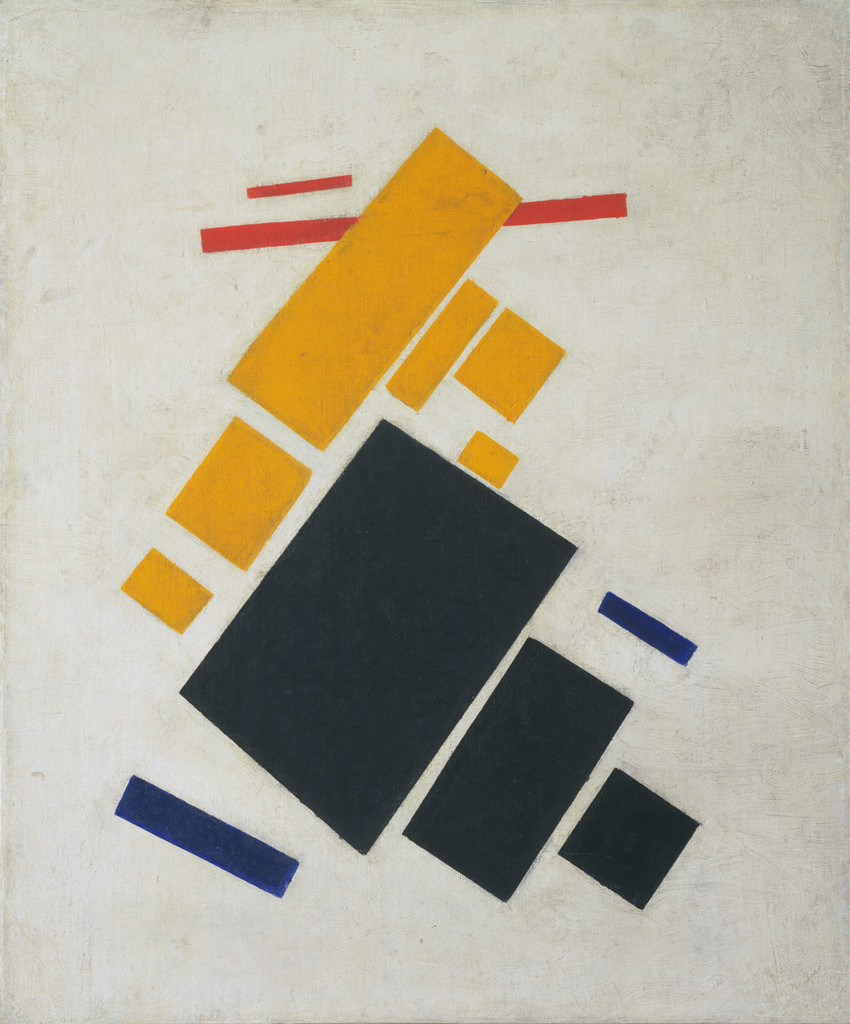
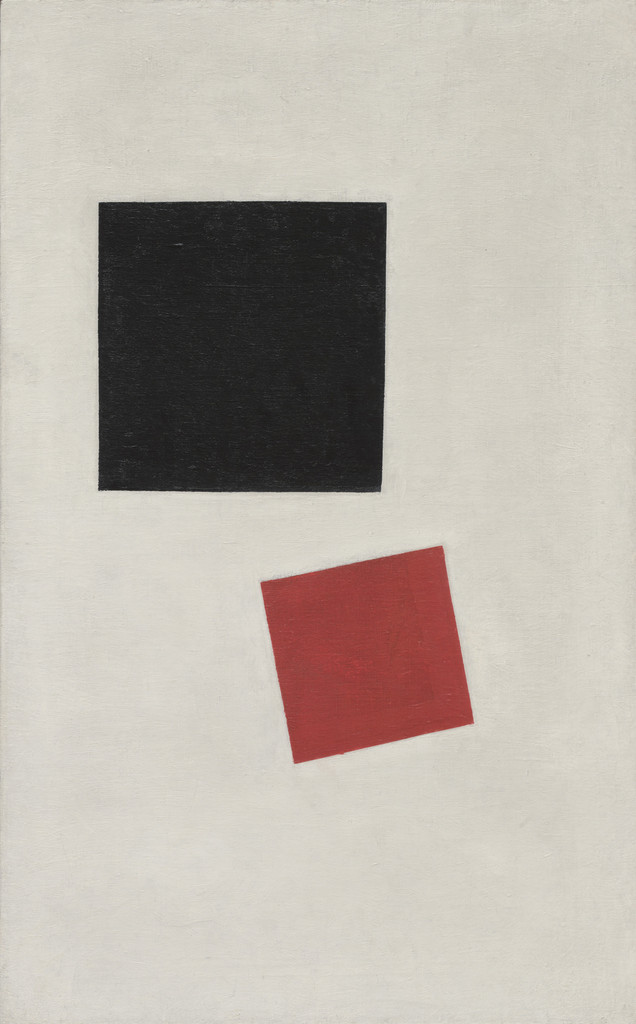
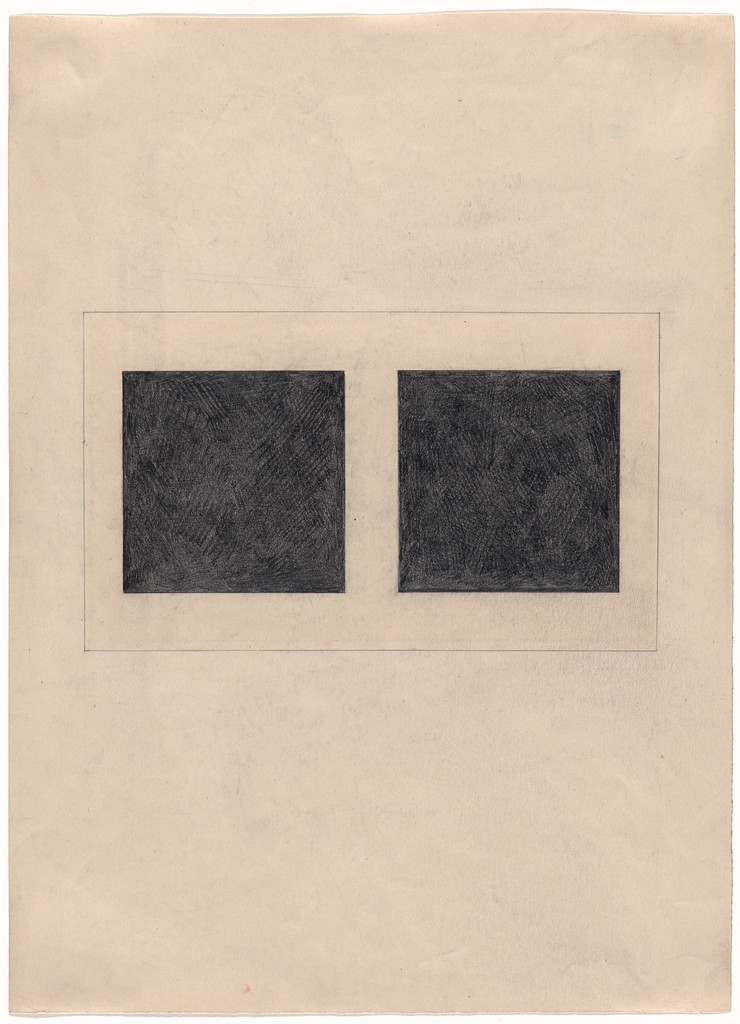
Suprematist Elements: Squares
Can I see it?
Not on view at present
Where is “Suprematist Elements: Squares” now? Collection: The Museum of Modern Art, New York. Not on view at present. Checked September 22, 2026.

New York, United States
It belongs to the collection, but is not on display at present.
- Checked
- Source
- The museum
Details
- Accession number
- 807.1935
In the catalog
Sources
- The Museum of Modern Art
- Image: The Museum of Modern Art — © the artist or rights holder
In the life of Kazimir Malevich
The whole life1919–1922
The theoretical writings of the Vitebsk years
In Vitebsk Malevich published the theoretical work “On New Systems in Art” (1919), issued the UNOVIS manifesto in the journal “Iskusstvo” (1921), and in 1922 finished his chief theoretical and philosophical work, “Suprematism. The World as Non-Objectivity, or Eternal Rest”, and brought out the pamphlet “God Is Not Cast Down. Art, Church, Factory”.
June 1922
Moving to Petrograd with his pupils
In early June 1922 Malevich moved to Petrograd with several pupils, members of UNOVIS, and joined the work of the Museum of Artistic Culture; that year his works were shown at the First Russian Art Exhibition in Berlin.
1923
An exhibition for the 25th anniversary of his career
In 1923 Malevich’s second solo exhibition, marking the 25th anniversary of his creative activity, was held in Moscow; that year he also gave a paper at the State Academy of Artistic Sciences and made sketches of Suprematist decoration and new forms for the Petrograd State Porcelain Factory.
1923–1926
Director of the Museum of Artistic Culture and GINKhUK
In 1923 Malevich was appointed acting director of the Petrograd Museum of Artistic Culture and began research and teaching there, surrounded by pupils who had followed him. In 1924 the museum was renamed, and from 1924 to 1926 he was director of the Leningrad State Institute of Artistic Culture (GINKhUK), where he headed the formal-theoretical department; he lived in the Myatlev house on St Isaac’s Square, where the institute was housed, from 1926 until his death.