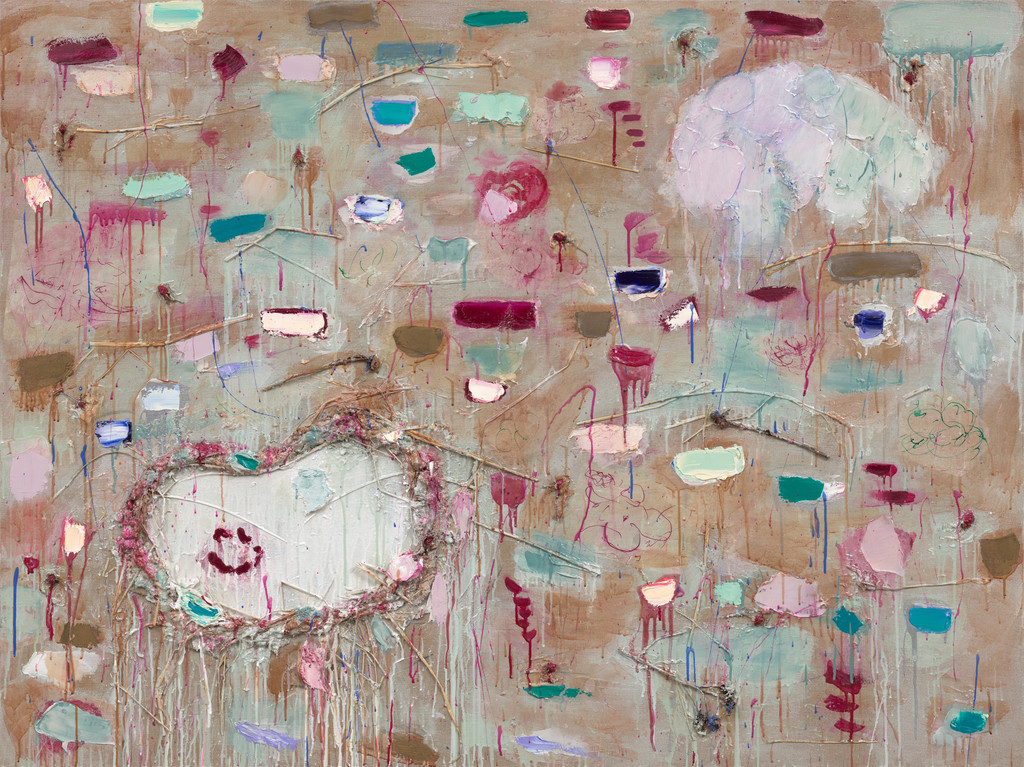
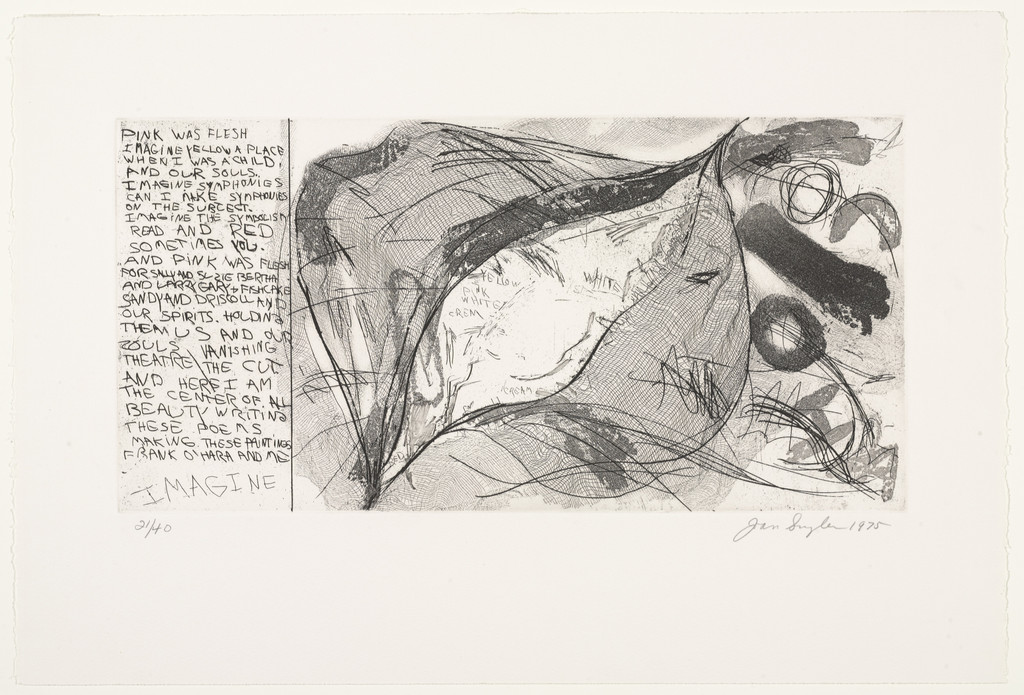
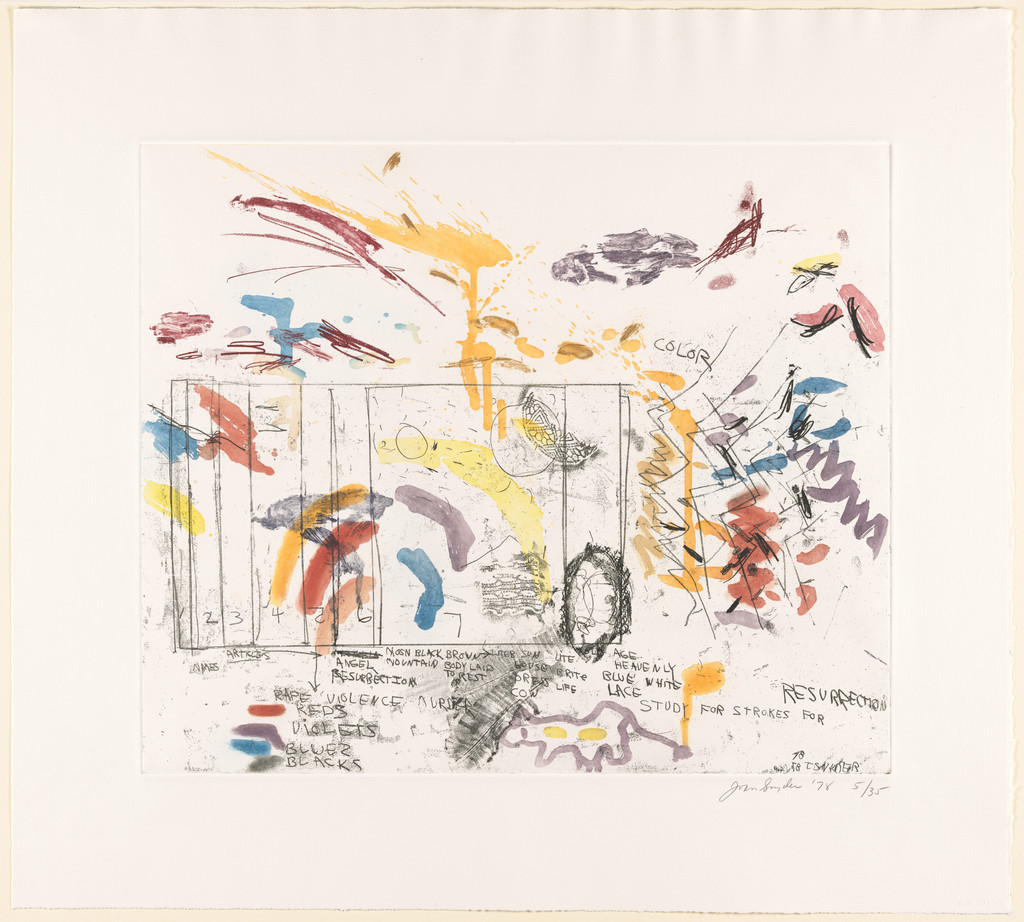
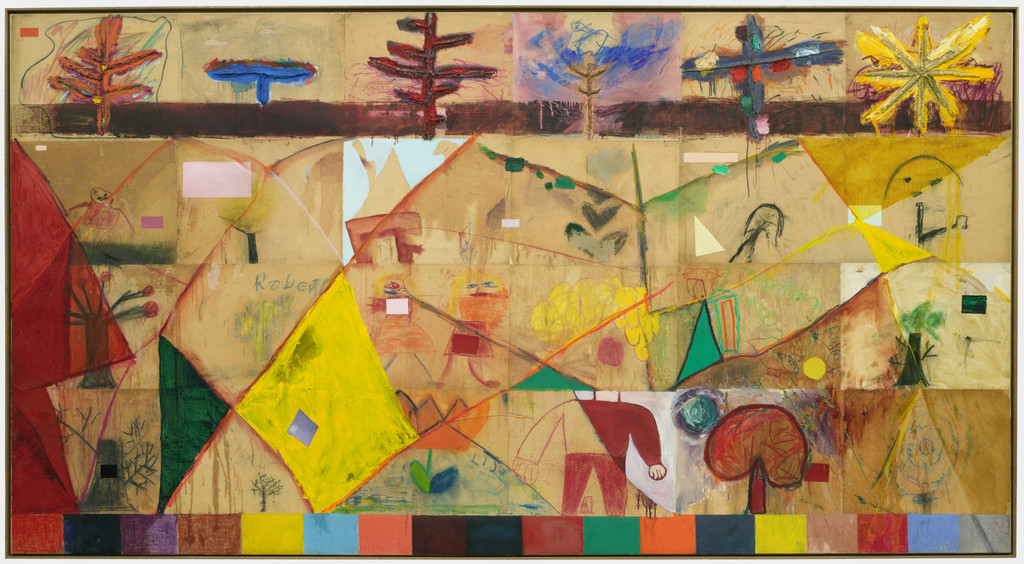
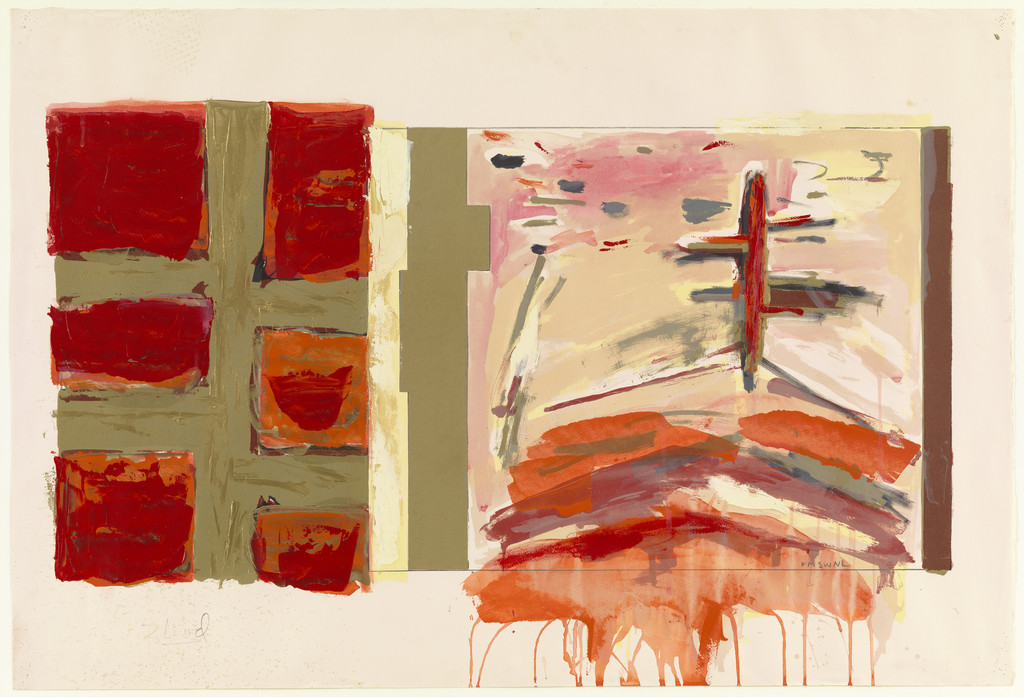
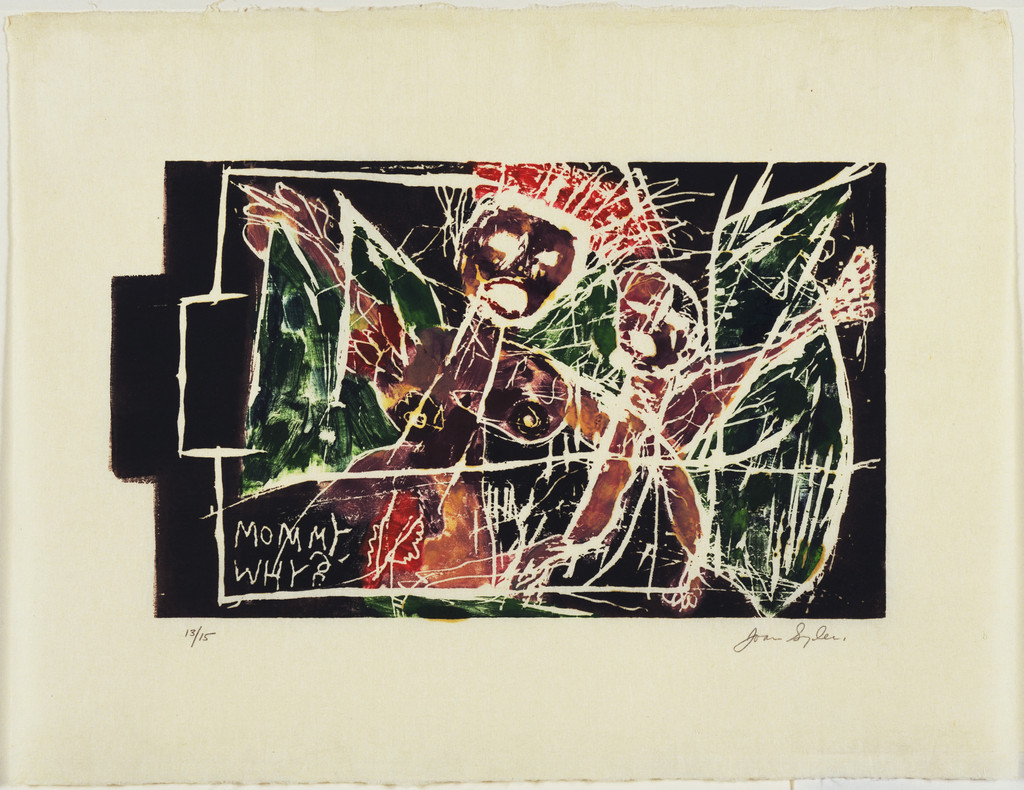
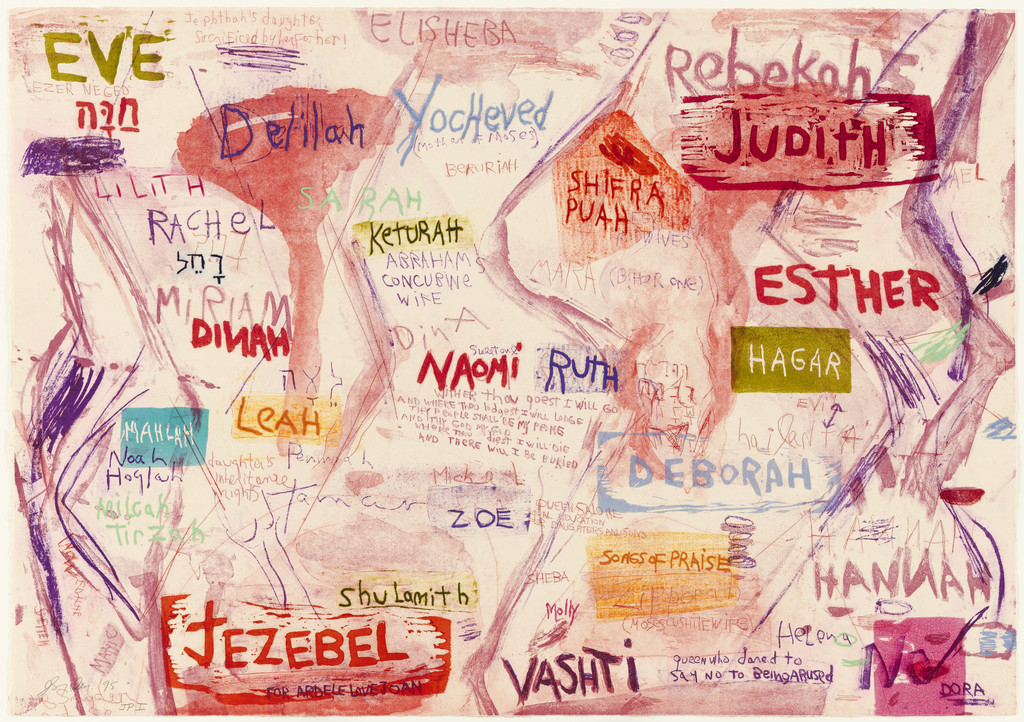
An American painter based in New York, Joan Snyder first became known for her “stroke paintings” in the 1970s. Summer Orange, one of these works, pointedly combines different techniques of twentieth-century abstract painting, from staining the canvas to applying pigment with spray cans. A penciled grid — the prototypical structure of modernist painting — organizes the color patches, which also exceed its regular lines. Vertical paint streaks, frozen in mid-drip, heighten the tension between order and disorder, and evoke the work of Jackson Pollock. Although by the 1970s abstract expressionism no longer dominated the New York art world, its larger-than-life progenitors continued to hold sway over younger artists. While Snyder, like the abstract expressionists, saw painting as an extension of personal experience, she also saw it as bound up with feminist struggles for equality in both political and cultural spheres. Painting allowed her to “speak visually,” as she phrased it, in a male-dominated world.