Edvard MunchNorwegian, 1863–1944
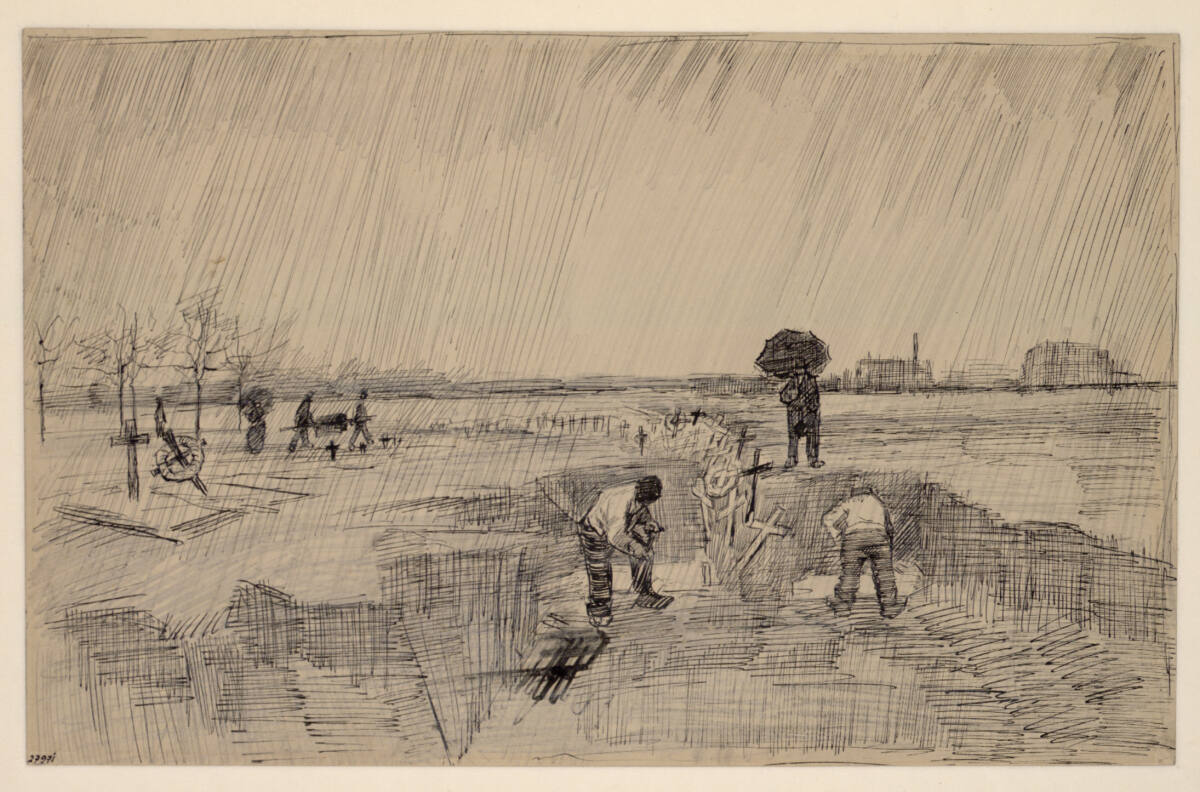
Strandlandschaft mit Wäscherinnen
May one see it?
Unknown

Albertina
Vienna, Austria
The owner is known; whether it is on view today is not.
- In this state since
- Source
- The museum
Particulars
In the catalog
Sources
- Albertina
- Image: Albertina — Public Domain Mark 1.0
Meanwhile, in the life of Edvard Munch
The whole life1902
The Revolver Incident
After Tulla Larsen's suicide attempt and a mysterious quarrel, Munch shot himself through the hand and was hospitalized. The relationship with Tulla ended, but the artist's mental wellbeing was badly shaken.
1902
"The Frieze of Life" Complete at the Berlin Secession
"The Frieze of Life" was exhibited for the first time in the form the artist had conceived, at the gallery of the Berlin Secession; Munch wrote of the show's "symphonic effect." Here he gained long-standing patrons, Albert Kollmann and Max Linde.
1903
Affair with Eva Mudocci
An affair began with the cellist Evangeline Muddock, who performed under the stage name Eva Mudocci; the relationship was clouded by Munch's increasingly troubled behavior, and they parted.
autumn 1908
Nervous Breakdown and Dr. Jacobson's Clinic
Amid heavy drinking, hallucinations, and persecution mania, Munch entered Daniel Jacobson's clinic in Copenhagen, where he spent about eight months. The treatment stabilized his condition; after his return to Norway in 1909 his painting became lighter and more optimistic.
1912
First American Exhibition
Munch's first exhibition in the United States was held in New York.
1918
Survived the Spanish Flu
Despite his fragile health, he came safely through the Spanish flu during the global pandemic; in 1919 he painted "Self-Portrait after the Spanish Flu."