 Claude MonetFrench, 1840–1926
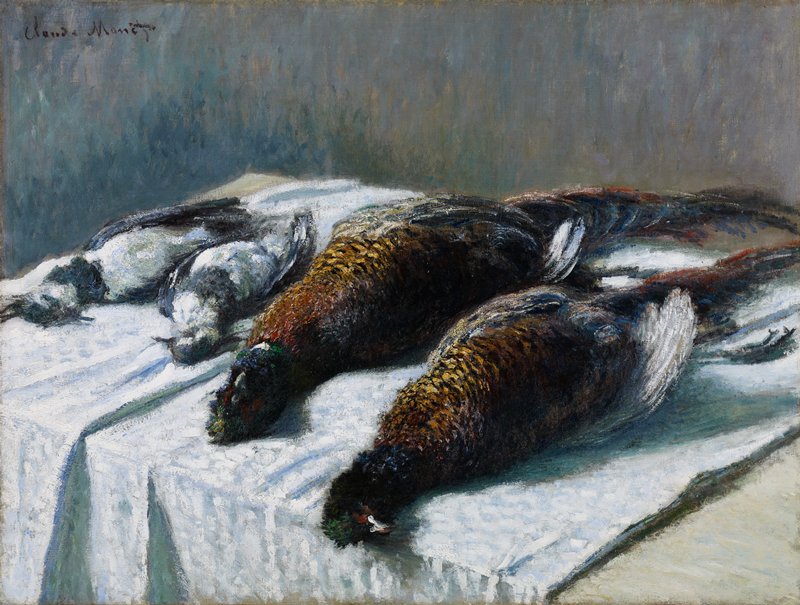
Still Life with Pheasants and Plovers
May one see it?
Yes, receiving visitors

Minneapolis Institute of Art
RoomG351Minneapolis, United States
On public display.
- Checked
- 4 hours ago
- In this state since
- Sep 25, 2026
- Source
- The museum's own collection data
About the painting
The iridescent plumage of a ring-necked pheasant was an enthralling subject for the Impressionist painter Claude Monet, and one he treated a number of times in the late 1870s. This painting demonstrates the artist’s supreme mastery of color: the play of light on the pheasants creates a vibrant life that belies the subject of dead game. The work was exhibited in the Seventh Impressionist Exhibition of 1882. Monet selected it over three closely related paintings, indicating that he saw this version as the definitive rendering of the challenging theme.
Minneapolis Institute of Art
Particulars
- Accession number
- 84.140
In the catalog
Sources
- Minneapolis Institute of Art: the museum's own open data · fetched 4 days ago
- Image: Minneapolis Institute of Art — public domain
Meanwhile, in the life of Claude Monet
The whole life5 April 1877
The "Gare Saint-Lazare" series at the third exhibition
For the third Impressionist exhibition Monet selected seven of the dozen paintings of the Gare Saint-Lazare made over the previous three months — the first time he showed so many canvases of a single motif in such a coordinated way. Critics especially praised the rendering of the trains' movement.
1878 · Workplace
Vétheuil
17 March 1878
Son born: Michel Monet
September 1879
Death of Camille
The artist's wife Camille Doncieux died at Vétheuil; Monet painted her posthumous portrait. Her death, along with financial difficulties, weighed heavily on the artist.
1880–1881
Durand-Ruel resumes purchases
Durand-Ruel offered to handle the buying and selling of Monet's works on a permanent basis, after which the artist's fortunes rapidly improved.
December 1881 – April 1883 · Residence
Villa Saint-Louis