Le CorbusierSwiss, 1887–1965
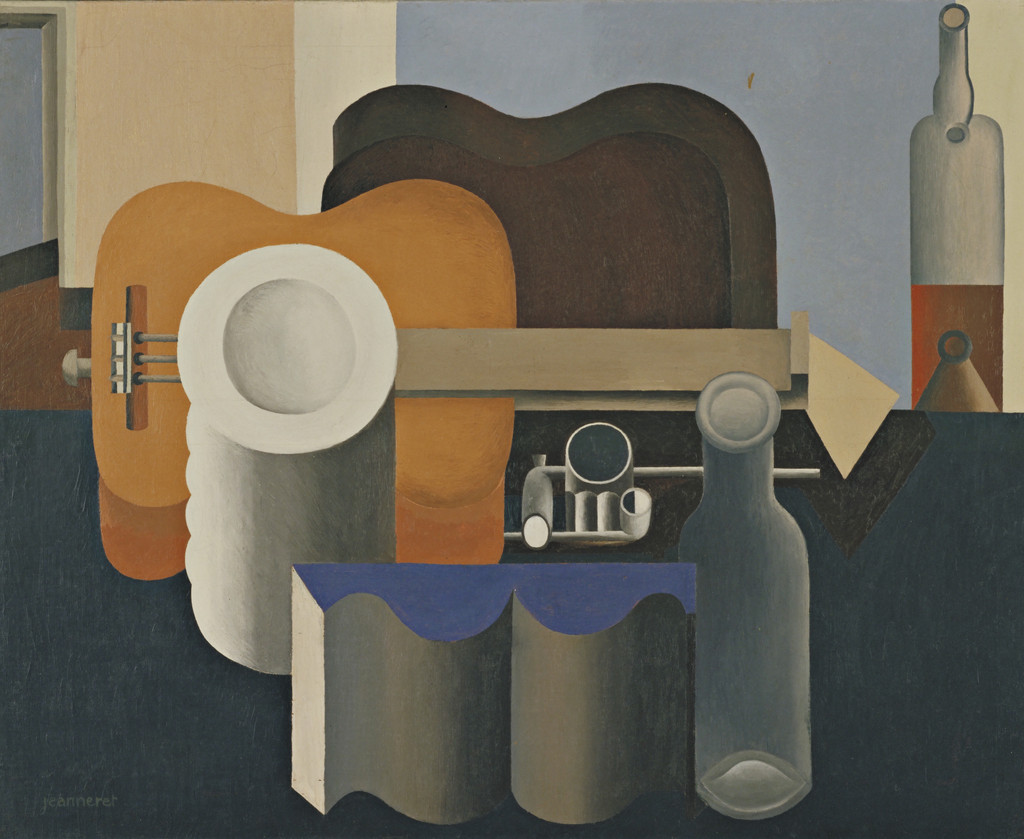
Still Life Filled with Space
Can I see it?
Not on view at present
Where is “Still Life Filled with Space” now? Collection: Art Institute of Chicago, Chicago. Not on view at present. Checked September 29, 2026.

Chicago, United States
It belongs to the collection, but is not on display at present.
- Checked
- In this state since
- Source
- The museum
About the painting
This still life is a prime example of Purism, a style developed in 1918 by the architect Charles-Édouard Jeanneret (later called Le Corbusier) and the painter Amédée Ozenfant and championed in their journal, L’Esprit nouveau (The New Spirit). Promoting the elimination of the picturesque in favor of mathematical order and logic, Purist artists, including Fernand Léger, sought to represent the modern, "universal" forms of the world—especially machine-made objects—in a precise and balanced way as part of their effort to promote a new, modern classicism. Despite the generally smooth, brushless style of Purist pictures, Still Life Filled with Space has an unusual amount of brushwork and texture, notably in the patterned border, which the artist made by dragging a comblike tool repeatedly through the wet white paint.
Art Institute of ChicagoCC BY 4.0
Details
- Accession number
- 2007.279
In the catalog
Sources
- Art Institute of Chicago
- Image: Art Institute of Chicago — © the artist or rights holder
In the life of Le Corbusier
The whole life1922
Opens his own office with his cousin Pierre Jeanneret
Le Corbusier opened his own architectural office in Paris and took on his cousin Pierre Jeanneret, who became his permanent partner.
1922
The Ville Contemporaine at the Salon d'Automne
At the Paris Salon d'Automne Le Corbusier presented his plan for the Ville Contemporaine, a city for three million people: identical towers among lower zigzag blocks and a large park. An imaginary city in an imaginary place, it did not attract the attention he had hoped for.
1923
Publishes Towards an Architecture
Le Corbusier gathered his articles from L'Esprit Nouveau into his first and most influential book. It carried his famous maxim “A house is a machine to live in”, and its cover showed not a building but the promenade deck of an ocean liner.
1925
The Esprit Nouveau Pavilion at the 1925 Exposition
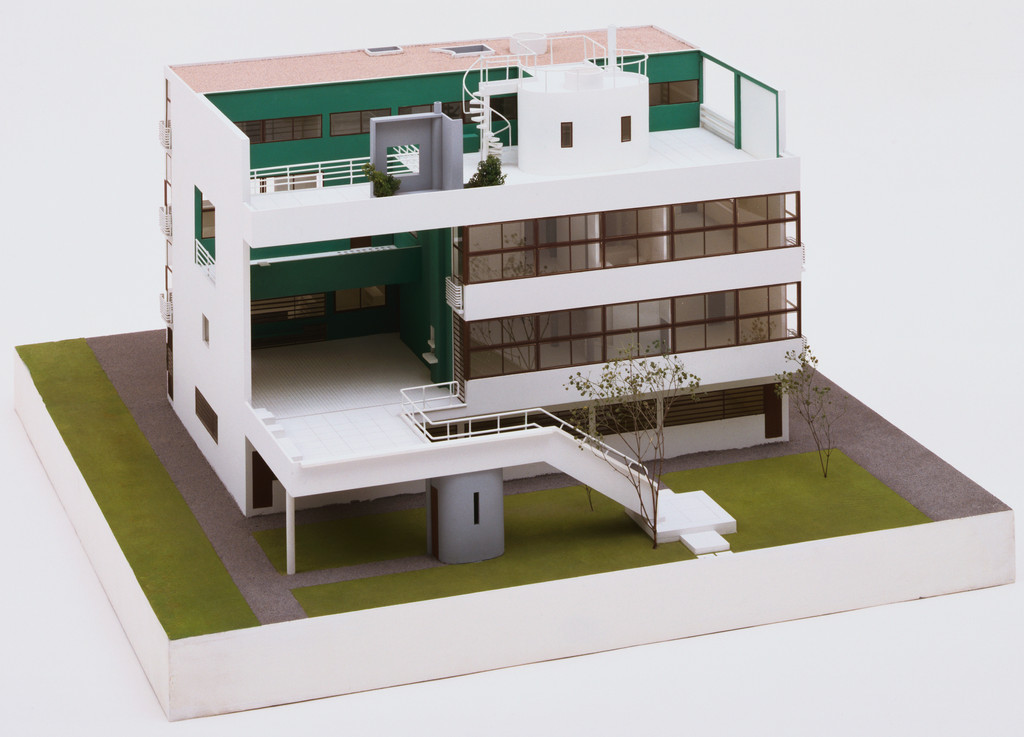
For the International Exhibition of Decorative Arts in Paris, Le Corbusier, with Ozenfant and Pierre Jeanneret, built a pavilion: a white “cell” of a future apartment block, with a tree growing through the roof. The furious organisers screened it with a fence, removed only on the order of the Ministry of Fine Arts, and critics ridiculed it.
1925
The Plan Voisin: to raze central Paris
The pavilion displayed a model of the Plan Voisin: bulldoze much of central Paris north of the Seine and replace it with cruciform towers set in parkland. French politicians and industrialists met it with criticism and scorn.
1926
The Five Points of a New Architecture
Le Corbusier formulated his architect's code, the Five Points of a New Architecture, which set out the basic principles of the new style.