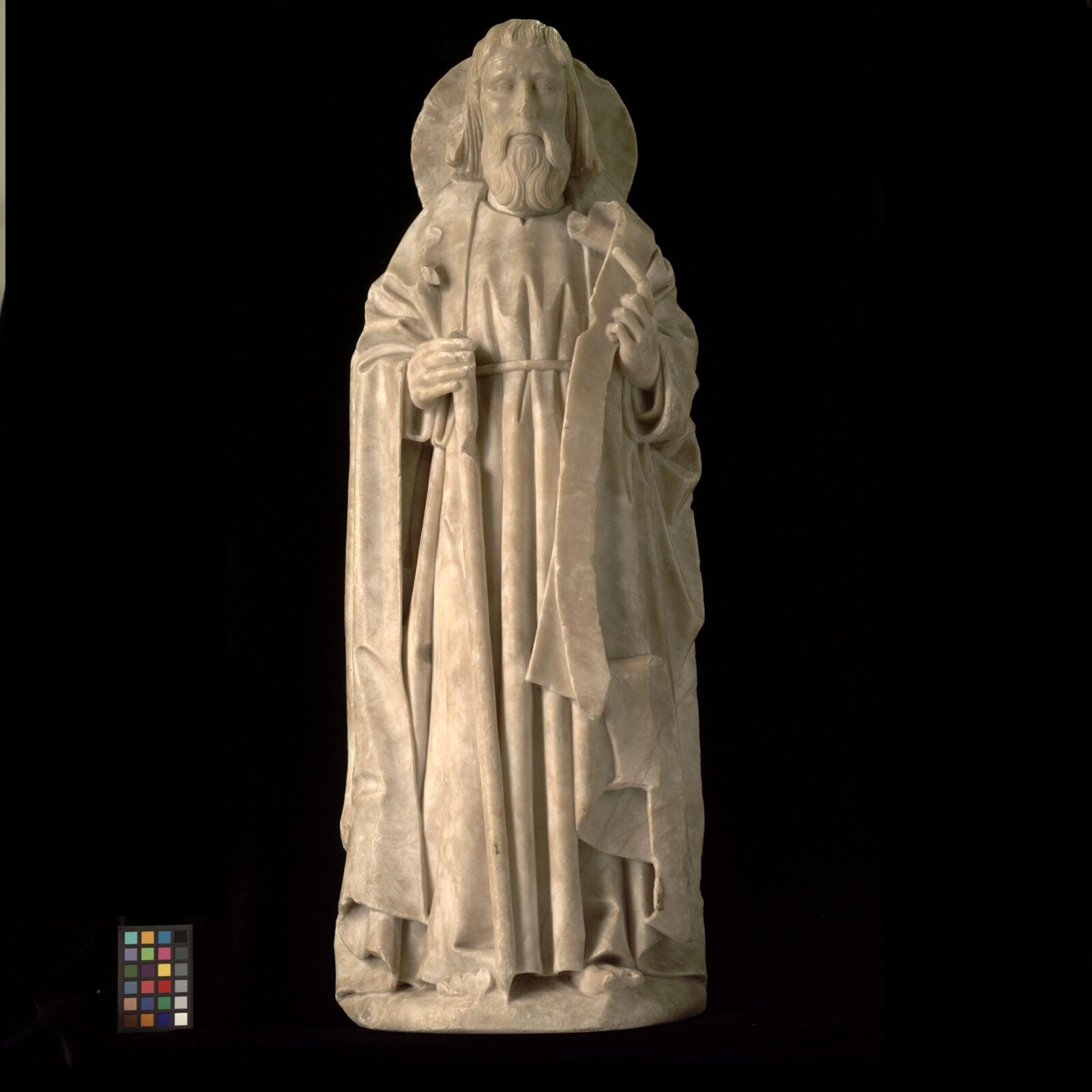
St James the Less
May one see it?
Not receiving at present

Victoria and Albert Museum
London, United Kingdom
It belongs to the collection, but is not on display at present.
- Checked
- 8 days ago
- In this state since
- Sep 25, 2026
- Source
- The museum's own collection data
About the sculpture
This alabaster statuette representing St. James the Less was made in the 15th century England. The statuette was previously in the church of St. Catharine, Hoogstraten, province of Antwerp and purchased in Brussels.
The carving of alabaster, mostly quarried in Tutbury and Chellaston near Nottingham, took on industrial proportions in England between the middle of the 14th and the early 16th centuries. The market for altarpieces and smaller devotional images was a large one. It included not only religious foundations but also the merchant classes. Many hundreds of English alabasters were exported, some as far afield as Iceland and Santiago de Compostela in north-west Spain.
Read on
Alabaster - a form of gypsum - is a comparatively soft material and is therefore easy to carve. It can also be polished. Its natural colour was especially useful for the representation of faces and flesh, which would normally remain unpainted. The finished alabaster panels in altarpieces of this type were fixed into position in the wooden frame by means of lead wires. They were embedded in the backs of the panels, fed through holes in the frame and secured.
Victoria and Albert Museum
Particulars
- Accession number
- A.107-1920
What it shows
In the catalog
Sources
- Victoria and Albert Museum: the museum's own open data · fetched 8 days ago
- Image: Victoria and Albert Museum — © Victoria and Albert Museum, London