ART WIKI32,963 on view
MapCollectionArtistsMuseumsExhibitionsJournal
Sign in

ART WIKI

Where the masterpiece hangs, and when they let you in.

Collections: Art Institute of Chicago, Getty Villa, Harvard Art Museums, Hirshhorn Museum and Sculpture Garden, J. Paul Getty Museum, Minneapolis Institute of Art, Musée du Louvre, National Gallery of Art, National Museum of Asian Art, National Portrait Gallery (Smithsonian), Pushkin State Museum of Fine Arts, Rijksmuseum, Smithsonian American Art Museum, SMK — National Gallery of Denmark, State Hermitage Museum, State Russian Museum, The Cleveland Museum of Art, The Metropolitan Museum of Art, The Museum of Modern Art, Tretyakov Gallery, Victoria and Albert Museum, Whitney Museum of American Art, State Catalogue of the Museum Fund of Russia (274 museums), Europeana (19 museums), Wikidata (6 museums), Paris Musées (12 museums), and Joconde, the French Ministry of Culture's museum database (495 museums). Images belong to their rights holders.

Sections

  • Map
  • Search
  • Collection
  • Masterpieces
  • On view now
  • Artists

More

  • Museums & galleries
  • Exhibitions
  • Journal
  • Where the data comes from
  • Privacy & cookies
HomeMapBrowse
  1. Collection/
  2. Art Institute of Chicago/
  3. Spain
Spain, Henri Cartier-Bresson, 1933
Henri Cartier-Bresson, portraitHenri Cartier-BressonFrench, 1908–2004

Spain

1933 · Photograph

May one see it?

Not receiving at present

Art Institute of Chicago

Chicago, United States

It belongs to the collection, but is not on display at present.

Checked
3 days ago
In this state since
Aug 19, 2026
Source
The museum
On the mapMuseum page

About the work

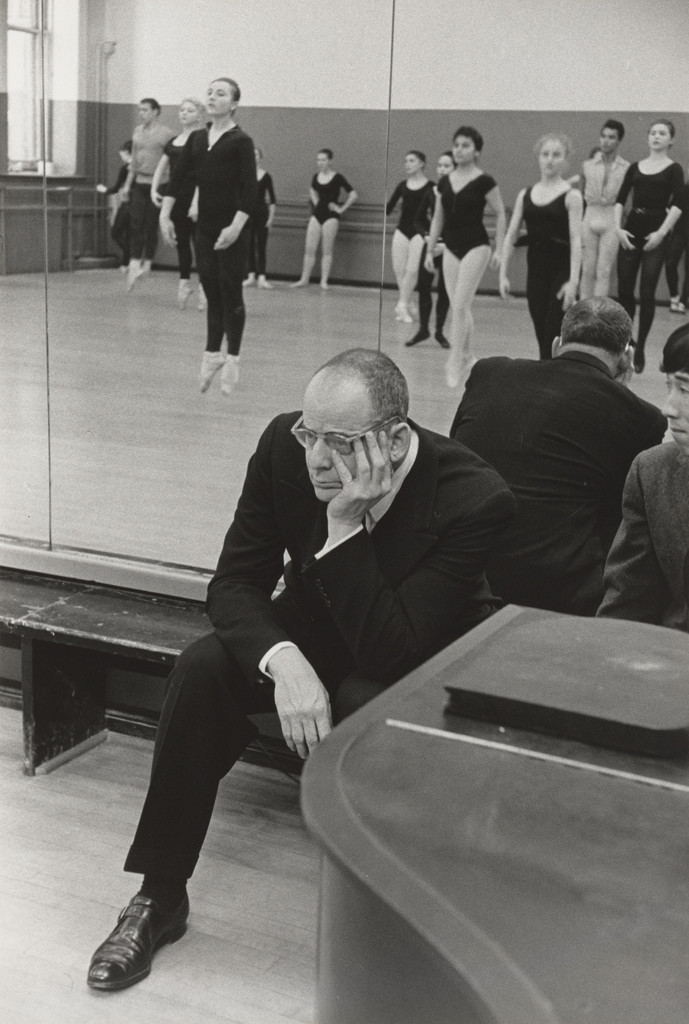
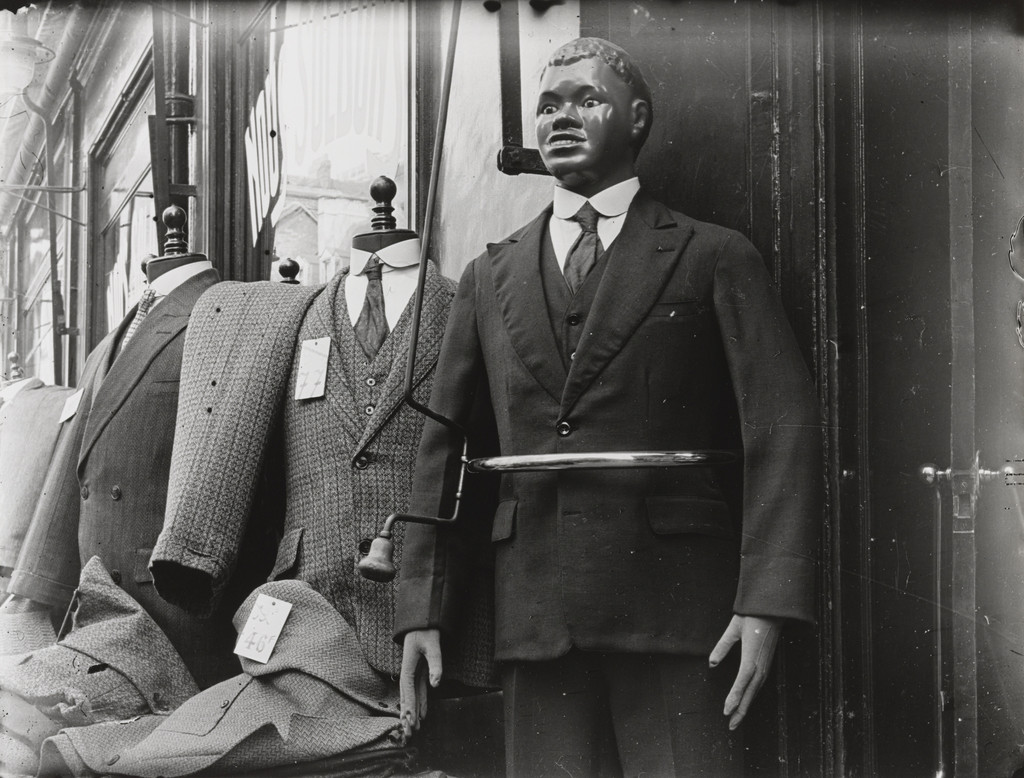
Henri Cartier-Bresson became known for “the decisive moment,” an instantaneous composition of a scene, for which the photographer must act quickly and intuitively. As a photojournalist for Magnum Photos, the agency he founded with his colleagues Robert Capa and David “Chim” Seymour, he traveled across the world, photographing some of the most important events of the 20th century. Early in his career, he developed a distinct style of photography and made some of his most famous and enduring images.

Art Institute of Chicago · CC BY 4.0

Particulars

1933 · aged 25
19082004
Accession number
1979.63

In the catalog

PhotographsGelatin silver printModernism20th centuryFrance

Sources

  • Art Institute of Chicago
  • Image: Art Institute of Chicago — © the artist or rights holder

Meanwhile, in the life of Henri Cartier-Bresson

The whole life
  1. 1930–1932

    Escape to Africa: Côte d’Ivoire

    After reading Conrad’s “Heart of Darkness” in the army he decided to escape and seek adventure in Côte d’Ivoire; he lived by shooting game and selling it to villagers, and later carried methods learned hunting into his photography. Only seven photographs survived the tropics, although he had taken a portable camera smaller than a Brownie.

  2. 1930–1932

    Blackwater fever and instructions for his own funeral

    In Côte d’Ivoire he contracted blackwater fever, which nearly killed him; still feverish, he sent his grandfather instructions for his own funeral — in Normandy, at the edge of the Eawy Forest, with Debussy’s String Quartet played.

  3. 1931–1932

    Munkácsi’s photograph, a Leica and the choice of photography

    Recovering in Marseille, he saw Martin Munkácsi’s photograph “Three Boys at Lake Tanganyika” and “suddenly understood that a photograph could fix eternity in an instant”; he gave up painting and bought a Leica with a 50 mm lens, darkening its shiny parts to stay unnoticed.

  4. 1933

    First exhibitions: New York and Madrid

    In 1933 his photographs were first exhibited at the Julien Levy Gallery in New York and then at the Ateneo Club in Madrid.

  5. 1934

    He meets Chim, and through him Capa

    In 1934 he met the young Polish intellectual and photographer David Szymin, known as “Chim” (later David Seymour), and through him the Hungarian photographer Endré Friedmann, the future Robert Capa; he would later found Magnum with them.

  6. 1934

    In Mexico, a shared show with Álvarez Bravo

    In 1934 in Mexico he shared an exhibition with Manuel Álvarez Bravo at the Palacio de Bellas Artes.
More by Henri Cartier-Bresson

All works
Lincoln Kirstein, Henri Cartier-Bresson, 1964

Lincoln Kirstein

1964 · The Museum of Modern Art

Rouen, Henri Cartier-Bresson, 1929

Rouen

1929 · Not on view · The Museum of Modern Art

France, Henri Cartier-Bresson, 1929

France

1929 · Not on view · The Museum of Modern Art

Dieppe, France, Henri Cartier-Bresson, 1929

Dieppe, France

1929 · Not on view · The Museum of Modern Art

Rouen, Henri Cartier-Bresson, 1929

Rouen

1929 · Not on view · The Museum of Modern Art

Budapest, Henri Cartier-Bresson, 1931

Budapest

1931 · Not on view · The Museum of Modern Art

Front view of Jalma with her Hand, Montmarte (Jalma de face et sa main, Montmarte), Henri Cartier-Bresson, c. 1931

Front view of Jalma with her Hand, Montmarte (Jalma de face et sa main, Montmarte)

c. 1931 · Not on view · The Museum of Modern Art

Untitled, Henri Cartier-Bresson, c. 1931

Untitled

c. 1931 · Not on view · The Museum of Modern Art

Neighbors at Art Institute of Chicago

Museum page
The Bedroom, Vincent van Gogh, 1889

Vincent van Gogh

The Bedroom, 1889

A Sunday on La Grande Jatte — 1884, Georges Seurat, 1884–86, border added 1888–89

Georges Seurat

A Sunday Afternoon on the Island of La Grande Jatte, 1884–86, border added 1888–89

Paris Street; Rainy Day, Gustave Caillebotte, 1877

Gustave Caillebotte

Paris Street; Rainy Day, 1877

Two Sisters (On the Terrace), Pierre-Auguste Renoir, 1881

Pierre-Auguste Renoir

Two Sisters (On the Terrace), 1881

The Basket of Apples, Paul Cézanne, c. 1893

Paul Cézanne

The Basket of Apples, c. 1893

Stacks of Wheat (End of Summer), Claude Monet, 1890–91

Claude Monet

Stacks of Wheat (End of Summer), 1890–91

American Gothic, Grant Wood, 1930

Grant Wood

American Gothic, 1930

Nighthawks, Edward Hopper, 1942

Edward Hopper

Nighthawks, 1942