Isaac Levitan1860–1900
Серый день. Этюд
Can I see it?
Unknown
Where is “Серый день. Этюд” now? Collection: Voronezh Regional Art Museum, Voronezh. Unknown.
Voronezh, Russia
The owner is known; whether it is on view today is not.
- In this state since
- Source
- The museum
About the painting
Museum text in Russian
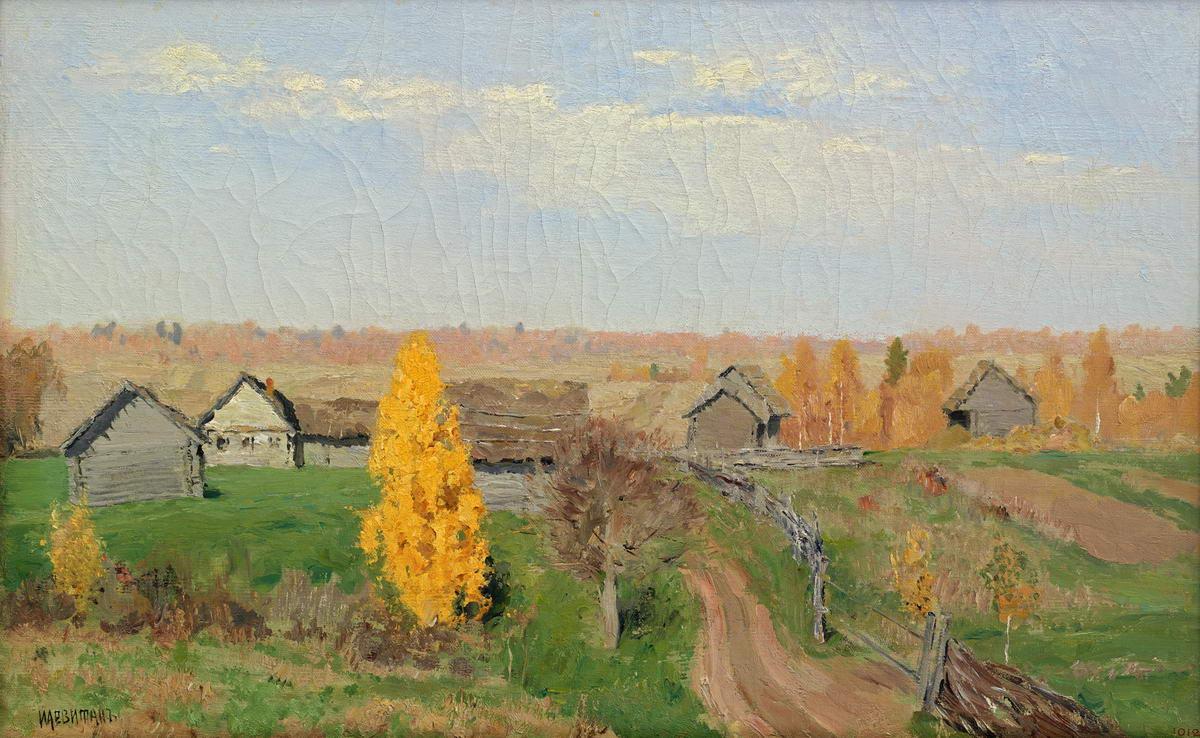
На гладком сером фоне неба вырисовываются серые дали и серые берега широкой реки, текущей из глубины на зрителя. Справа и слева на берегах видны строения.
Voronezh Regional Art Museum
Details
- Accession number
- Ж-492
In the catalog
Sources
- The State Catalogue of the Museum Fund of Russia
- Image: Voronezh Regional Art Museum — © Воронежский областной художественный музей им. И. Н. Крамского · Госкаталог музейного фонда РФ
In the life of Isaac Levitan
The whole lifespring 1884
He takes part in a Peredvizhniki exhibition
In the spring of 1884 he takes part in the travelling exhibition of the Peredvizhniki; he will become a member of their Association in 1891.
mid-1880s
His heart disease sharply worsens
Levitan's material situation improves in the mid-1880s, but a hungry childhood, an unsettled life and hard work tell on his health: his heart disease sharply worsens.
spring 1885
He graduates without the title of artist
In spring 1885, at twenty-four, he graduates from the school but does not receive the title of artist: he is given a diploma as a teacher of penmanship. He has no money.
April 1885
He settles at Maximovka and meets Chekhov
In April 1885 he settles in the remote village of Maximovka near Babkino, where the Chekhovs are staying at the Kiselyov estate; his acquaintance with Anton Pavlovich Chekhov begins a friendship and rivalry that will last all his life.
1886
The Crimea and an exhibition of fifty landscapes
A trip to the Crimea in 1886 restores his strength; on his return Levitan organises an exhibition of fifty of his landscapes.
spring 1888
He discovers Plyos on the Volga
In spring 1888 he sails by steamer along the Oka to Nizhny Novgorod and on up the Volga with the artist Alexei Stepanov and Sofia Kuvshinnikova; to their own surprise they discover the small, quiet town of Plyos and decide to stay on for a while. The three summer seasons there (1888–1890) prove extremely productive: some two hundred works bring Levitan wide fame.