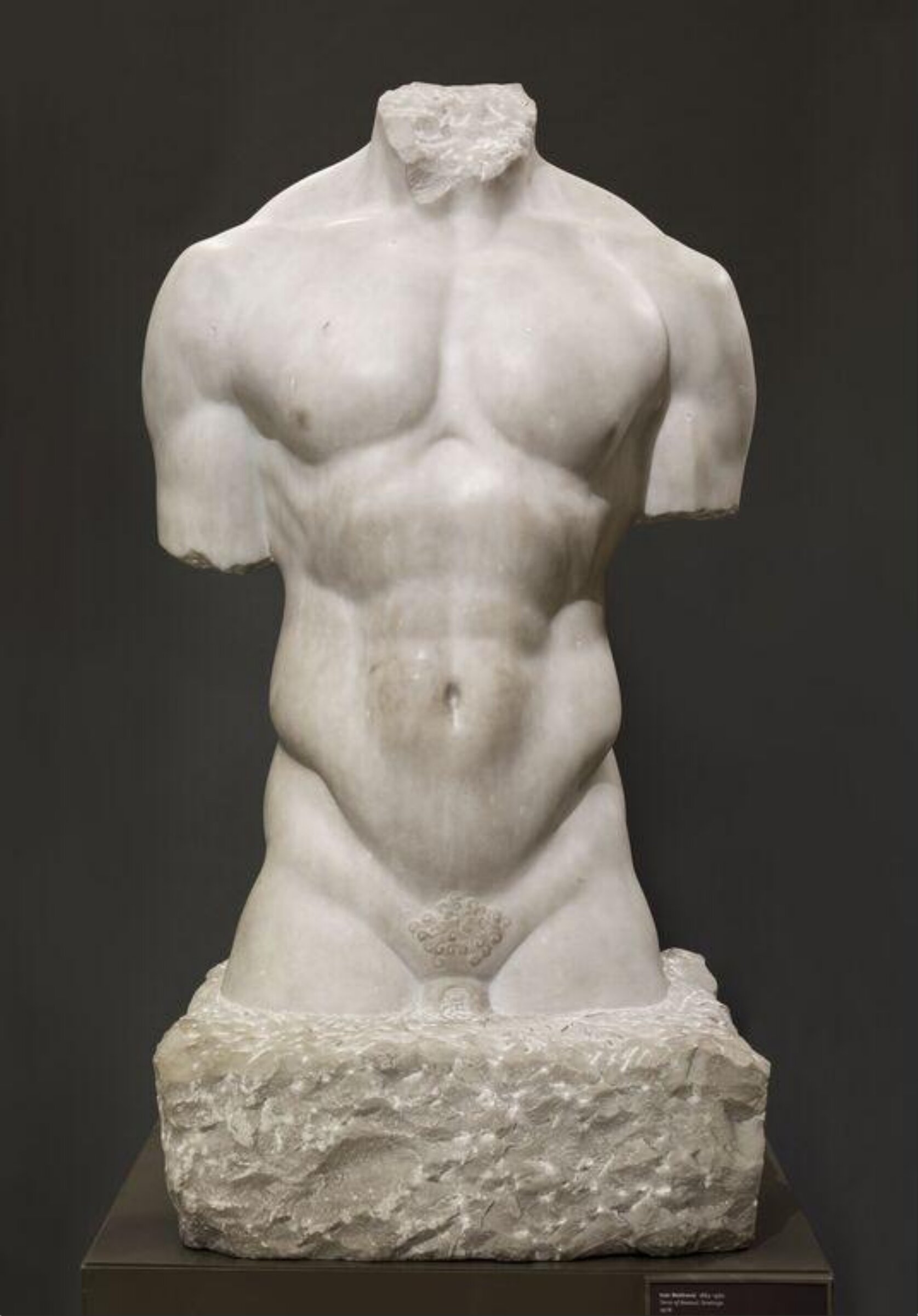
Ivan MestrovicAmerican, 1883–1962
Sad Memories
Can I see it?
Not on view at present
Where is “Sad Memories” now? Collection: Harvard Art Museums, Cambridge. Not on view at present. Checked September 29, 2026.

Cambridge, United States
It belongs to the collection, but is not on display at present.
- Checked
- In this state since
- Source
- The museum
Details
- Accession number
- 1950.158
In the catalog
Sources
- Harvard Art Museums
- Image: Harvard Art Museums — © President and Fellows of Harvard College
In the life of Ivan Mestrovic
The whole life1905
First exhibition with the Secession group in Vienna
In 1905 he shows for the first time with the Secession group in Vienna, his work noticeably influenced by Art Nouveau. Success comes quickly: Rodin once called Meštrović the greatest phenomenon among sculptors, and an even greater sculptor than himself.
1911
Grand prix at the International Exhibition in Rome
In Rome he receives the grand prix for the Serbian Pavilion at the 1911 International Exhibition: beside the “soft and ineffectual” pieces of Hugo Lederer, Anton Hanak and Franz Metzner, his work is judged strong and monumental. For the exhibition he sculpts Prince Marko, a hero of Serbian folk legend; the statue is exhibited along with 73 sculptures at the pavilion of the Kingdom of Serbia, and he also takes part in the Turin International.
7 November 1941
Arrested by the Ustaše in Zagreb
Meštrović and the painter Jozo Kljaković are arrested by the Ustaše in Zagreb, ostensibly out of the regime’s fear that the two would emigrate. He serves three and a half months in the Savska Cesta prison.
1942
Release and departure for Italy
With the help of Archbishop Aloysius Stepinac and then the Vatican he is released, on condition that he travel to Venice to attend the pavilion of the Independent State of Croatia at the Venice Biennale; from there he relocates to Rome.
1946–1947
Move to the US: professor at Syracuse University
In 1946 Syracuse University offers him a professorship and he moves to the United States (other accounts date the move to 1947); he becomes a professor of sculpture.
16 January 1962
Died