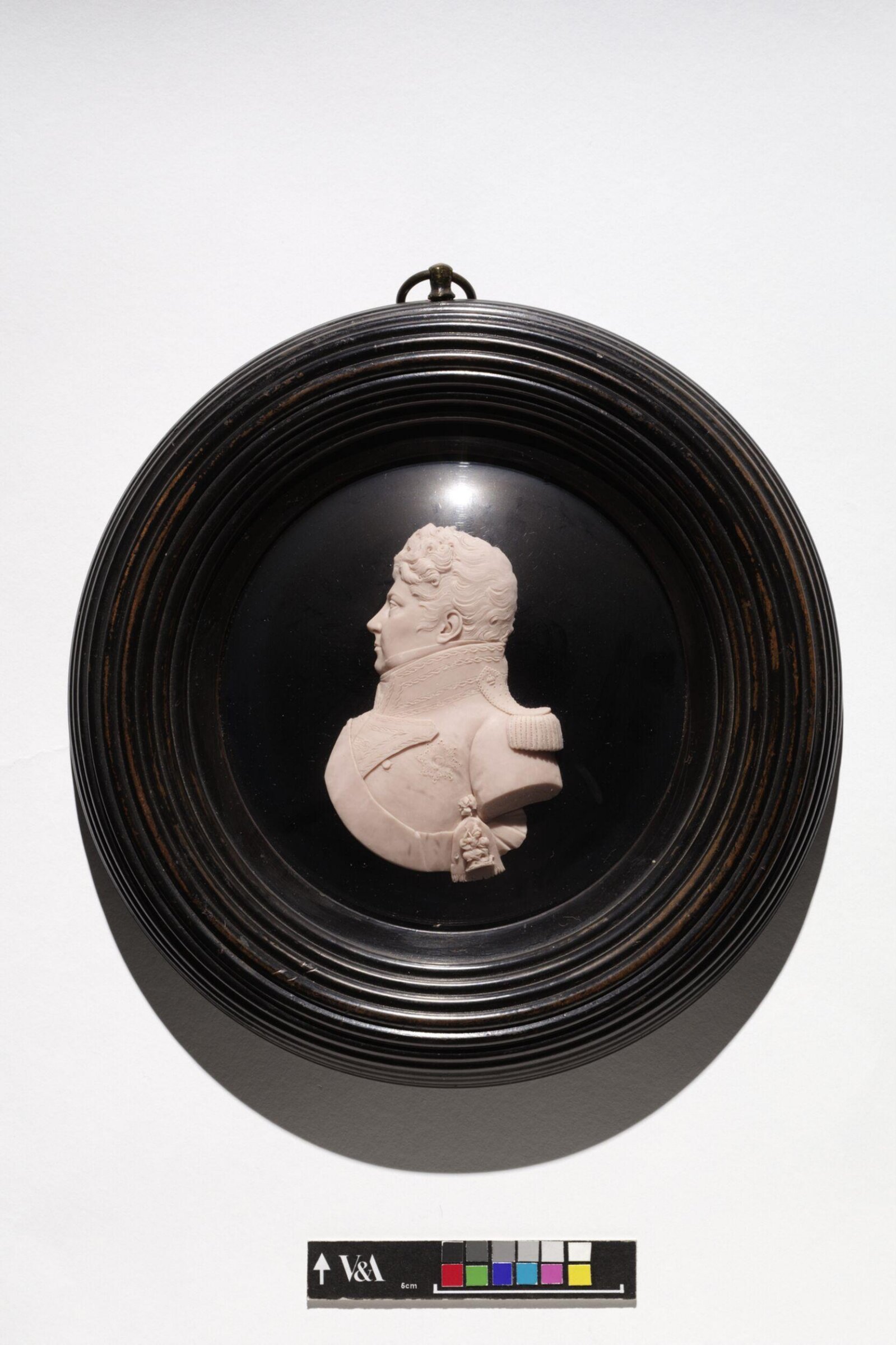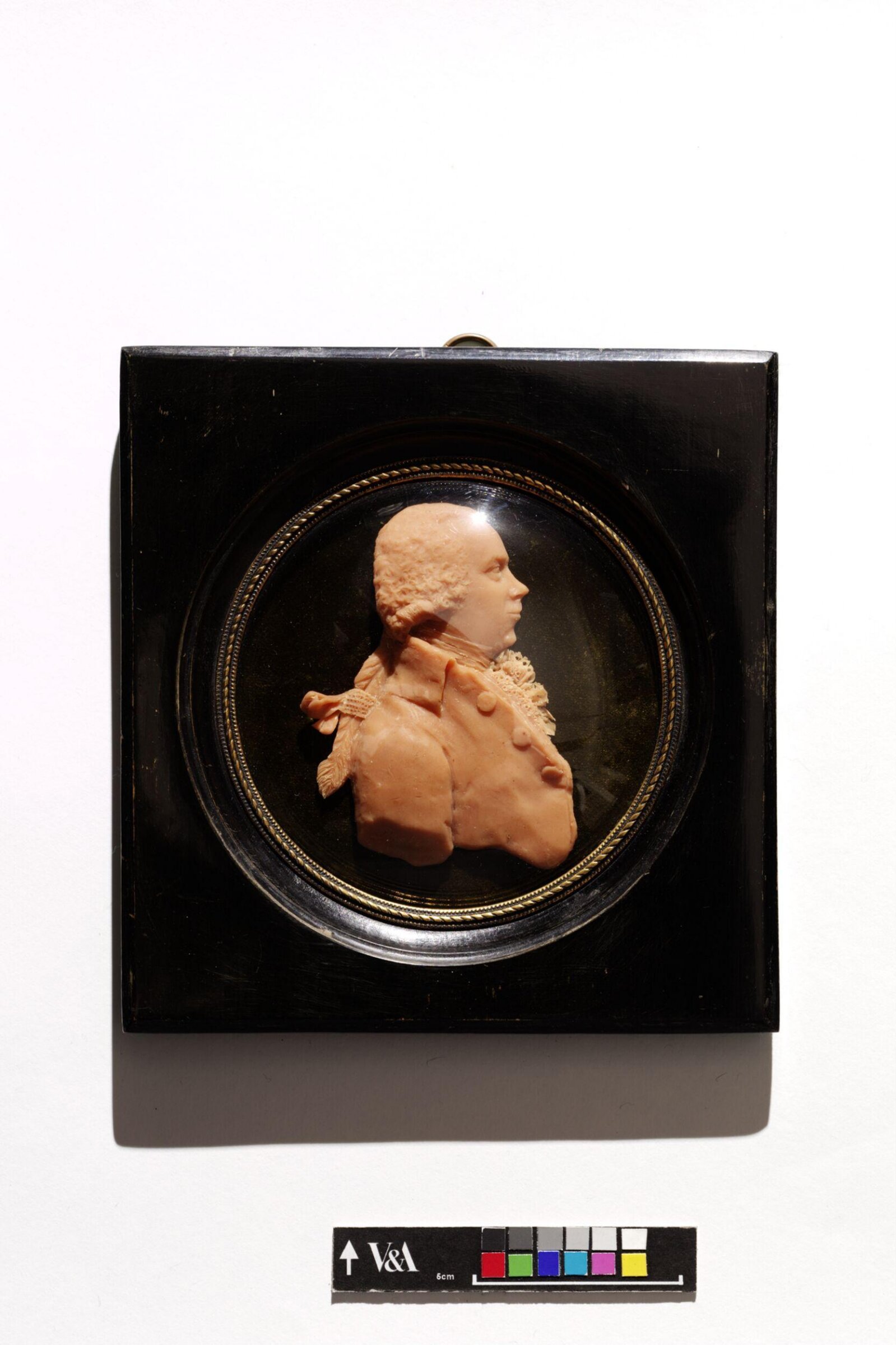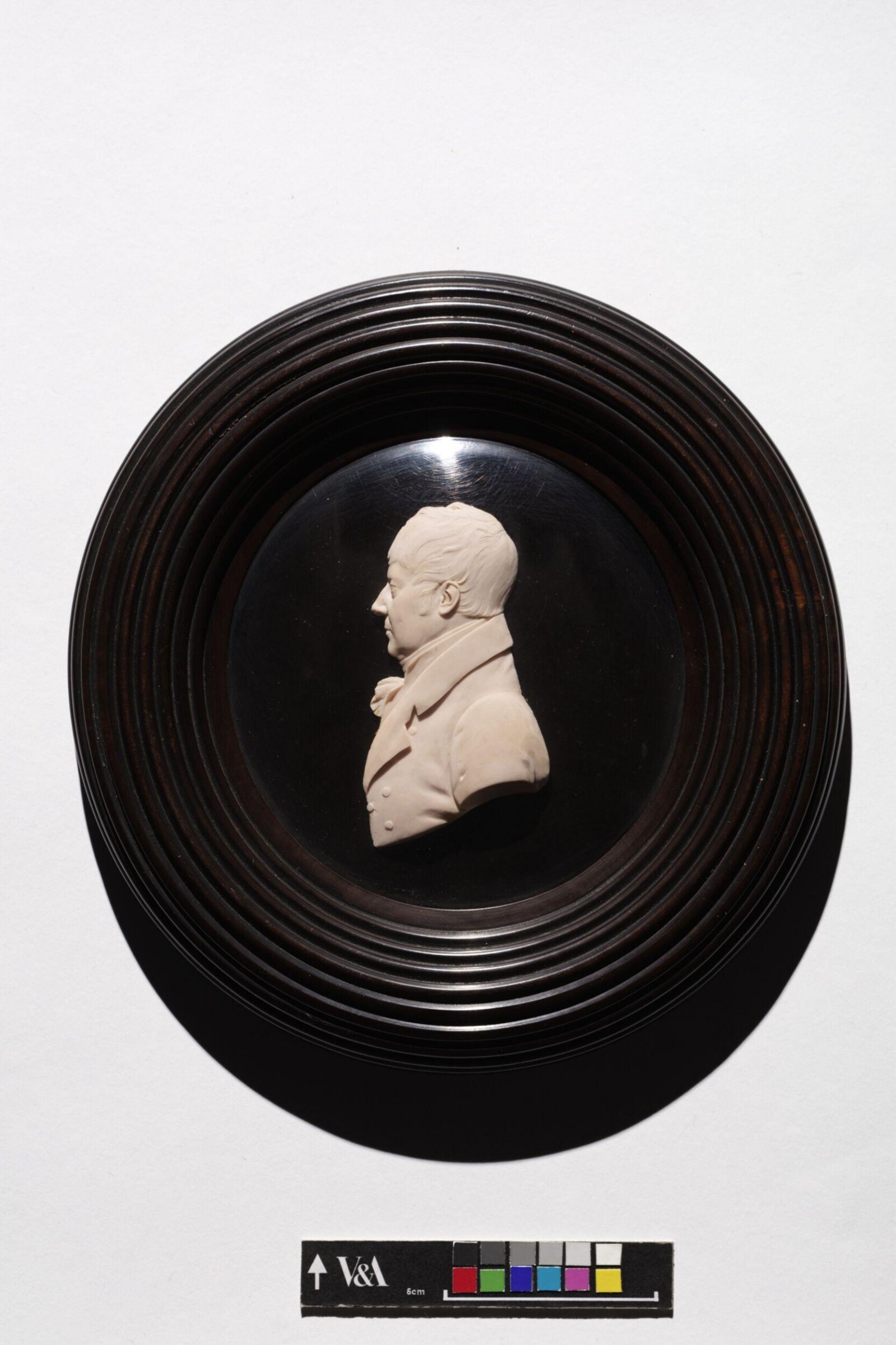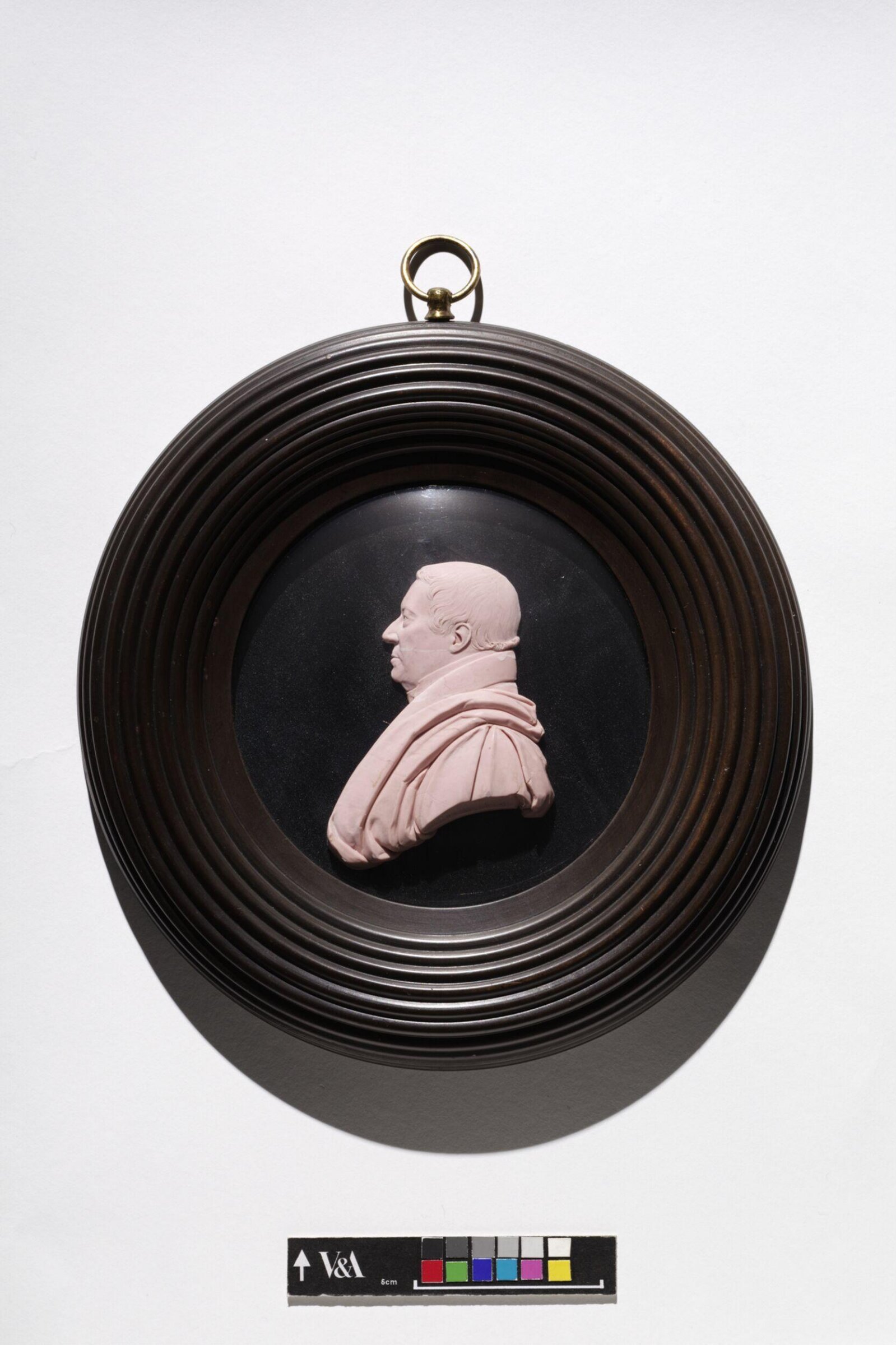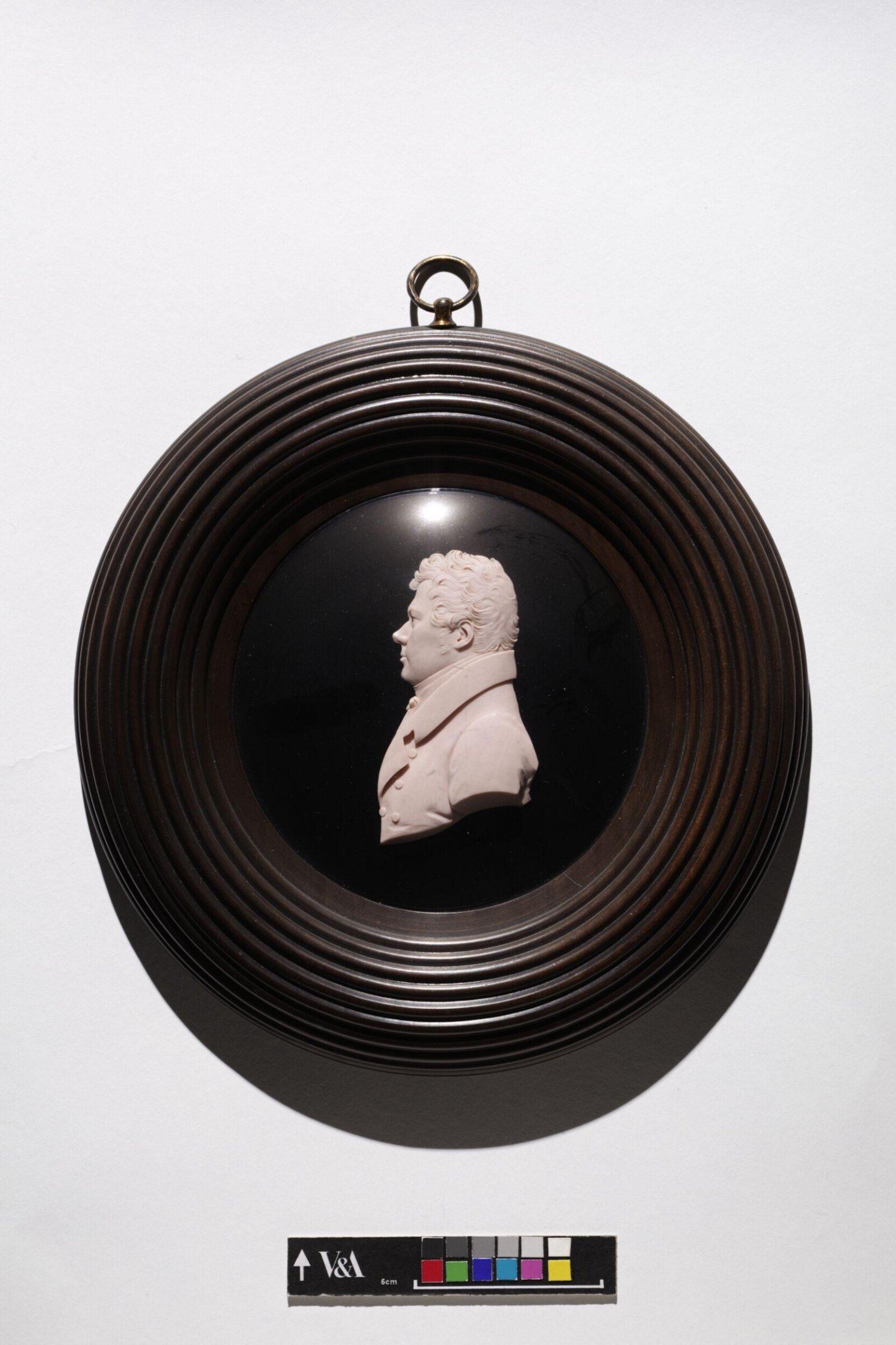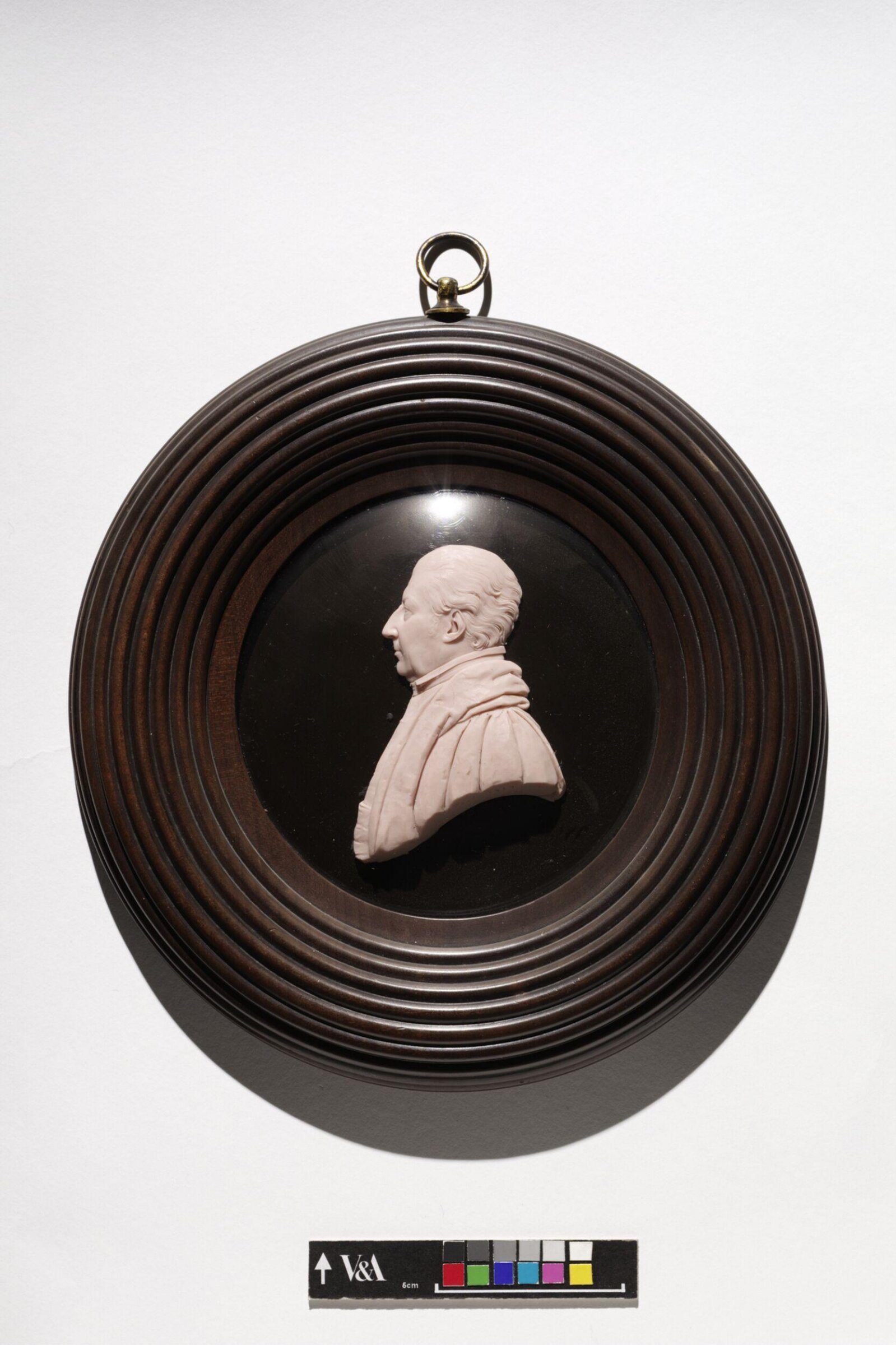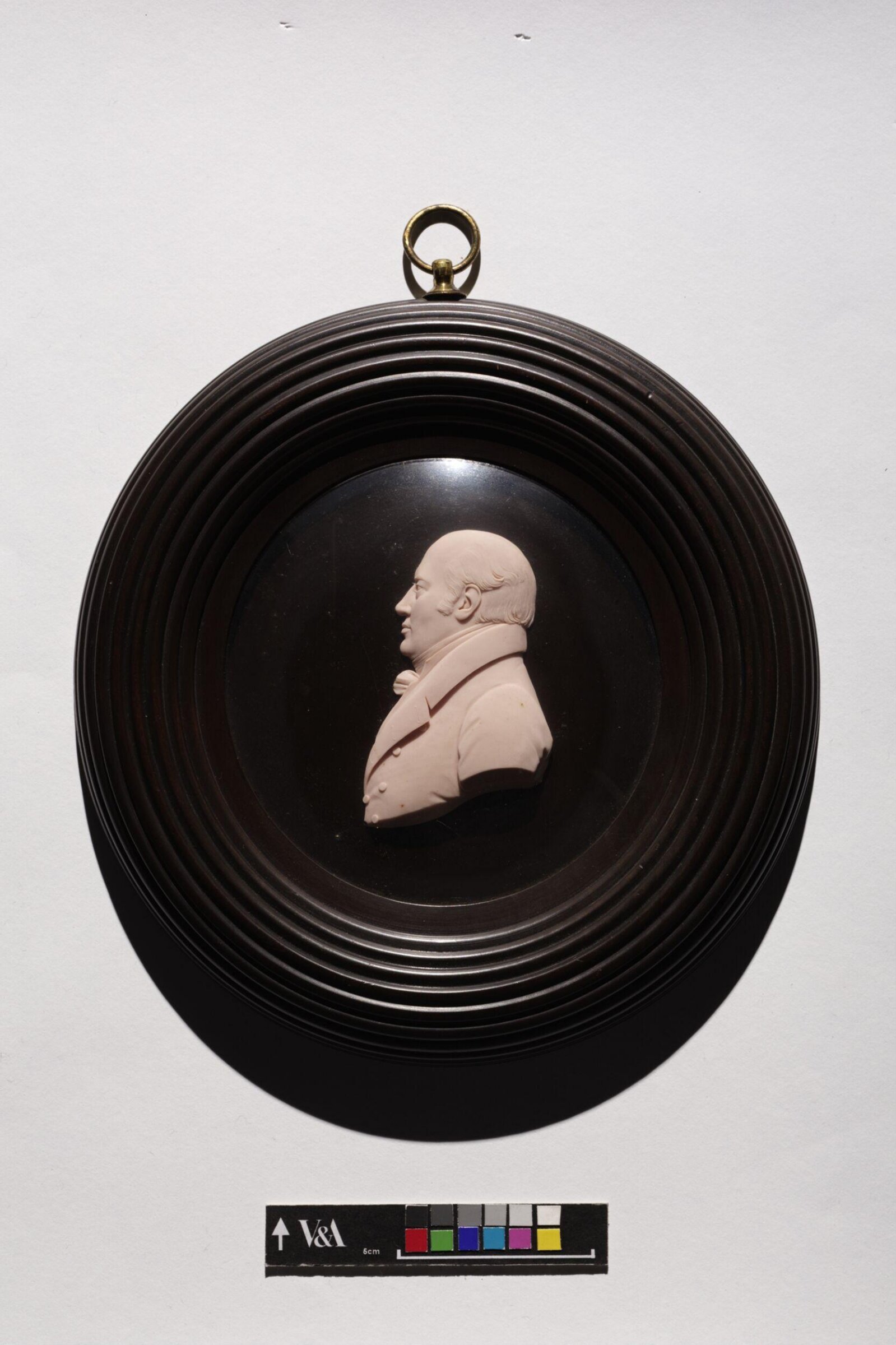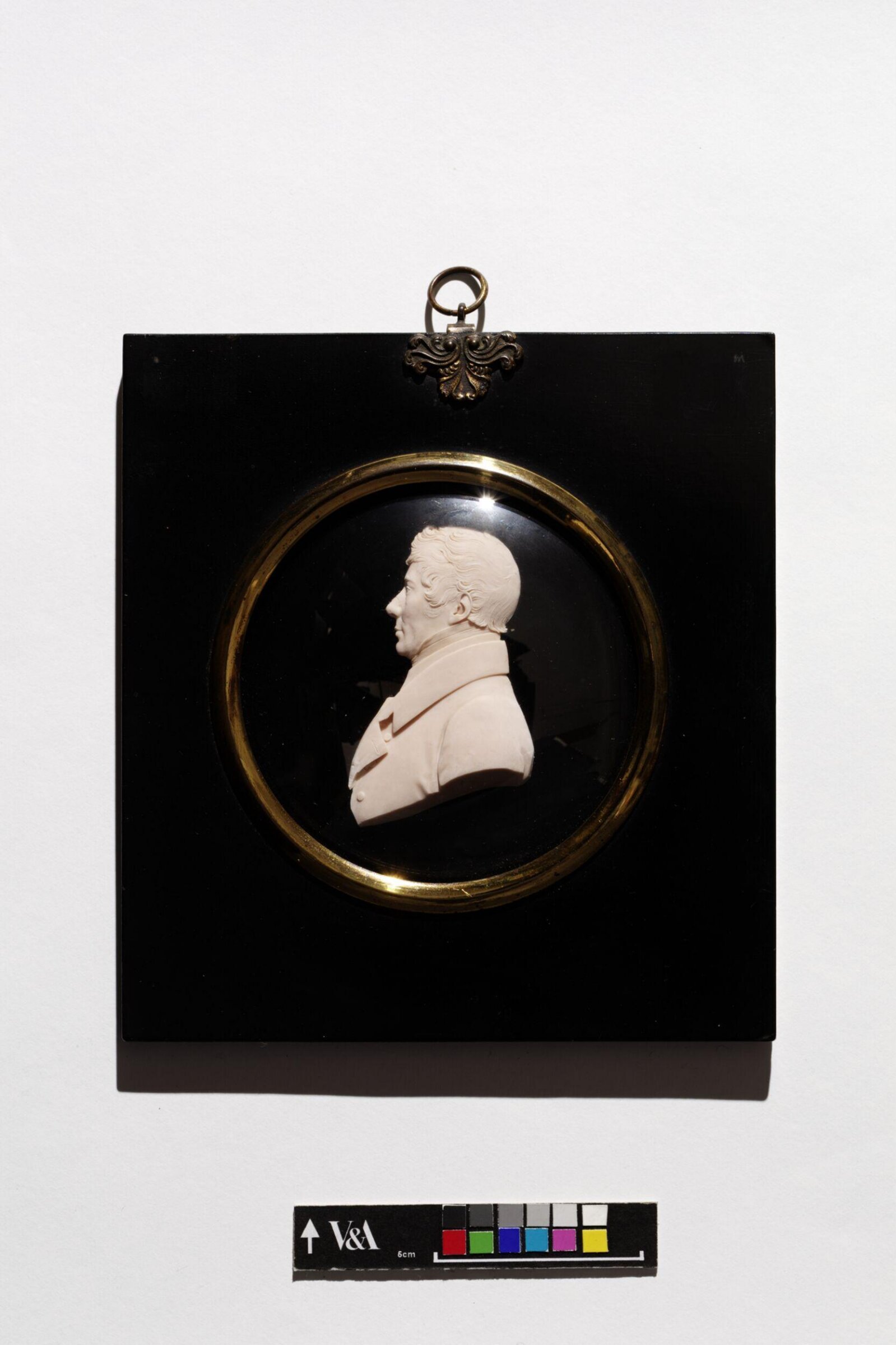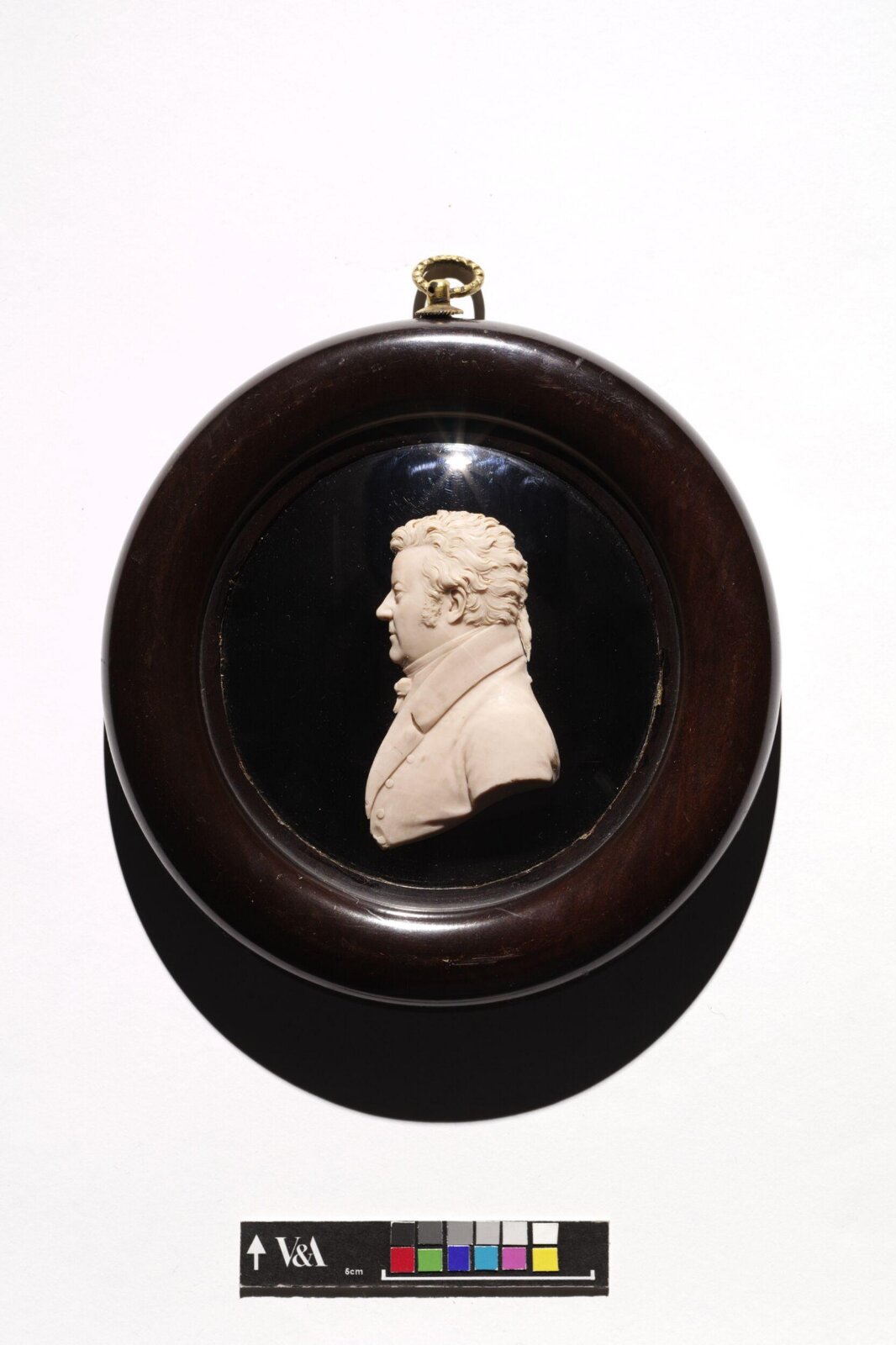
Richard Barton
May one see it?
Not receiving at present

London, United Kingdom
It belongs to the collection, but is not on display at present.
- Checked
- In this state since
- Source
- The museum
About the sculpture
During the eighteenth and nineteenth centuries, low relief portraits in wax became popular in Britain and they were often exhibited at the Royal Academy, the Society of Artists and elsewhere. Waxes were used in a similar way to prints and medals, in order to disseminate the image of the sitter, or, like miniature paintings or silhouettes as portable mementoes.
The popularity of wax portraits was in part driven by their links with other types of portrait manufacture such as ceramic medallions.
The process of making a portrait in wax would begin with a model in plasticine or soft wax which would be worked using ivory or wooden tools in much the same way as a model in clay. A plaster mould would then be made and molten wax poured into it. The relief would be hand-finished by the artist.
Read on
This relief is the work of T.R. Poole, who exhibited three portrait medallions at the Royal Academy in 1799 and 1800. It depicts Richard Barton.
Victoria and Albert Museum
Particulars
- Accession number
- A.110-1965
In the catalog
Sources
- Victoria and Albert Museum
- Image: Victoria and Albert Museum — © Victoria and Albert Museum, London